
Zelenski’s Promised Talks Spotlight Washington’s High-Stakes Role in Ukraine Reconstruction
President Zelenski’s upcoming talks with US emissaries underscore the urgent need for America to lead on securing Ukraine’s rebuilding—will Washington deliver real results or risk letting globalist inertia prolong conflict?
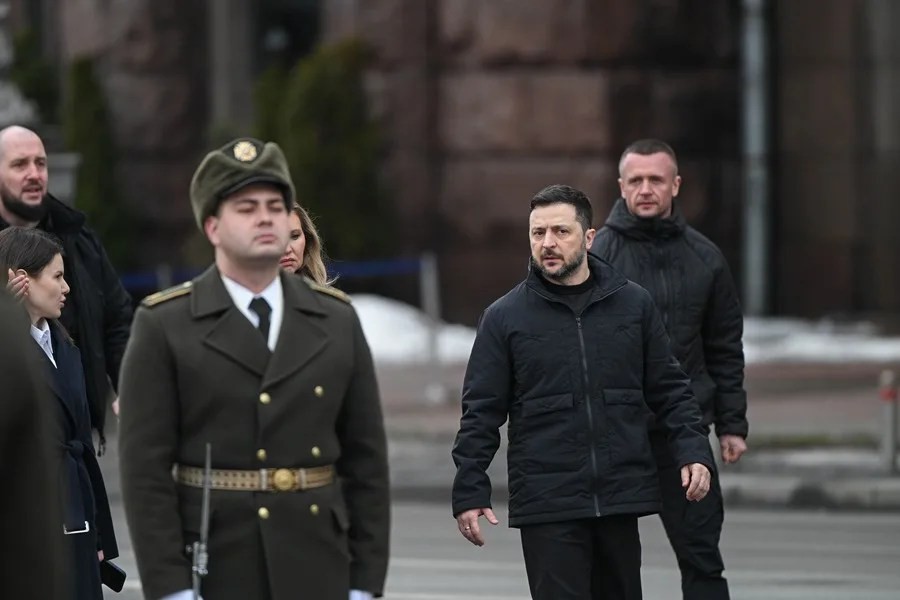
President Volodimir Zelenski has announced that two of his top envoys will meet Thursday in Geneva with representatives from the White House to negotiate a crucial economic agreement aimed at reconstructing war-torn Ukraine. This meeting signals a strategic moment for the United States to assert its leadership—not just diplomatically, but decisively—in shaping Ukraine’s future amid ongoing Russian aggression.
Why Does America’s Role Matter More Than Ever?
The stakes are clear: Ukraine’s economy lies devastated after Russia’s invasion, and Kiev is seeking firm commitments from the US and European allies to back a robust recovery plan. Rustem Umérov, head of Ukraine’s National Security Council, and Economy Minister Oleksí Sobolev are tasked with pressing Steve Witkoff and Jared Kushner, Washington’s appointed mediators, to secure foreign investments critical to rebuilding infrastructure and revitalizing industry.
But these negotiations come wrapped in complexity. While Zelenski projects hope for a trilateral meeting with Russian counterparts soon—tentatively slated for early March—the reality remains uncertain. Can Washington push beyond empty diplomacy and enforce meaningful security guarantees that protect Ukrainian sovereignty? How long will bureaucratic delays stall the economic lifeline that millions of Ukrainians desperately need?
Empty Promises or Strategic Opportunity?
Zelenski also stressed hopes that this new round of talks would at least yield another prisoner exchange—a modest but symbolically important step amid broader hostilities. Meanwhile, he firmly rejected Kremlin claims about alleged UK and French plans to supply nuclear weapons to Ukraine, calling them distractions designed to shift focus from battlefield realities.
This confrontation of facts versus misinformation highlights the critical role American leadership must play in cutting through propaganda and delivering tangible outcomes that prioritize freedom and national sovereignty over grandstanding.
Washington cannot afford repeated missteps or tepid responses. The reconstruction of Ukraine represents more than foreign aid—it is a frontline test of America First principles: protecting democratic allies against authoritarian threats while safeguarding our own borders from the fallout of failed foreign policy.
How long will Washington hesitate before confronting this challenge head-on? For American families facing inflation and uncertainty, effective support for Ukraine means fewer prolonged conflicts abroad that drain resources here at home.