
Violence Erupts in Lima’s ‘Generation Z March’—A Test of Law, Order, and National Stability
In Lima, clashes between police and protesters during the ‘Generation Z March’ expose a troubling breakdown in law enforcement and civil order, underscoring the urgent need for accountable governance that safeguards stability amid nationwide unrest.
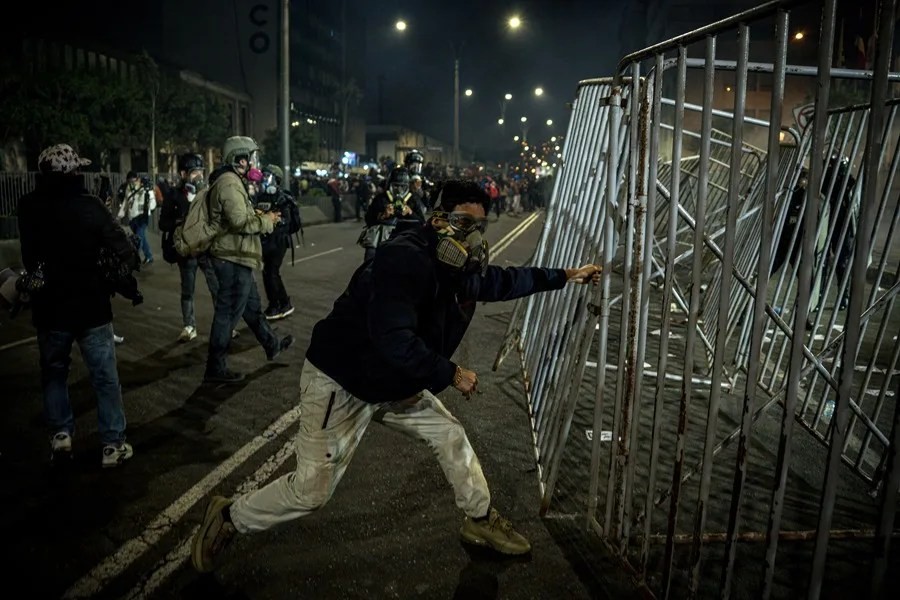
The recent unrest in Lima during the so-called ‘March of Generation Z’ is more than just another protest—it highlights a critical failure of governance and security that resonates far beyond Peru’s borders. On Saturday, officers from Peru’s National Police (PNP) faced violent confrontations with demonstrators protesting against President Dina Boluarte’s government and the Congress. At least one riot police officer suffered first-degree burns from a molotov cocktail, while an unconfirmed number of protesters were injured amid tear gas and rubber bullet volleys.
Why Does This Chaos Matter to America?
While these disturbances unfold thousands of miles away, they exemplify how weak governance and escalating violence can destabilize entire regions—conditions that inevitably ripple into hemispheric security challenges. Instability in Latin America fuels migration pressures on our southern border and threatens economic partnerships vital to American families and businesses.
The protests involved mainly young citizens—students and workers—united under the banner of fighting corruption, organized crime, and violence plaguing their homeland. Yet the violent escalation—from molotov cocktails to police countermeasures using tear gas—illustrates a dangerous spiral where state authority struggles to maintain order without undermining civil liberties.
Accountability Is Non-Negotiable
These events raise pressing questions: How long will governments tolerate disorder that endangers public safety? How can law enforcement balance necessary control tactics without becoming sources of excessive force or impeding press freedom? Notably, journalists covering the protests have faced over a dozen documented attacks, mostly attributed to police actions—a worrying infringement on free press principles essential to democratic accountability.
This crisis underscores an America First imperative: supporting sovereign nations able to enforce rule of law while respecting individual freedoms. Strong borders abroad mean fewer crises at home; effective governance overseas fosters stable trade partners; safeguarding journalists ensures transparency against corruption that breeds instability.
Peru’s turmoil is a cautionary tale reminding us that national sovereignty must be defended not only by guarding borders but by promoting responsible leadership committed to public order and liberty. The successful application of these principles was evident when American leadership prioritized secure frontiers paired with strong judicial institutions—policies worth emulating globally.
For families already stretched thin by economic uncertainty, seeing foreign unrest spiral unchecked is a warning: national security starts with accountable governments everywhere—and especially in neighboring regions. As we watch events unfold in Lima’s streets littered with smoke and injury reports pile up, one cannot help but ask—when will true reform replace chaos?