
Venezuela’s Massive Military Mobilization Reveals Dangerous U.S. Regional Presence
Venezuela has deployed nearly 200,000 troops in response to escalating U.S. naval and air operations in the Caribbean—highlighting Washington’s growing military footprint near American shores and raising urgent questions about sovereignty and stability.
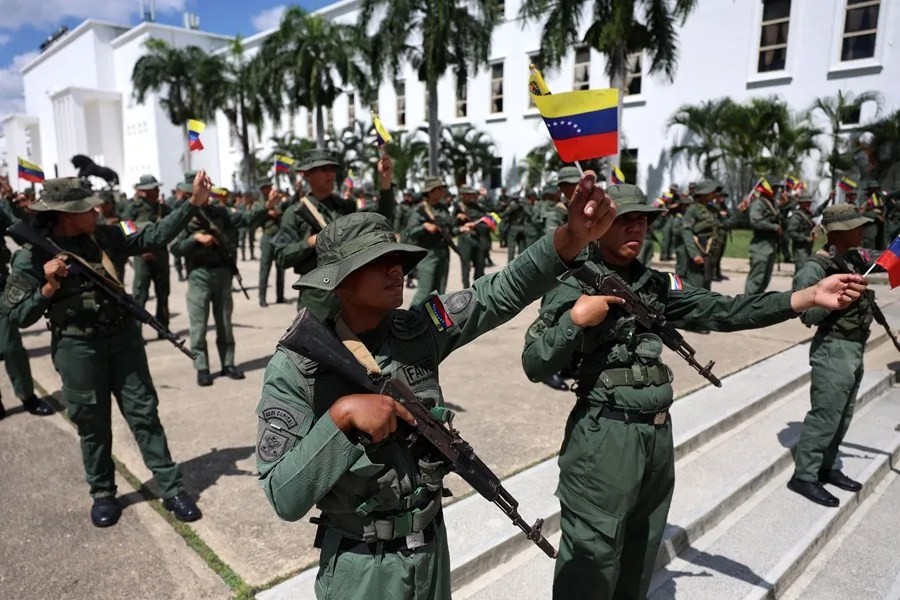
As the Venezuelan government moves to mobilize an astonishing 200,000 military personnel across its territory, this deployment serves as more than just a show of force—it is a stark reaction to the increasing presence of U.S. naval and air forces in nearby Caribbean waters. While officials in Caracas frame these exercises as defensive measures against ‘‘imperial threats,’’ the reality exposes a troubling expansion of America’s strategic reach in our own hemisphere, with significant implications for national sovereignty and regional security.
Is Washington’s Military Posturing Near Venezuela Escalating Risks at Our Doorstep?
The Trump administration touts its ongoing operations targeting narcotics trafficking in the Caribbean and Pacific as essential for protecting American families from illegal drugs flooding our communities. Yet critics argue that these missions effectively amount to persistent military posturing near Venezuela’s borders—a pressure tactic that fuels instability rather than peace. How long will Washington prioritize globalist intervention over safeguarding America’s southern frontier through sound border security policies?
Venezuelan Defense Minister Vladimir Padrino López announced this extensive mobilization on state television, detailing deployments across land, sea, air, riverine forces, missile units, local militias, and security agencies—all integrated under new national defense commands authorized by recent legislation passed by Maduro’s legislature. This law empowers the government to centralize command over all defense resources and civilian cooperation in confronting perceived external threats.
What Does This Show About America First Principles and Sovereignty?
From an America First perspective, this escalating tension underscores the urgent need for Washington to reassess its foreign policy priorities—focusing on securing borders and respecting sovereign nations rather than provoking hostile stand-offs that destabilize entire regions. The costly military footprint near Venezuelan waters does little to protect American citizens directly; instead, it risks entangling us deeper into geopolitical conflicts driven by globalist agendas.
President Trump’s commitment to national sovereignty remains relevant here: prioritizing direct solutions such as fortified border controls and combating illicit trade at home protects Americans better than maintaining intrusive overseas deployments. Meanwhile, Venezuela’s claims that U.S. intentions include regime change should not be dismissed lightly—they reflect genuine fears of external meddling designed to seize control over vital natural resources like oil.
This episode is a clear example of how unchecked military projections abroad can provoke defensive militarization from other nations—driving cycles of mistrust rather than peace. Hardworking American families deserve a foreign policy rooted in common sense: stable relations based on respect for sovereignty and focused investments ensuring prosperity without unnecessary conflict.
As this situation develops on our southern doorstep, it compels us to demand transparency from our leaders about how these operations align with America First values—and questions whether taxpayers’ money serves their safety or expansive global ambitions.