
Venezuela’s Carnival Mask: A Festive Pause Amidst Political Turmoil and Repression
While Venezuelans flood beaches and plazas to celebrate carnival, the nation endures mounting uncertainty, increased militarization, and the ongoing plight of political prisoners—raising urgent questions about freedom and national sovereignty.
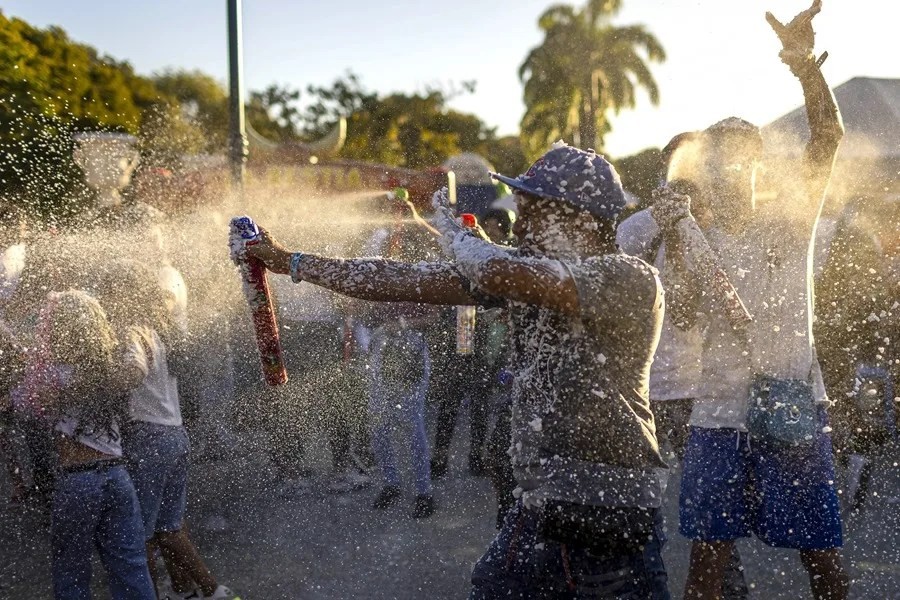
As Venezuelans immerse themselves in vibrant carnival celebrations—filling Caracas’s historic Paseo Los Próceres with laughter, painted faces, and foam sprays—a much darker reality festers beneath the festivities. What appears as a momentary escape from daily struggles masks a country gripped by political instability and tightened government control that threatens the very freedoms Americans hold dear.
Is Festivity Used to Distract from National Crisis?
The January carnival surge saw families and children flocking to parks and public spaces, enjoying food vendors and inflatable pools, all under an unusually heavy security presence. Some 228,000 military and police personnel were deployed nationwide—a near 20% increase from last year’s already substantial figure. Such militarization resonates alarmingly with trends seen when authoritarian regimes use pageantry to veil repression.
This intensified security operation comes just after the controversial capture of President Nicolás Maduro at Fuerte Tiuna—an event signaling deep turmoil in Venezuela’s power structures. Yet instead of transparent governance or dialogue on restoring constitutional order, officials double down on controlling public space during these “Carnavales por la Paz,” proclaiming unity while silencing dissent.
What About Basic Liberties? The Unseen Struggle of Political Prisoners
While music and color fill the streets, relatives of political prisoners face grim realities outside detention centers. Women chained in protest and enduring hunger strikes highlight ongoing human rights abuses ignored amid sanitized carnival coverage. Promised releases remain slow or insufficient, spotlighting a regime more focused on appearances than genuine reconciliation or respect for individual liberty.
For an America committed to national sovereignty and freedom worldwide, Venezuela’s trajectory is a cautionary tale. How long will Washington tolerate such blatant erosion of democracy on its hemisphere’s doorstep? The carnivals should not blind us to the systemic crackdown that jeopardizes regional stability—and ultimately impacts our own border security challenges.
As patriotic citizens champion freedom at home, we must call attention to governments using spectacle to mask oppression abroad. Venezuela’s colorful distractions underline why true peace requires protecting democracy—not policing public joy while jailing opposition voices.