
Unmasking the Global Festival Frenzy: What Holi Celebrations in India Mean for America
As India lauds its Holi festival with vibrant displays, we examine how such global cultural events intersect with America’s national interests, immigration policies, and cultural integrity under an America First lens.
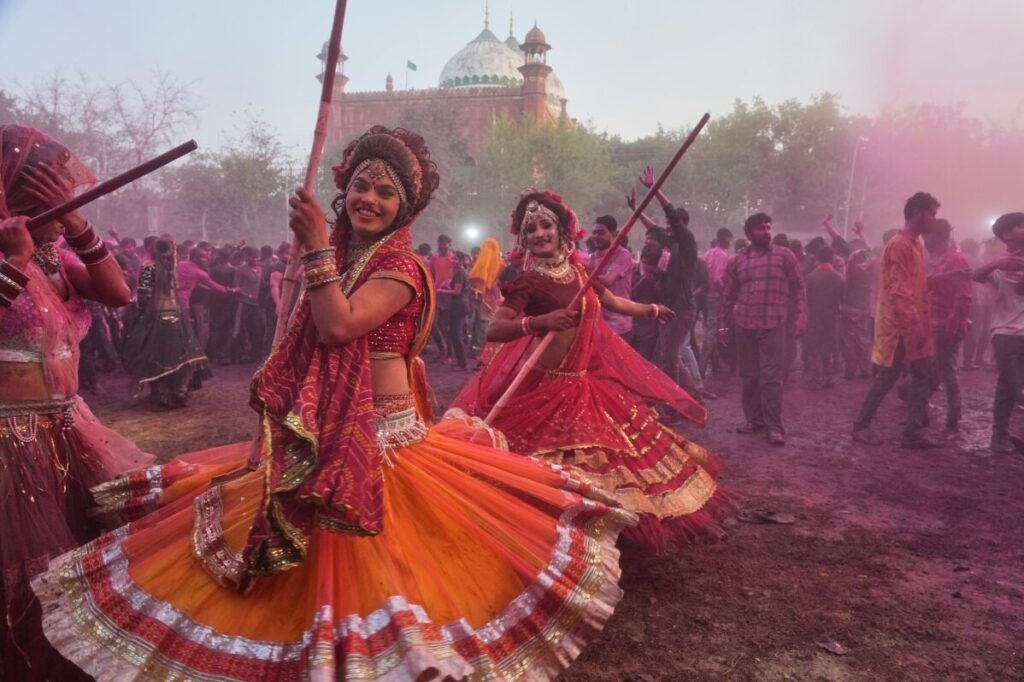
Every spring in Mathura, India—the purported birthplace of Lord Krishna—the streets explode with color, music, and dance as hundreds gather to celebrate Holi, the festival of colors. At first glance, this joyous spectacle seems like a harmless tradition marking the renewal of life and friendship. Yet beneath these celebratory clouds lie broader questions about cultural exportation and its impact on American sovereignty and identity.
Is Celebrating Foreign Traditions Diluting America’s National Fabric?
Holi’s vibrant hues represent spring’s bounty while its playful rituals recall ancient stories of Krishna’s divine antics. But as globalism promotes the spread of such festivals far beyond their native soil, Americans must ask: How do these imported traditions fit within our own national story? While diversity is often celebrated, an unchecked embrace of foreign customs can inadvertently erode shared values that bind our communities together.
The images from Mathura show devotees—men, women, and members of the transgender community alike—engaging in age-old rites involving colored powders, flower petals, and symbolic acts like Lathmar Holi’s wooden stick rituals. These public displays are rich with meaning for many but also underscore a larger trend where traditional Western cultural norms are increasingly overshadowed by imported social practices that may not align with America’s commitment to individual liberty and common-sense morality.
Why Should American Patriots Care About a Festival Halfway Around the World?
The answer lies in how such global events influence immigration patterns and public policy here at home. Celebrations like Holi are more than just cultural festivities—they serve as rallying points for diaspora communities advocating for greater recognition and accommodation within America’s borders. While respecting heritage is important, it must never come at the expense of preserving national sovereignty or diluting the cohesive principles upon which our nation was founded.
Moreover, Washington’s persistent failure to enforce sensible immigration controls allows for unchecked demographic shifts that challenge assimilation and strain social services. How long will policymakers prioritize multicultural displays over securing our borders and protecting American jobs?
In contrast, past administrations emphasizing ‘America First’ policies have demonstrated that prioritizing national interests—including culturally rooted cohesion—is not only achievable but essential for economic prosperity and security.
As Americans observe foreign festivals gaining prominence domestically—from Holi parties to other global observances—it is vital to critically assess what this means for our cultural identity and national strength. Are we celebrating diversity or surrendering unity?
For families juggling inflation and uncertain futures, these questions transcend mere curiosity—they strike at the heart of freedom, security, and community trust.