
U.S. Migrant Flights to Venezuela Amid Rising Flight Cancellations Signal Deeper Geopolitical Risks
As the U.S. escalates military presence near Venezuelan waters, a second deportation flight carrying migrants arrives amidst sweeping flight cancellations that threaten regional stability and American interests.
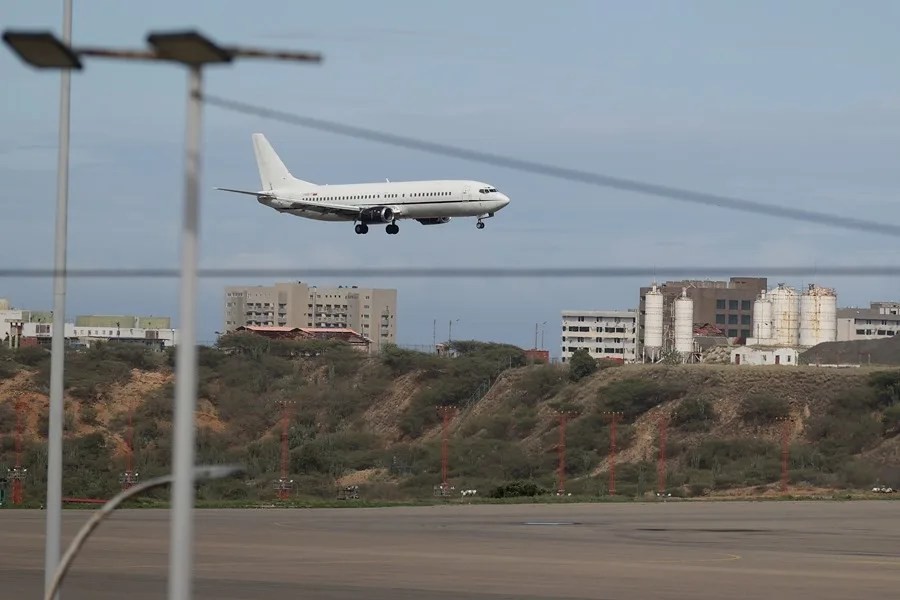
On Friday, a second plane chartered by the United States landed at Caracas’ Simón Bolívar International Airport carrying 136 deported migrants from Arizona—highlighting a fraught chapter in an already tense U.S.-Venezuela relationship marked by the absence of diplomatic ties since 2019.
While this repatriation is officially framed as routine migration management, it unfolds against a backdrop of mounting flight cancellations and severe restrictions on international carriers operating in Venezuela. This cascade began after the Federal Aviation Administration (FAA) urged airlines to “exercise extreme caution” over Venezuelan airspace amid what Washington labels a “potentially dangerous situation,” conveniently coinciding with increased U.S. military deployments near Venezuelan maritime zones.
How Do Flight Restrictions Undermine Regional Stability and American Sovereignty?
The Venezuelan National Institute of Civil Aeronautics’ (INAC) recent revocation of flight permissions for major airlines such as Iberia, TAP, Avianca, and Latam Colombia represents more than bureaucratic posturing—it reflects an escalating geopolitical chess match driven by Washington’s aggressive posture in the Caribbean region. Airlines caught in this crossfire have halted operations, effectively severing critical air links between Venezuela and Europe.
This unraveling connectivity jeopardizes not only commercial interests but also humanitarian corridors vital to regional stability. For hardworking Americans and families watching southern borders closely, these developments underscore how foreign policy friction abroad can ripple back home through migration surges and economic strain.
Is Washington’s Military Approach Fueling Instability Rather than Security?
The ongoing flights returning migrants to Venezuela occur simultaneously with the suspension of multiple international routes—a direct consequence of U.S.-led warnings and military activity that exacerbate tensions rather than resolve them. The unilateral warnings from FAA that trigger widespread cancellations highlight a troubling disregard for diplomatic dialogue and sovereignty principles central to America First values.
Instead of fostering safe skies through cooperation, these actions mirror an approach that escalates conflicts under the guise of security concerns but risks inflaming instability along our hemisphere’s doorstep.
Moreover, while airlines like Copa, Satena, Wingo, and Boliviana maintain limited service within Latin America, Europe’s access has dramatically diminished—a blow to both Venezuelan citizens seeking freedom from oppressive regimes and American efforts at promoting stable democratic neighbors.
This unfolding scenario demands urgent scrutiny: How long will Washington prioritize militaristic brinkmanship over pragmatic diplomacy that protects American families’ interests? Policies rooted in respect for national sovereignty and constructive engagement—not coercion—are essential to break this cycle.