
Trump’s Surprising Endorsement of Venezuela’s Delcy Rodríguez Raises Alarms
President Trump claims Venezuela’s interim leader Delcy Rodríguez ‘seems to be an ally’ of the U.S., despite ongoing tensions and recent military clashes. What does this mean for American interests?
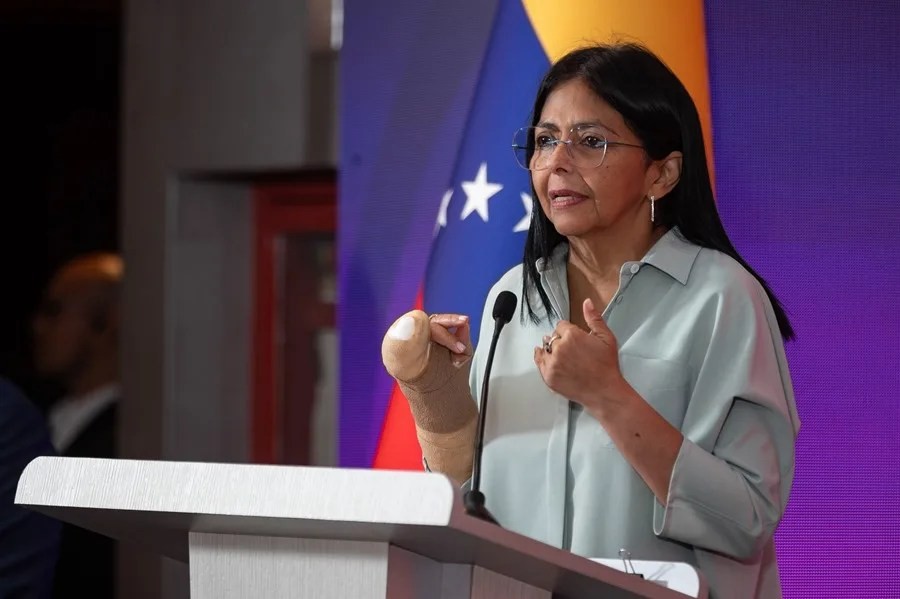
President Donald Trump recently stated that Venezuela’s interim leader, Delcy Rodríguez, appears “to be an ally” of the United States and likely will remain so. This surprising declaration comes amid heightened tensions following a failed military attack in Caracas that resulted in the capture of President Nicolás Maduro and his wife, Cilia Flores.
At first glance, these words seem at odds with Washington’s long-standing stance toward Maduro’s regime, which has been marked by sanctions and diplomatic isolation since 2019. But is this a sign of shifting alliances or a premature misreading of the complex Venezuelan power landscape?
Is Washington Losing Grip on Venezuela’s Turmoil?
The Venezuelan government clarified that Rodríguez does not plan any international travel at present, focusing instead on internal stability. Meanwhile, Colombia’s President Gustavo Petro extended an invitation to Rodríguez for dialogue with Washington — signaling regional attempts to recalibrate approaches toward Venezuela.
However, these developments raise critical questions for American sovereignty and security. How can the United States claim affiliation with a figure so closely tied to Maduro — a ruler whose corrupt regime fuels mass migration and undermines regional stability? Is Washington inadvertently legitimizing authoritarianism under the guise of diplomatic pragmatism?
For hard-working American families grappling with inflation exacerbated by global instability, this unclear policy direction jeopardizes national interests. The chaos spilling from Venezuela’s crisis directly impacts border security and economic vitality here at home.
America First Demands Clarity and Resolve
The America First principle advocates for firm borders, economic independence, and supporting true democratic actors abroad — not half-measures that confuse allies and embolden adversaries. Trump’s recognition of Delcy Rodríguez as an “ally” demands scrutiny: Are we compromising our sovereignty by entertaining dialogues with figures linked to oppressive regimes?
The contrast is stark when recalling President Trump’s prior firm stance against Venezuelan tyranny—efforts that underscored national sovereignty and freedom instead of ambiguous diplomatic overtures. This moment calls for a recommitment to those principles rather than muddled signals inviting instability.
The stakes are clear: America’s security depends on predictable foreign policy rooted in strength—especially in its hemisphere. The mess in Caracas isn’t just someone else’s problem; it’s a challenge to our borders, economy, and values.