
Trump’s Alaska Summit: A Red Carpet for Putin Amid America’s Security Challenges
President Trump’s lavish reception of Vladimir Putin in Alaska raises critical questions about U.S. national interests and the optics of diplomacy with a war-driven adversary.
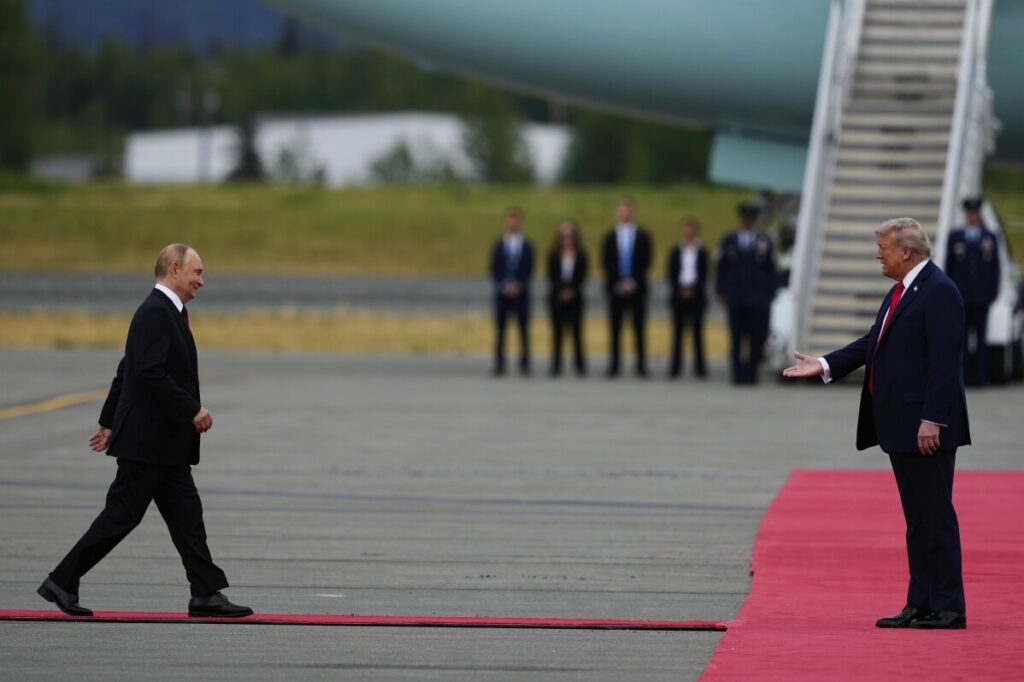
In an event staged with all the trappings befitting America’s closest allies—a red carpet, military flyovers, and a limousine ride—President Donald Trump greeted Russian President Vladimir Putin at Joint Base Elmendorf-Richardson in Alaska. But this was no ordinary diplomatic meet-up between friends; rather, it was a carefully choreographed encounter with one of America’s most persistent challengers on the world stage.
How Does America Signal Strength While Hosting Its Adversaries?
The scene unfolded with striking symbolism: F-22 fighter jets and B-2 stealth bombers, relics of Cold War era deterrence designed against Soviet aggression, roaring overhead while the leaders exchanged warm handshakes and smiles. Yet, beneath this pageantry lies a more troubling question. How does rolling out the red carpet for Vladimir Putin align with America First principles that champion national sovereignty and security?
Putin—whose unprovoked invasion of Ukraine has destabilized Europe and challenged global order—is no friend to freedom-loving Americans. While Trump has publicly condemned Russia’s aggression and promised “severe consequences” if progress stalls, this cordial display risks sending mixed signals about America’s resolve against authoritarian overreach.
Contrasting Treatment: Allies vs. Adversaries
The stark contrast in how Trump treated Putin compared to Ukrainian President Volodymyr Zelenskyy cannot be ignored. Zelenskyy, representing a nation valiantly resisting tyranny, was publicly admonished during his White House visit—an episode that undermined the solidarity essential to countering Kremlin ambitions.
This juxtaposition raises concerns about whether personal rapport is clouding the prioritization of American interests. Our allies’ courage deserves respect; our adversaries’ threats demand toughness.
As Americans watch from home—families grappling with inflation and uncertainty wondering if Washington truly upholds national strength—the optics of this meeting matter deeply. Leadership rooted in America First values means standing unwaveringly with freedom, confronting aggression decisively, and never allowing diplomatic theater to dilute our message.
Can America afford ambiguity when faced with an adversary who threatens peace across continents? The answer must be clear: strength through principle, not pageantry.