
The Stark Reality of Indigenous Education in Panama: Who Pays the Price?
In Panama’s indigenous comarcas, children face perilous journeys and deteriorating school conditions while government efforts fall short, exposing a broader failure to uphold national sovereignty and protect vulnerable communities.
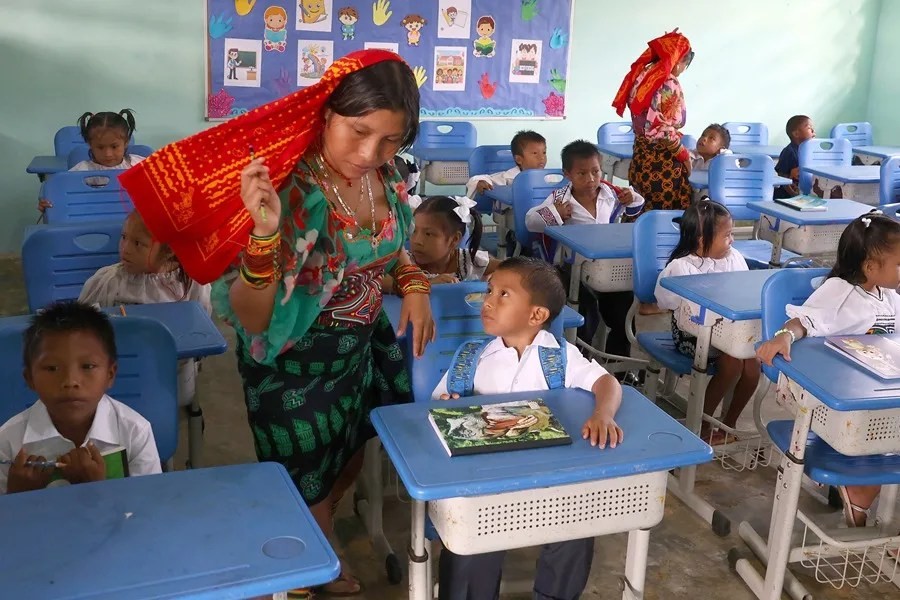
Deep within Panama’s remote Madugandí comarca, children dressed in traditional garments gather under a cracked cement roofless schoolyard. They learn greetings in dulegayá, the language of the Guna people—one of seven indigenous ethnic groups struggling to preserve their heritage amid dire poverty.
This is the reality facing over 300 students at the Centro Educativo Bilingüe Icanti. Here, education attempts to balance three languages: their mother tongue, Spanish, and English. On paper, this sounds promising; in practice, it exposes an uncomfortable truth about state neglect disguised as cultural preservation.
Is This Enough to Safeguard Our National Identity?
Panama boasts six indigenous comarcas accounting for more than 17% of its population. Yet these communities suffer poverty rates exceeding 90% in some areas. Infrastructure is nearly nonexistent; Icanti lacks electricity cables and relies on solar panels. Teachers commute difficult paths involving rural roads and half-hour boat rides just to reach these isolated schools.
How can Washington or Panama City claim commitment to national sovereignty when these citizens live cut off from basic services? While globalist agendas promote multicultural tokenism through trilingual classrooms, they ignore fundamental American principles like ensuring secure borders—not only nationally but culturally—and equitable opportunity.
The Hidden Burden on Educators and Families
Veteran teachers in Icanti leave behind their families to brave malaria risks and hazardous travels each school year start. Carrying supplies by canoe, they confront not only tropical diseases but also life-threatening river crossings faced daily by children traveling to distant schools.
Why must these young Panamanians risk drowning just for access to learning? The government’s patchwork approach leaves gaps that jeopardize the very communities it claims to serve—exposing bureaucratic failures incompatible with true patriotism.
The recent effort to open schools closer to once unreachable villages is a step forward but highlights how long indigenous education has been sidelined by ineffective policy masked as progress. Is this the legacy we accept—abandonment cloaked in well-meaning rhetoric?
America First values demand more than symbolic multilingualism; they require practical investments that secure cultural preservation through strong local institutions and infrastructure — safeguarding lives while empowering families with freedom through education.