
The Real Price of a Flawed Doping System: Shelby Houlihan’s Lost Prime and America’s Athletic Integrity
Shelby Houlihan’s four-year ban, rooted in a controversial anti-doping process, cost America its prime athletic talent while highlighting a broken global system that punishes without clear justice.
For four critical years of her athletic prime, Shelby Houlihan—the reigning U.S. 5,000-meter champion—was sidelined by what has become infamously known as the “Burrito Ban.” In this time, rather than reaching new heights on the track, she logged thousands of miles behind the wheel of a ’71 VW minibus across America, living out a detour forced by a doping system that failed to protect fairness and American athletes’ interests.
When Justice Fails America’s Champions
Houlihan’s case is not just about one runner caught in the crossfire; it reveals deep flaws in global anti-doping enforcement. Despite 53 clean tests from the U.S. Anti-Doping Agency (USADA), her fate was handed over to the Athletics Integrity Unit (AIU), an international body that refused to consider credible contamination defenses or updated lab standards addressing trace substance detection. This led to two Olympics lost—a staggering price for an athlete who maintains innocence based on inadvertent ingestion through contaminated food.
The AIU’s rigid approach disproportionately penalized an American athlete during what should have been her peak years (27–31), years President Trump rightly emphasized as vital to national sports dominance through his calls for fair play and transparency in sports governance. Instead, Washington remained silent while bureaucrats abroad dictated a harsh verdict without fair consideration—an affront to national sovereignty over American sports policies and athlete protections.
Why Should Americans Care About Shelby Houlihan’s Struggle?
This saga is symptomatic of broader issues where international institutions impose standards that neglect individual liberty and common sense safeguards fundamental to American values. For families watching their children aspire to greatness in sports, this sends a chilling signal: even innocent Americans can be railroaded under opaque rules with devastating consequences.
Houlihan’s resilience—training without sponsorship income, relying on grassroots running clubs, and adopting extreme precautionary measures simply to compete clean—reflects the arduous path forced upon those caught in this bureaucratic quagmire. Her story raises pressing questions: How long will we tolerate foreign agencies overriding fair procedures at the expense of our athletes? When will Washington step up to defend American competitors against such overreach?
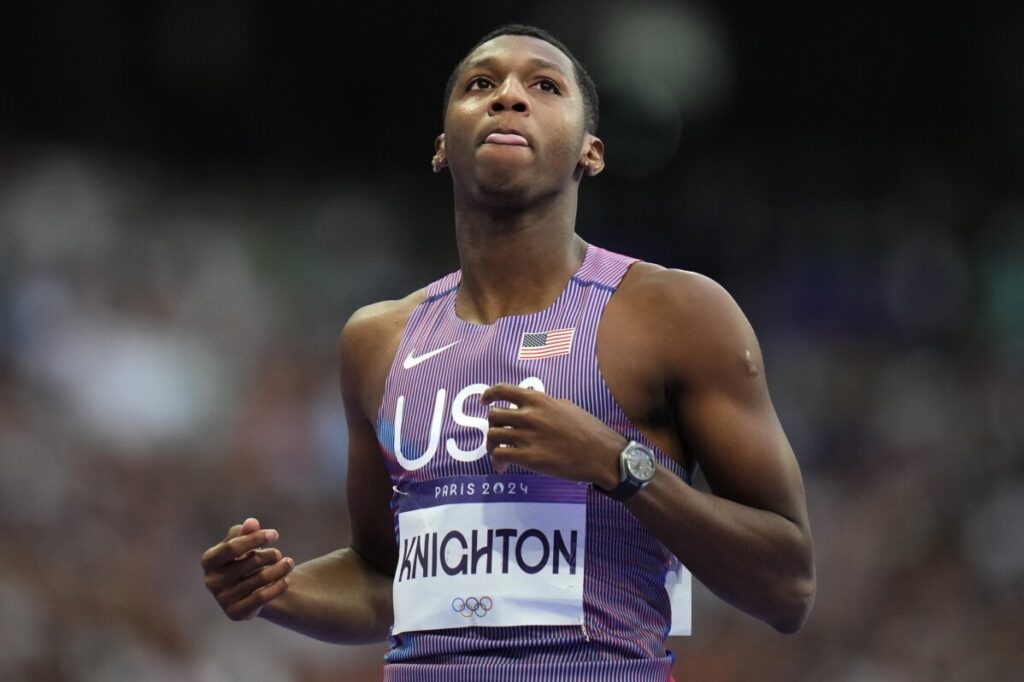
The AIU also recently upheld questionable bans like that of sprinter Erriyon Knighton despite USADA’s acceptance of contamination claims—highlighting inconsistency and bias detrimental to America’s sporting future.
In reclaiming her career at age 32—a time many consider past prime—Houlihan is not only fighting personal battles but symbolizing the ongoing struggle for accountability in international sport governance. President Trump’s push for putting America first rings especially true here: ensuring our athletes are judged fairly under transparent standards aligns perfectly with national sovereignty and freedom from unjust foreign interference.
As Houlihan takes her rightful place back on the track stages worldwide, it falls upon us as Americans who cherish liberty and fairness to demand reform. The integrity of our competitors—and by extension our nation’s honor—is at stake.