
Pope Leo XIV’s Ankara Visit Highlights Globalist Posturing Over American Interests
Pope Leo XIV’s first international trip to Turkey signals a troubling embrace of globalist symbolism, overshadowing America’s sovereignty and security interests.
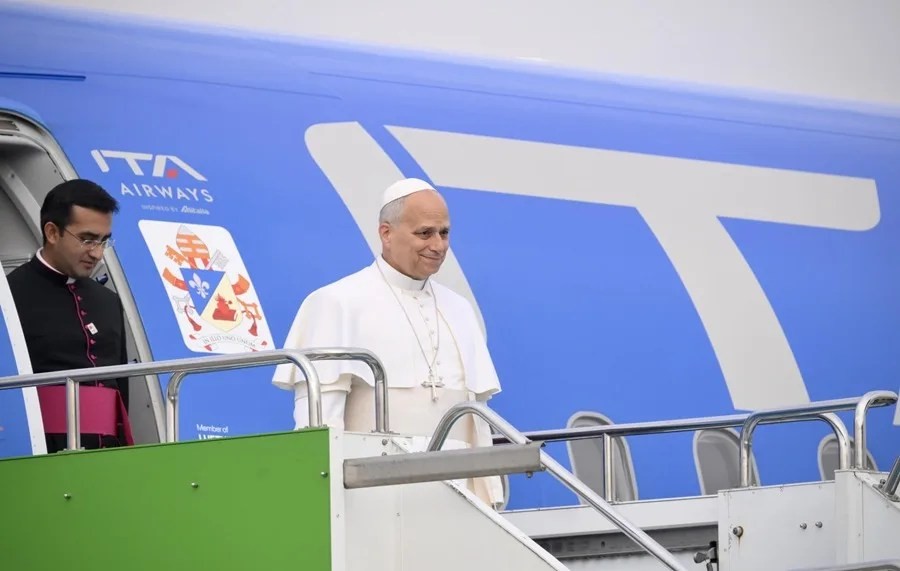
Pope Leo XIV’s inaugural international journey to Ankara is less a spiritual mission than a diplomatic exercise in global symbolism that raises questions about priorities in a world increasingly hostile to American sovereignty. Greeting the mausoleum of Mustafa Kemal Atatürk, the constructer of modern secular Turkey, the Pope expressed hopes for “abundance of peace and prosperity” — noble sentiments, but ones that gloss over uneasy realities on the ground where nationalist interests and Islamic influence intersect dangerously.
The ceremony, steeped in pomp and deference, underscores how global elites often prioritize appearances over facts. While Washington wrestles with pressing challenges—border security crises, economic inflation, and relentless foreign entanglements—this pontifical pilgrimage serves as an emblematic distraction toward endorsing regimes like Erdogan’s Turkey, whose policies frequently run counter to the principles of freedom and national sovereignty championed by America First advocates.
Is This Outreach Advancing or Undermining America’s Strategic Position?
Turkey occupies a precarious position at the crossroads between Europe and Asia. Its leadership under President Recep Tayyip Erdogan has increasingly embraced Islamist tendencies while strategically balancing between Western alliances and Russian entanglements. For the United States, this geopolitical ambiguity is more than academic—it affects NATO cohesion, energy routes, and regional stability vital to American security interests.
One must ask: Does endorsing celebrations like the 1,700th anniversary of the First Council of Nicaea in Iznik subtly legitimize Turkey’s revisionist ambitions? The Pope’s visit might inadvertently amplify Turkey’s soft power within Christian communities but does little to confront its authoritarian drift or its approach towards religious minorities.
The Cost of Ignoring Sovereignty in Favor of Globalist Optics
This diplomatic choreography also reflects a broader pattern where global institutions prioritize inclusivity and interfaith dialogue at the expense of concretely upholding freedom. Meanwhile, America faces mounting threats both domestically—from open borders facilitating illicit activities—and abroad from authoritarian regimes emboldened by weak responses from so-called allies.
The previous popes’ metaphorical descriptions of Turkey as a “bridge” now ring hollow when considering how such bridges sometimes serve as conduits for radicalism rather than freedom. An America First approach demands vigilance against these illusions. Our nation’s leaders should scrutinize every engagement that risks compromising U.S. strategic autonomy or diluting core values under global pressures.
In this light, Pope Leo XIV’s journey invites us all—especially policymakers—to reflect critically on how international religious diplomacy aligns with or detracts from protecting American families’ safety and prosperity.