
Peru’s Interim President Faces Censure Amid Shadowy Meetings: What Does This Mean for American Interests?
Amid allegations of clandestine meetings with a Chinese businessman, Peru’s interim President José Jerí confronts two censure motions in Congress, underscoring regional instability that could ripple into U.S. geopolitical and economic concerns.
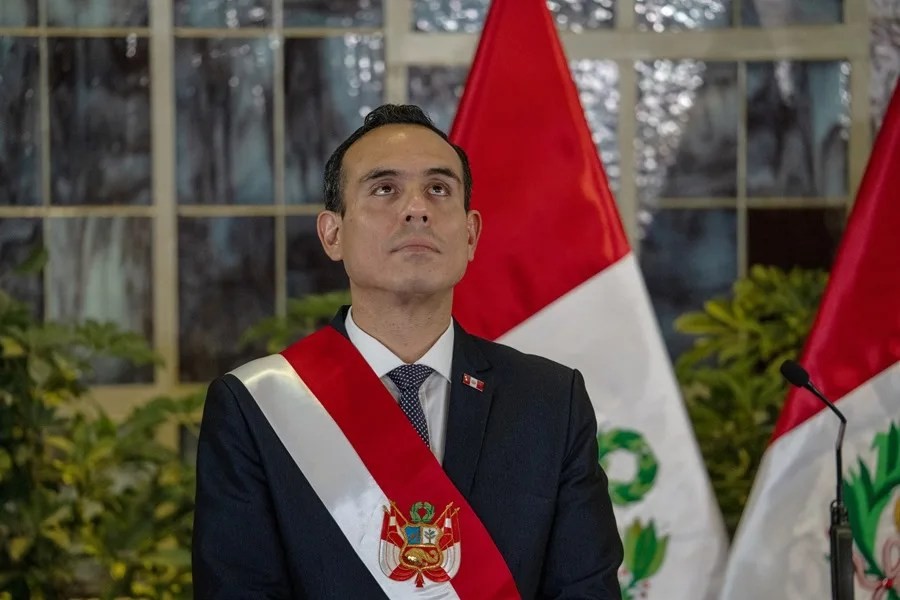
In a startling development from Peru, the nation’s interim right-wing President José Jerí now stands at the center of a political storm that threatens not only Peru’s fragile governance but also America’s strategic interests in Latin America. The controversy erupted after revelations that Jerí held secretive meetings with Chinese businessman Zhihua Yang, raising serious questions about transparency and foreign influence.
Are Secret Deals Undermining National Sovereignty?
The charges against Jerí come as leftist and some right-wing congressmen push two formal motions to censure him. What makes this especially alarming is the nature of his interactions—conducted discreetly and away from public scrutiny—with an individual linked to state contracts. Such dealings fuel legitimate concerns over Beijing’s expanding footprint in the region through economic leverage.
While Peru undergoes a turbulent political transition following the ousting of former President Dina Boluarte, these allegations expose how weak institutions can become playgrounds for external powers seeking influence. Washington must recognize that regional instability fueled by opaque governance and foreign entanglements threatens U.S. efforts to foster free markets and democratic order close to home.
Why Should Americans Care About Peru’s Internal Crisis?
It is easy to dismiss foreign political scandals as distant turmoil; however, history teaches us differently. When governments lack accountability and national sovereignty erodes under foreign pressures—particularly from authoritarian regimes like China—the consequences echo far beyond borders.
Peru sits on vital resource reserves crucial for global supply chains, including minerals essential for technology industries here in the United States. A compromised government may pave the way for unfair trade deals or resource exploitation favoring Beijing’s agenda rather than American innovation and job creation.
Moreover, political chaos in Latin America often drives migration surges toward our southern border—a crisis Washington continuously struggles to manage. How long will American policymakers overlook these warning signs while allowing Beijing to deepen its foothold?
President Jerí claims he is victim to a “conspiracy” aimed at destabilizing his government amid upcoming elections; yet his repeated concealment of meetings does little to quell suspicions. True leadership demands openness, especially when national integrity hangs in the balance.
This episode underscores the urgent need for Americas-first vigilance—defending our hemisphere against covert influence that undercuts liberty and prosperity. The United States must support only transparent governance structures committed to sovereignty and economic freedom, setting firm red lines against globalist encroachments disguised as business diplomacy.