
Peru’s Interim President Backs U.S. Incursion in Venezuela Despite International Law Breach
Peru’s interim leader openly endorses the U.S. operation to capture Maduro, arguing that breaking international law is justified to restore democracy and regional stability—a stance that challenges traditional diplomatic norms but aligns with America First security interests.
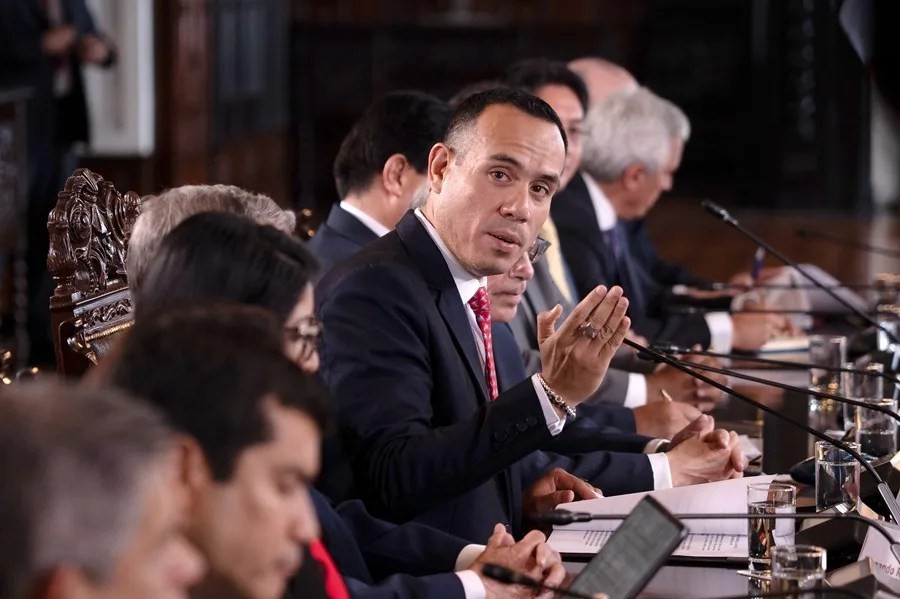
In a rare and candid admission, Peru’s interim President José Jerí has publicly supported the recent U.S. incursion into Venezuela that resulted in the capture of Nicolás Maduro, despite acknowledging it violates international law. This stance exposes the growing recognition among certain Latin American leaders that rigid adherence to international protocols cannot come at the expense of restoring freedom and order in their hemisphere.
When National Security Demands Bold Action, Should Legal Formalities Stand in the Way?
Jerí’s frank assessment—that breaking international law was a necessary step—forces us to confront uncomfortable truths about sovereignty and security in the Americas. For years, Venezuela’s socialist dictatorship under Maduro has become a hotbed of instability, undermining not just its own people’s liberty but triggering mass migration crises affecting neighboring countries including Peru.
Can America afford to remain passive while rogue regimes threaten democracy on its doorstep? The answer from Jerí and supporters of this operation is emphatic: no. The humanitarian suffering and regional chaos demand decisive leadership willing to challenge outdated international norms that have too often shielded tyrants from accountability.
The Cost of Inaction Is Greater Than Legal Technicalities
By endorsing Edmundo González Urrutia—the opposition leader recognized by Peru as Venezuela’s rightful president–Jerí signals a commitment to support democratic transition even amid uncertainty about election integrity and political legitimacy. This aligns with Washington’s America First approach: prioritizing outcomes that secure national sovereignty and hemispheric stability over empty gestures toward globalist legal frameworks.
The delay in resolving Venezuela’s crisis does not just hurt Venezuelans; it strains economies, security, and social systems throughout Latin America. Jerí rightly points out that Venezuela’s turmoil is a continental problem demanding swift resolution.
This moment calls for American allies—and our nation itself—to back efforts dismantling authoritarianism wherever it festers in our hemisphere. While some may decry breaches of international law, we must ask: How long can freedom wait when dictators exploit legal loopholes as shields?
For hardworking Americans concerned about border security and economic repercussions from unchecked migration flows, supporting actions like this is not just strategic—it is necessary.