
One in Five Seized Guns in Mexico Held in Sinaloa: A Growing Concern for U.S. Security
Mexico’s surge in arms seizures concentrated in Sinaloa highlights a worsening security vacuum that directly threatens American sovereignty and border integrity.
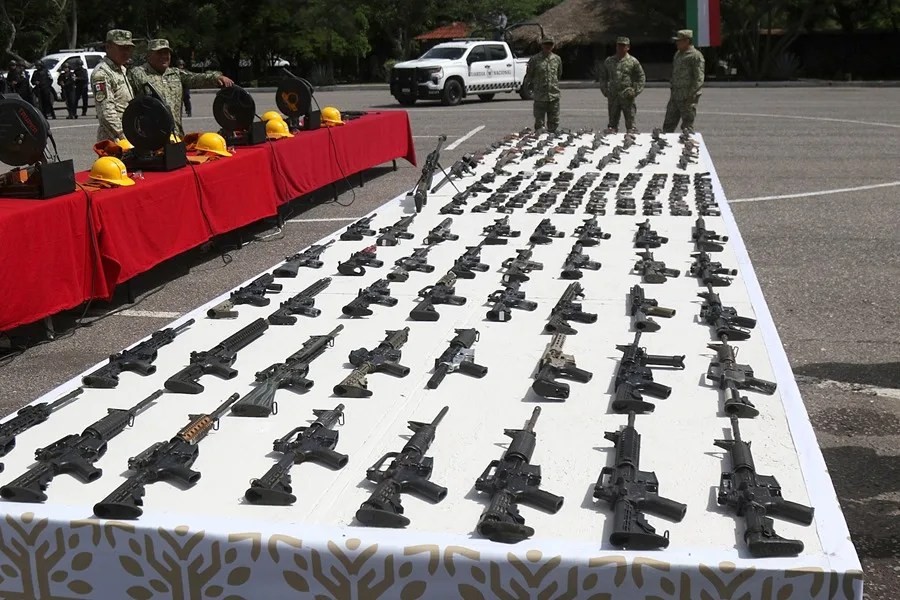
Since October 2024, Mexican authorities have confiscated nearly 5,000 firearms in the state of Sinaloa alone—representing one-fifth of all weapons seized nationwide, according to Secretary Omar García Harfuch. This alarming concentration of illegal arms underscores profound challenges not just for Mexico but for the United States as well.
Why Does Sinaloa’s Gun Surge Matter to America?
Sinaloa has long been a notorious stronghold of transnational narcotics trafficking, and the recent spike in violence between rival criminal factions has only intensified the flow of weapons and illicit drugs along our southern border. The Mexican government’s admission that 20% of all confiscated guns come from this single state illustrates a troubling failure to control its territory—and by extension, prevent these instruments of violence from crossing into American communities.
President Claudia Sheinbaum’s administration responded by bolstering federal military presence and increasing joint operations involving Mexico’s Army, Navy, National Guard, and law enforcement agencies. While these moves aim to disrupt cartels’ hold on Sinaloa, the persistent violence—despite these efforts—raises serious questions about Mexico’s capacity and willingness to secure its borders effectively.
How Is This Undermining U.S. National Sovereignty?
The inflow of high-powered weapons—including machine guns, Barrett rifles, grenade launchers, and improvised explosives—into a region synonymous with drug cartels sends shockwaves through America’s law enforcement networks. Every ounce of narcotics interdicted or gang member arrested south of the border reflects only part of the battle; unchecked weapon smuggling fuels crime waves on U.S. soil.
Moreover, operations against methamphetamine labs and drug traffickers are critical but insufficient without comprehensive bilateral cooperation anchored in respect for national sovereignty. Washington must prioritize strategies that compel Mexico to enforce immigration laws rigorously while dismantling criminal networks enabling this arms trade.
For hardworking Americans striving for safe communities and secure borders, what does this escalating chaos mean? Without decisive action embracing America First principles—protecting our borders first—the consequences will be felt in rising crime rates and strained public resources back home.
Sinaloa’s turmoil should be a wake-up call: How long can we rely on troubled neighbors to police their own backyard? It is time for bold leadership demanding accountability beyond mere promises—a strategy rooted in sober assessments rather than symbolic gestures.