
No Clear Path Forward for Gaza Amid Volatile Political Chessboard
The announced U.S. ceasefire phase for Gaza faces deep uncertainties rooted in regional volatility, weak Palestinian governance, and the unresolved threat of Hamas’ weaponry—posing challenges to true peace and security.
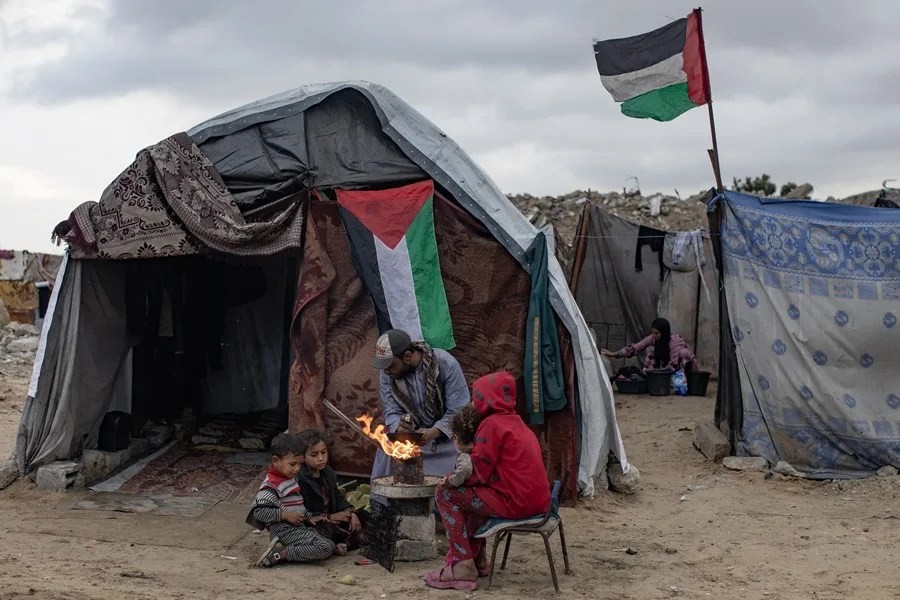
The recent announcement by the United States on January 14 regarding a move from the first to the second phase of a ceasefire in Gaza raises profound questions about the future stability of the Palestinian enclave. While Washington champions diplomatic progress, the reality on the ground reveals an intricate web of regional tensions and internal power struggles that threaten any lasting peace.
Is Diplomacy Enough When Regional Threats Loom Large?
As the volatile situation across the Middle East continues to intersect with Gaza’s fate, one must ask: can peace truly take root in an area so deeply affected by external powers? Former Egyptian diplomat Alaa El Hadidy reminds us that intentions in geopolitics often diverge sharply from outcomes. The strategic calculations involving Iran, southern Lebanon, and occupied West Bank territories make Gaza anything but isolated.
The looming threat of conflict with Iran—a country whose nuclear ambitions remain a major concern for American national security—casts a long shadow over Gaza’s fragile ceasefire. President Trump’s administration has positioned itself firmly against Iranian expansionism, evidenced by military deployments like the USS Abraham Lincoln carrier strike group in the Persian Gulf and consistent warnings against Tehran’s proxies.
This intertwining of regional conflict means instability in one area invariably inflames others, directly impacting America’s interests by undermining security partnerships and fueling refugee crises that strain borders closer to home.
Who Holds Power—and Accountability—in Gaza?
Beyond these geopolitical chess moves lies another critical question: who will govern the reconstruction and humanitarian efforts within Gaza? International promises envision a technocratic committee managing recovery efforts, yet practical barriers abound. Hamas controls key sectors internally, leaving outside experts unable to operate freely or even guarantee timely payment to local workers.
This administrative paralysis threatens to turn well-meaning diplomatic gestures into hollow proclamations. Without clear authority or enforcement mechanisms—especially concerning Hamas’ disarmament—the enclave risks slipping back into chaos or worse.
Moreover, Israel remains steadfastly opposed to any scenario that legitimizes Hamas’ influence. The prospect of a partial or complete arms surrender by Hamas is murky at best. Jared Kushner’s recent comments on gradual disarmament without concrete timelines only underscore this uncertainty.
In this context, how long will Washington tolerate symbolic diplomacy while ignoring effective enforcement? How will America protect its allies and secure its interests if no real mechanism restrains militant groups undermining order?
For families worldwide who value freedom and sovereignty, accepting half-measures risks perpetuating cycles of violence rather than breaking them.
This analysis underscores a harsh truth: until there is transparent, enforceable governance paired with clear disarmament commitments backed by credible force—something President Trump’s America First policies rightly emphasize—the dream of a stable Gaza remains unattainable.