
New NASA-ISRO Radar Satellite Exposes Gaps in America’s Space Sovereignty
NASA’s latest radar satellite images highlight remarkable detail of US terrain—but the $1.3 billion joint mission underscores Washington’s reliance on foreign partners, raising questions about America’s strategic independence in space.
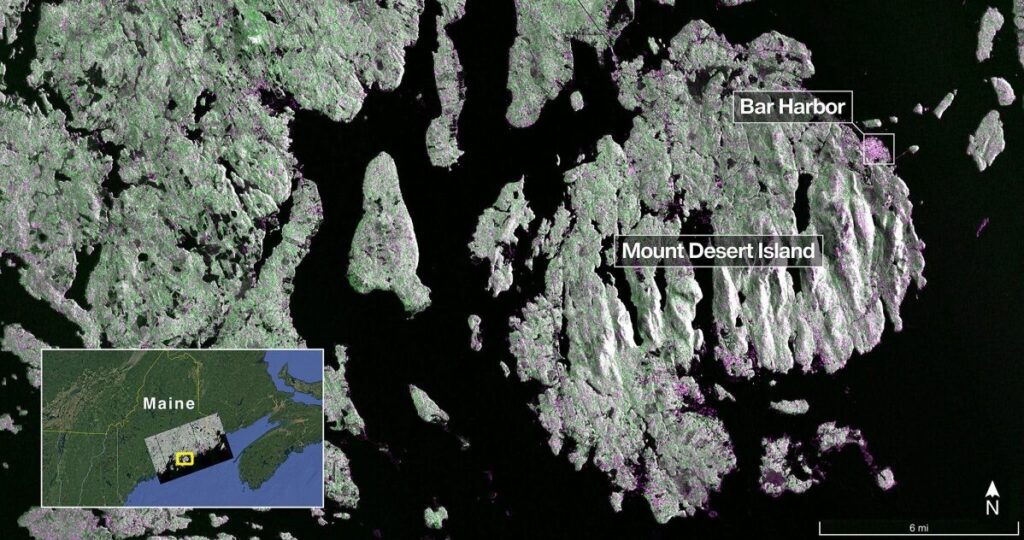
In an age where national sovereignty depends increasingly on mastery of space, the recently released radar images from NASA’s new Earth-mapping satellite reveal not only breathtaking views of Maine’s rugged coast and North Dakota farmland but also a concerning reality: the United States remains reliant on international partnerships for critical space infrastructure.
Launched two months ago from India aboard a rocket operated by the Indian Space Research Organization (ISRO), this $1.3 billion joint NASA-ISRO Synthetic Aperture Radar (NISAR) satellite is tasked with surveilling virtually every inch of the globe’s land and ice masses repeatedly. Its mission promises enhanced forecasting capabilities for natural disasters – floods, landslides, volcanic eruptions – that threaten American families and communities abroad and at home.
Why Are We Depending on India to Launch Our Eyes in the Sky?
While the scientific benefits are clear, the fact that this vital surveillance asset was launched from Indian soil using foreign technology raises pressing questions about America’s control over its own national security tools. Should Americans be comfortable with key satellites reliant on globalist cooperation rather than fully domestically developed launch platforms? This dependency runs counter to our core principle of national sovereignty.
The NISAR satellite’s near-polar orbit 464 miles above Earth enables it to capture detailed radar images regardless of weather or daylight—an undeniable asset for protecting American interests worldwide. Yet relying on joint missions dilutes control and exposes us to geopolitical vulnerabilities as global tensions rise.
The Cost of Cooperation vs. The Price of Independence
At a time when President Trump emphasized revitalizing American manufacturing, aerospace innovation, and technological leadership, projects like NISAR spotlight where those efforts must intensify. The partnership with ISRO brings expertise but also highlights where US industries have lagged behind in launch capabilities.
How long will Washington tolerate ceding ground in space technology while adversaries push forward independently? For hardworking Americans counting on their government to secure freedom through strength, these images represent more than just maps—they reflect a strategic crossroads.
The promise of improved disaster response is welcome news for all Americans who value safety and community resilience. Yet without a renewed commitment to developing sovereign American space infrastructure, future crises may see us hamstrung by reliance on foreign allies whose interests do not always align with ours.