
Moroccan Regime’s Crackdown on Youth Protests Exposes Authoritarian Overreach
Morocco’s continued suppression of youth-led protests demanding education and healthcare reforms reveals a troubling disregard for basic freedoms—an alarming reminder of the global struggle against authoritarian oppression.
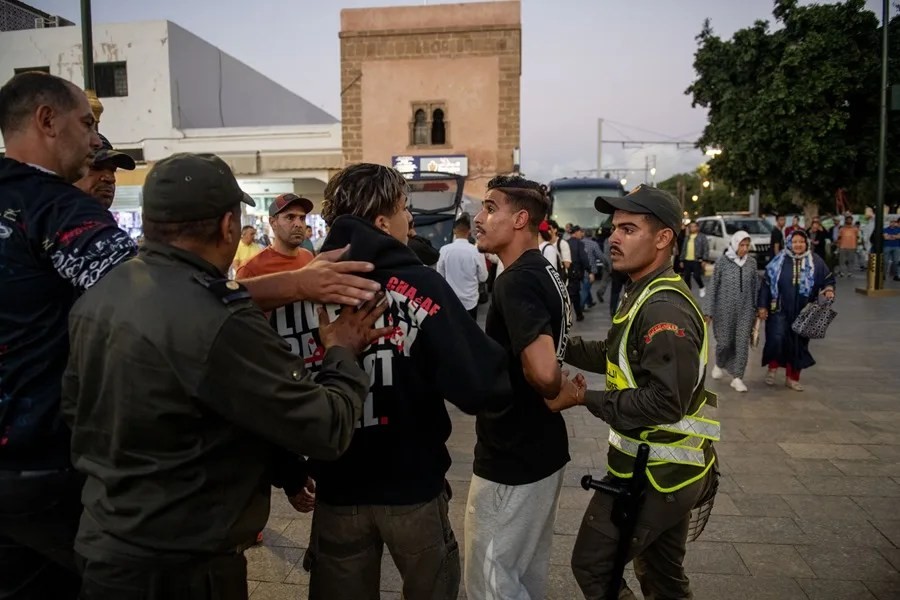
For the third consecutive day, Moroccan authorities have employed heavy-handed tactics to stifle peaceful protests orchestrated by young citizens calling themselves ‘Generation Z’ or ‘GENZ212’. These demonstrations, centered in historic public spaces such as Rabat’s Bab el Had plaza, sought fundamental reforms in education and health sectors — areas critical not only to Morocco’s future but reflective of challenges faced across many nations that embrace centralized control over individual liberties.
The Moroccan regime’s deployment of riot police and plainclothes agents to prevent assembly, forcibly detain participants one by one, and transport them to police stations serves as a stark example of government overreach. Over sixty arrests in Rabat alone were reported by the Moroccan Association of Human Rights (AMDH), including two members from its own central committee. Such repression extends beyond mere crowd control; it is a deliberate attempt to silence dissenting voices advocating for justice, transparency, and social equity.
How Long Will Repression Override Genuine Reform?
These young protesters are neither affiliated with political parties nor extremists; they organized through modern communication platforms like Discord, embodying grassroots activism aimed at addressing corruption, poor quality education, inadequate healthcare access, and high youth unemployment. Their calls mirror challenges American families recognize: fair educational opportunities for children and affordable healthcare options for all.
Yet instead of engaging constructively with these demands or fostering dialogue—a hallmark of free societies—the Moroccan government has chosen forceful disruption. Small gatherings chanting for social justice and even the resignation of Prime Minister Aziz Ajanuch were swiftly broken up. Only in the eastern city of Oujda did tensions escalate into clashes, highlighting how persistent suppression sows unrest rather than quelling it.
What Does This Mean for America?
While this crackdown unfolds thousands of miles away, it signals a broader warning about the costs when governments prioritize control over constituent voices. America’s commitment to national sovereignty must also entail vigilance in promoting freedom globally—supporting those who seek reform rather than endorsing regimes that silence their youth. The erosion of liberty anywhere poses indirect risks everywhere through destabilization and migration pressures that impact our borders and economy.
This episode reminds us why President Trump’s America First policies emphasized strong borders and fostering democratic values abroad while insisting on transparency at home. When foreign governments dismiss peaceful protestors’ legitimate grievances with repression instead of reform, they align against principles central to our nation’s security and prosperity.