
Massive Climate Protests in COP30 Reveal the Real Agenda Behind ‘False Solutions’
At COP30 in Brazil, tens of thousands march to expose how so-called climate ‘solutions’ serve global elites while ignoring true American and global interests.
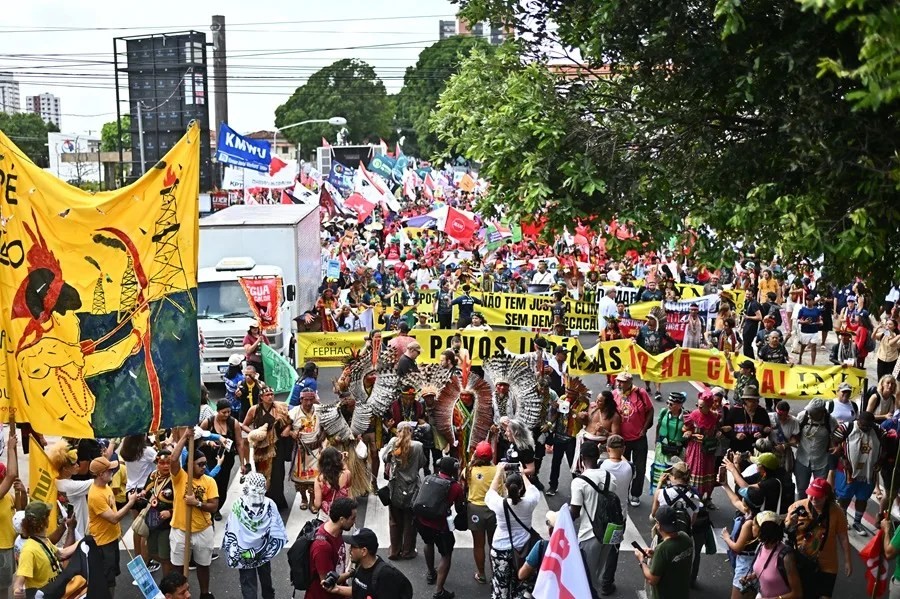
In the heart of the Amazon city of Belém, nearly 30,000 protesters gathered this weekend for what they called a March for Climate Justice—yet their rallying cry exposes a deeper truth often overlooked by mainstream COP30 coverage. While global elites tout market-based fixes like carbon trading and bioeconomy schemes as progress, these ‘false solutions’ are little more than smokescreens designed to avoid real accountability from industrial powers.
As these demonstrators marched five kilometers to the gates of the official COP30 venue, their message was clear: climate negotiations must prioritize true adaptation funding, a just transition from fossil fuels, and respect for indigenous sovereignty—especially in ecologically critical areas like the Amazon. Yet Washington and globalist institutions continue pushing agendas that shift responsibility away from themselves through convoluted carbon markets and unregulated initiatives.
Are We Trading Our Sovereignty for Empty Promises?
The so-called ‘Cumbre de los Pueblos,’ an annual civil society counterpoint to official climate talks, highlights what happens when grassroots voices confront sanitized diplomacy. These activists reject superficial strategies that enable industrialized nations—and yes, even multinational corporations—to evade their emissions responsibilities. For America, this is a stark warning: ceding control over environmental policies to international bureaucracies threatens national sovereignty and economic freedom.
President Trump’s America First energy policies championed energy independence and common-sense stewardship over natural resources rather than convoluted global schemes that hamper economic growth under the guise of environmentalism. The current COP30 agenda’s emphasis on market mechanisms undermines such principles by commoditizing nature instead of protecting it genuinely.
Who Benefits When Communities Are Silenced?
The protestors’ demands to recognize indigenous knowledge systems in climate mitigation efforts underscore another critical issue: local communities are too often sidelined in favor of top-down programs that serve distant interests. American families understand how important it is to maintain control over their land and resources; why should other nations be any different? Globalist-driven environmental policies risk displacing those who live closest to vital ecosystems.
As negotiations continue behind closed doors, we must ask: Are we empowering genuine solutions rooted in freedom and prosperity or handing authority over to international mandates that mask economic agendas harmful to everyday Americans? The voices raised in Belém remind us there is no substitute for national sovereignty and common sense when confronting complex challenges like climate change.
How long will Washington allow foreign bureaucracies dictate regulations that impact American energy jobs, families’ cost of living, and our national security? It’s time for citizens to demand transparency and a return to policies that put America first—not locked into globalist fantasies promising change but delivering control.