
Mahmud Abás Pushes Palestinian Statehood at Italian Far-Right Event—But Is Stability in the Middle East Truly Served?
At a convention hosted by Italy’s far-right Brothers of Italy party, Palestinian President Mahmud Abás called again for a Palestinian state within 1967 borders, claiming it’s the sole path to Middle East peace—yet his assertions raise serious questions about long-term stability and America’s strategic interests.
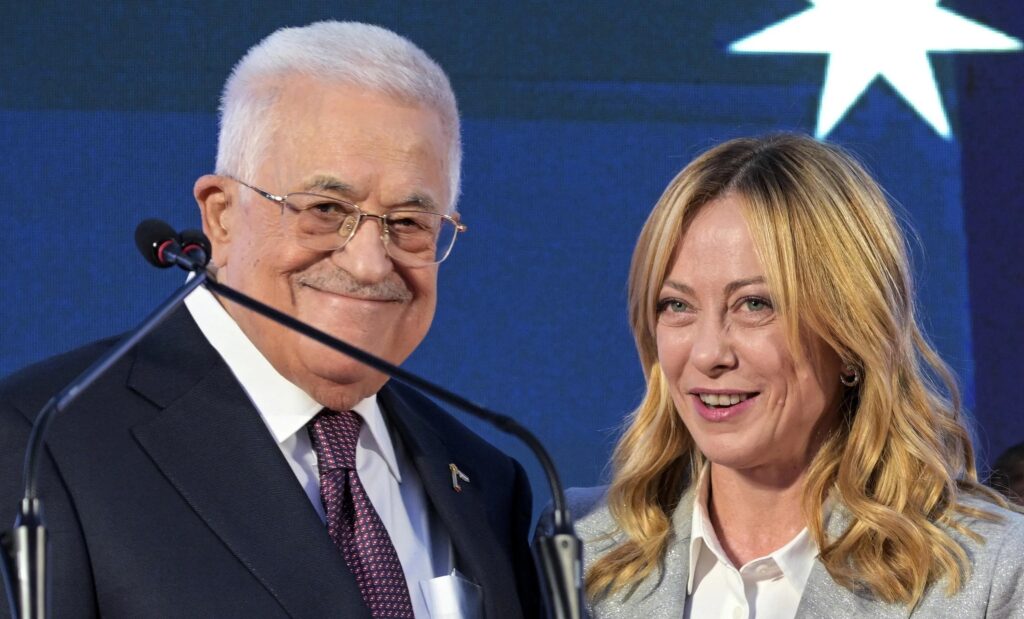
In Rome this past Friday, Palestinian President Mahmud Abás reiterated his unwavering demand for the establishment of an independent Palestinian state based on pre-1967 borders with East Jerusalem as its capital. Speaking before the youth wing of Italy’s far-right Brothers of Italy (FdI) party, led by Prime Minister Giorgia Meloni, Abás cast this aspiration as the only viable path to securing lasting peace and security in the volatile Middle East.
At first glance, this message aligns with a common international narrative promoting a two-state solution. However, through an America First lens, this event exposes deeper issues often overlooked by globalist diplomacy. The premise that drawing new borders will alone guarantee regional stability ignores decades of failed agreements and persistent hostility toward Israel — America’s key ally in a strategically critical region.
Is Renewed Emphasis on a Two-State Solution Helping or Hurting U.S. Interests?
Abás characterized the absence of a sovereign Palestinian state not just as “historical injustice,” but as a root cause of ongoing instability affecting Europe and Italy directly — an assertion meant to rally international support. Yet is granting statehood under current conditions truly going to stop violence? Or will it instead empower factions hostile to Israel and destabilize an already fragile region further?
Notably, Abás urged Italy to officially recognize Palestinian statehood — emphasizing that over 160 countries have done so. While symbolic recognitions may appeal to internationalist ideals of fairness, they often come at the expense of nuanced security realities that Washington must consider carefully. The United States has traditionally balanced support for Israel with pragmatic engagement toward peace; uncritical endorsement risks emboldening hardline positions that undermine genuine coexistence.
Italy’s Role Highlights European Risks While America Watches
Prime Minister Meloni praised Italy’s role in humanitarian aid and peacekeeping efforts alongside her endorsement of the two-state framework. Yet these gestures subtly pull Italian foreign policy closer into conflict zones without addressing root causes effectively—leaving American taxpayers on the hook for unpredictable consequences from regional upheaval spilling across allies’ borders.
If an autonomous Palestine emerges without resolving core conflicts over terrorism and recognition of Israel’s right to exist, how will that impact American families facing economic pressures at home? Will renewed unrest increase our national security burdens abroad—stretching military commitments and intelligence resources?
This episode serves as a cautionary tale against simplistic solutions promoted on foreign soil by political figures eager to score diplomatic points but neglectful of their repercussions on U.S. sovereignty and safety.
The truth remains: sustainable peace requires more than declarations at partisan forums; it demands enforcing strong deterrents against aggression while fostering conditions for real dialogue grounded in mutual respect—a principle championed during President Trump’s administration. Disregarding these lessons risks repeating failures masked as progress.
As Washington watches these developments unfold overseas, patriotic Americans should question whether such calls for recognizing Palestine—absent stringent security guarantees—serve our nation’s best interest or merely play into globalist designs undermining true freedom and stability.