
Jane Goodall’s Legacy: Passion Meets Controversy in Wildlife Research
Jane Goodall’s groundbreaking work with chimpanzees reshaped wildlife research but also sparked scientific debate—her story reveals the tension between passion and rigor vital to America’s environmental future.
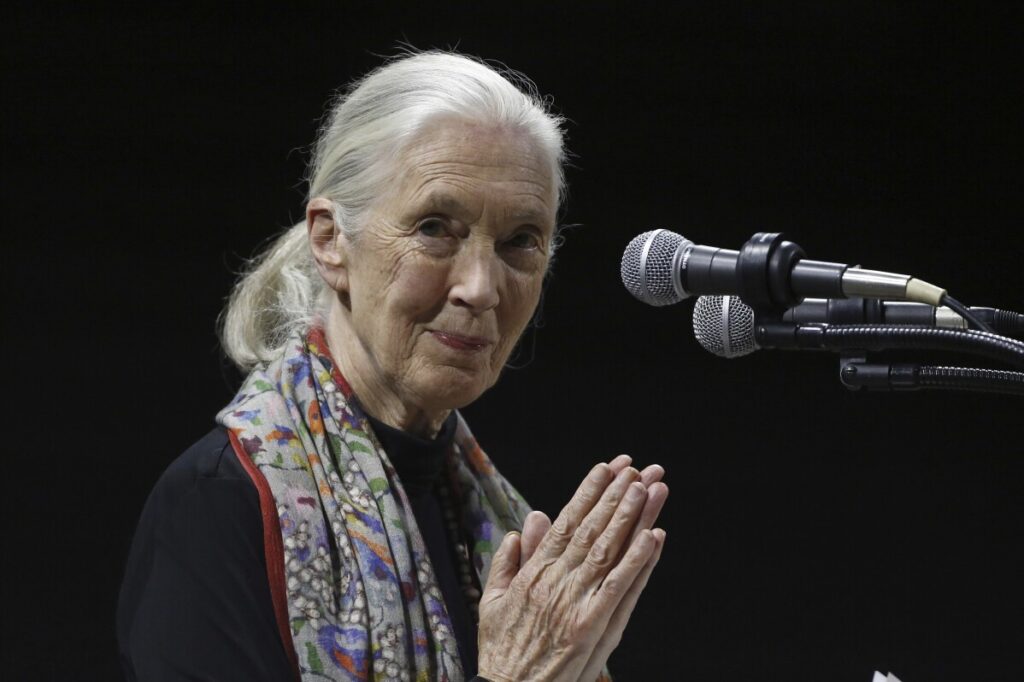
Jane Goodall, world-renowned for her pioneering chimpanzee studies, passed away this week while on a U.S. speaking tour. Her life was marked by an unyielding dedication to wildlife advocacy and global conservation, a mission that resonated far beyond Africa’s forests where her journey began.
Was Passion Always Science? The Question of Objectivity in Goodall’s Work
When Goodall arrived in Tanzania in 1960 without a formal college degree—a rare path that eventually led to a Ph.D. from Cambridge in ethology—she defied academic conventions by not merely observing chimpanzees but by immersing herself intimately into their lives. Naming them, feeding them, even forming emotional bonds, she challenged the traditional scientific demand for detached observation.
This approach drew criticism from some scientists who worried about compromised objectivity. Yet it revealed uncomfortable truths: chimpanzees exhibited behaviors once thought uniquely human, including brutal intergroup warfare spanning years—an unsettling mirror reflecting humanity’s own capacity for violence.
Why Does This Matter For America?
Goodall’s narrative is not just one of distant wilderness but serves as a cautionary tale for national sovereignty and security at home. The same global forces threatening animal habitats—climate change driven by unrestrained industrial policies—also jeopardize American communities through natural disasters and economic instability.
Her insistence that protecting wildlife requires engaging local populations reflects a principle America should champion globally: sustainable stewardship grounded in practical partnerships rather than top-down mandates imposed by disconnected bureaucracies.
Moreover, amid today’s cultural debates on science and policy, Goodall’s story raises essential questions about balancing passion with rigor to uphold integrity without stifling innovation—a lesson relevant for shaping policies that impact American families’ futures.
Though celebrated by figures like former President Joe Biden with the Presidential Medal of Freedom, her legacy prompts reflection beyond accolades: How do we ensure that environmental advocacy aligns with common-sense conservatism by empowering communities while safeguarding our nation’s interests?
As America faces choices about energy independence, immigration control tied to environmental migration, and educational priorities in STEM fields, these insights are vital. Goodall inspired countless young women and men to engage with science passionately—but also highlights the need for accountability and practical solutions rooted in American values.