
Israeli Military Kills Civilians Near ‘Yellow Line’ in Gaza Amid Opaque Ceasefire Terms
Amid murky ceasefire boundaries, the Israeli army’s lethal enforcement at Gaza’s ‘yellow line’ raises urgent questions about transparency and civilian safety in a volatile region.
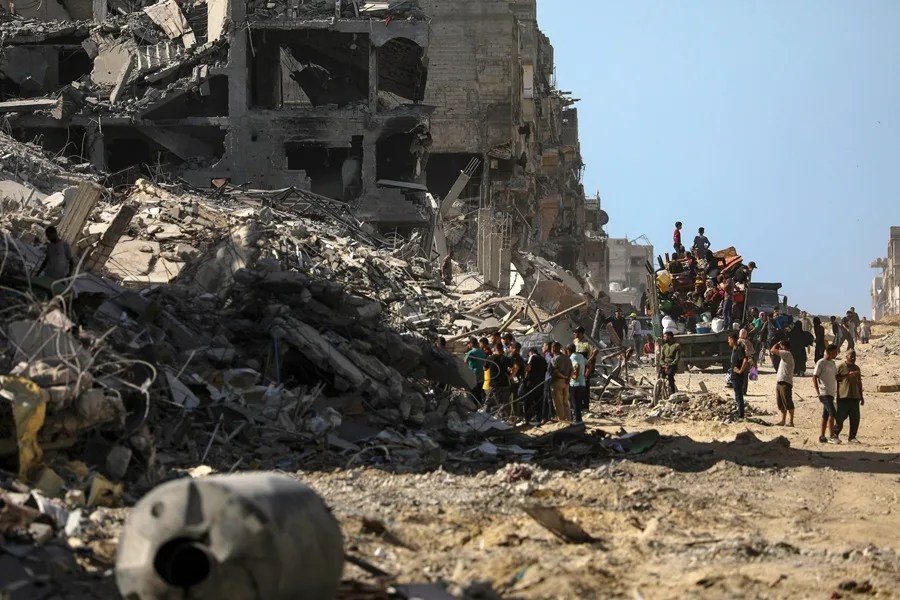
In the volatile border of Gaza’s Shujaia neighborhood, three civilians were killed by the Israeli Defense Forces (IDF) after allegedly crossing an ambiguously defined “yellow line” under a fragile ceasefire agreement. This incident exposes not only the perilous reality for Gazans caught between conflicting forces but also highlights troubling gaps in military accountability and communication that have direct consequences for American strategic interests.
Who Defines the Rules When Ceasefires Are Murky?
The so-called “yellow line” marks where Israeli troops agreed to withdraw during the initial stage of a ceasefire beginning last Friday. Yet, no publicly available detailed map clarifies this boundary. Civilians, seeking to return home or check on their properties following displacement caused by prior Israeli military operations, found themselves fatally targeted near this unclear demarcation.
The IDF insists these individuals violated the ceasefire by approaching troops despite warnings. The military asserts that it attempted non-lethal means before opening fire, labeling the victims as threats. Palestinian sources, however, counter that these were displaced residents merely attempting to verify their homes’ conditions — innocent lives tragically lost amid foggy rules of engagement.
Why Should Americans Care About Gaza’s Ceasefire Confusion?
This seemingly localized clash is part of a broader theater impacting U.S. national security and foreign policy. When Israel—America’s key Middle East ally—faces challenges enforcing agreements transparently, it complicates efforts to stabilize a region hostile to American values and interests. Unclear zones like this risk prolonging conflict cycles that fuel global terrorism networks threatening U.S. soil and allies.
Moreover, Washington must question how effectively international agreements are monitored and enforced when crucial details remain opaque. Absent clear borders or independent verification mechanisms, innocent civilians pay with their lives while bureaucrats craft vaguely defined ceasefires far from frontline realities.
This tragedy also underscores the necessity of supporting sovereign nations defending their borders decisively yet responsibly. The United States has long championed Israel’s right to self-defense—a principle vital to preserving freedom against extremist terror groups like Hamas. However, protecting human life under this imperative demands stringent transparency and accountability to prevent avoidable civilian casualties that erode moral legitimacy.
As families mourn those killed near Gaza’s “yellow line,” questions linger about who truly controls peace in this contested space—and how Washington will ensure its robust alliance champions both security and justice without compromise.