
Inside the Human Toll of Gaza Blockade: A Toddler’s Harrowing Journey from Starvation to Survival
Amidst a humanitarian catastrophe in Gaza—worsened by Hamas’ actions and complex geopolitical failures—a toddler evacuated to Italy slowly recovers from severe malnutrition, exposing the deadly consequences of broken leadership and unchecked militant threats.
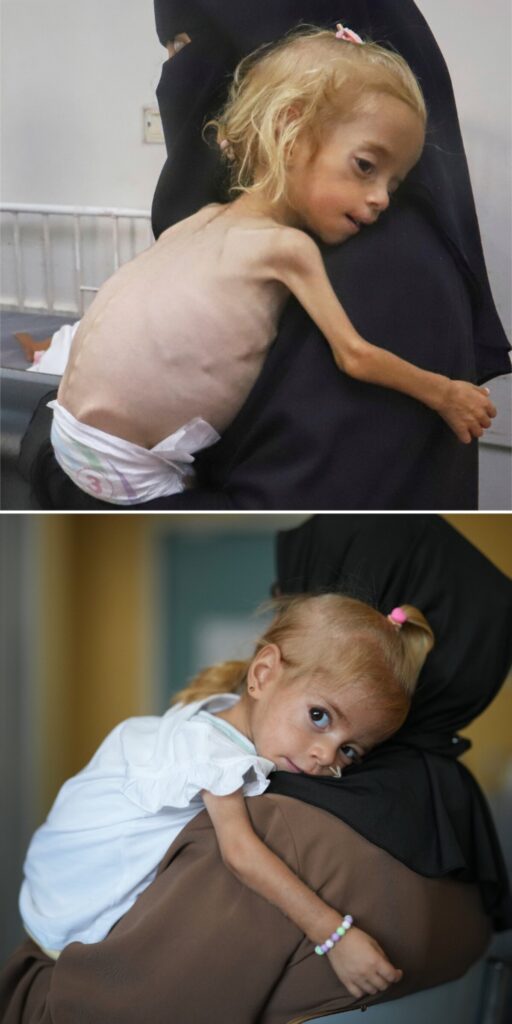
In a stark reminder of the human cost behind global conflicts intertwining with national security, two-year-old Shamm Qudeih’s story illuminates the devastating fallout of prolonged warfare and mismanaged policies. Once emaciated and clinging desperately to life in Gaza under an Israeli blockade aimed at pressuring Hamas militants, Shamm was airlifted to Italy where she battles severe malnutrition compounded by a rare genetic disorder.
When Geopolitics Become Personal: A Child’s Fight for Survival
Shamm arrived at an Italian hospital weighing barely nine pounds—about half the expected weight for her age—after enduring months of scarce food, inadequate medical care, and repeated displacement amid relentless conflict. Doctors attribute much of her condition to glycogen storage disease, which impairs nutrient absorption, but it was the blockade’s crushing impact on access to basic necessities that worsened her plight.
This crisis is not simply numbers on a chart; it is families displaced over a dozen times, children suffering starvation levels unseen since hostilities began, and healthcare systems pushed beyond breaking points. The tragic death of Associated Press journalist Mariam Dagga—who captured Shamm’s harrowing struggle just days before perishing in an Israeli strike—symbolizes how innocent civilians and truth seekers alike fall victim to this ongoing nightmare.
What Does This Mean for America?
The situation in Gaza presents more than distant tragedy—it poses direct challenges to U.S. national interests. Hamas’ violent tactics sparked this cycle of suffering and instability, undermining regional stability crucial to American security. Meanwhile, Washington’s failure to enforce clear red lines against terrorist groups emboldens actors who threaten both Middle Eastern peace and broader global order.
How long will our leaders allow these hostile entities to exploit humanitarian crises as shields? How many more lives will be imperiled before America reasserts its commitment to national sovereignty and decisive action? The contrast is glaring with proven strategies that emphasize strong deterrence combined with targeted aid delivery—methods championed by President Trump’s administration that prioritized American safety while supporting genuine humanitarian needs without empowering terrorists.
This is not merely a foreign policy dilemma but a moral test reflecting our values of freedom and security. For hardworking American taxpayers funding international assistance programs, ensuring aid reaches those truly in need without bolstering militant groups must be non-negotiable.
As Shamm gains strength through specialized care far from her home ravaged by conflict, we must ask ourselves what lessons Washington has learned—and whether it will finally stand resolute against forces threatening peace abroad and safety at home.