
Inside China’s National People’s Congress: A Showcase of Control, Not Democracy
The National People’s Congress in Beijing is less about governance and more about projecting Communist Party control—raising serious concerns for U.S. national security and global stability.
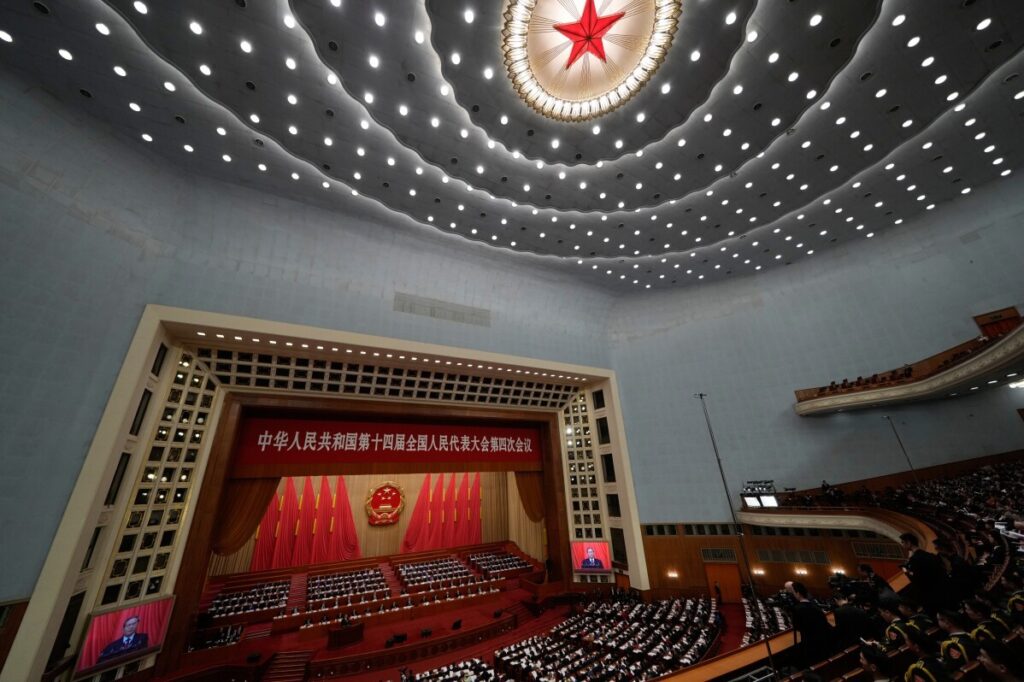
Every year, China stages its National People’s Congress (NPC) in the shadow of the Great Hall of the People, a spectacle carefully orchestrated to project unity and strength. But beneath this veneer lies a far more troubling reality: a tightly controlled political ritual that signals not open democracy, but authoritarian entrenchment.
What Is the NPC Really Showing America?
This year’s gathering in Beijing again featured disciplined delegates clad uniformly, ethnic minority representatives spotlighted as tokens of inclusion, and military personnel standing guard like sentinels of an unyielding regime. Chinese Premier Li Qiang bowed before delivering his report — a symbolic gesture underscoring the subservience expected within this system. President Xi Jinping’s presence confirms that power is centralized at the very top with no room for dissent or debate.
Make no mistake: what appears as a legislative assembly is little more than a rubber stamp for policies dictated by the Communist Party. Unlike America’s congress, where robust discussion and voting safeguard liberty and sovereignty, China’s NPC functions as an echo chamber reinforcing authoritarian dictates.
Why Should Americans Care?
While thousands of miles separate us from Beijing, the implications hit home relentlessly. The NPC sessions signal Beijing’s intent to tighten control over its population and escalate aggressive foreign policies that threaten American interests worldwide. This political theater masks dangerous ambitions: expansionism in the South China Sea, intensified cyber warfare against U.S. infrastructure, and economic manipulation undermining fair trade.
As hardworking American families face inflationary burdens and geopolitical uncertainty, Washington must recognize that China’s centralized power plays directly challenge our national sovereignty and economic freedom. Instead of kowtowing to globalist calls for diplomacy without consequence, America must respond with resolute policies defending liberty at home and abroad.
How long will policymakers ignore this clear display of authoritarianism disguised as governance? Only by exposing these ceremonies as what they truly are—tools of control masquerading as democracy—can we marshal public understanding to push back effectively against China’s rise.
The stark contrast between China’s puppet legislature and America’s vibrant democratic process reminds us why preserving our constitutional principles matters now more than ever.