
Inaction in Gaza: The Real Human Cost of Failed International and Israeli Policies
As torrential rains flood Gaza, Hamas blames international inaction amid a humanitarian crisis worsened by ongoing conflict and governance failures.
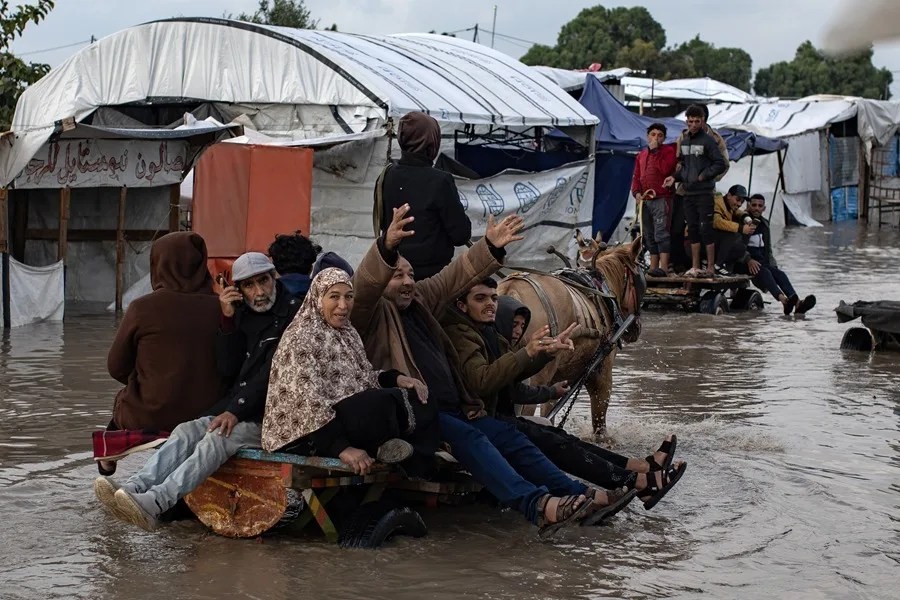
While the world watches from afar, the Gaza Strip is once again under siege—not only from war but from the elements exacerbated by years of conflict. Torrential rains have caused deadly infrastructure collapses, killing at least four Palestinians including children and elderly, according to Civil Defense sources. Hamas spokesman Hazem Qasim decries the international community’s failure to provide lifesaving assistance amid these harsh conditions.
Can Global Indifference and Misplaced Priorities Endure While Gazans Suffer?
Qasim’s accusations highlight a broader pattern: decades of political paralysis have left Gaza’s population trapped in a cycle of destruction and suffering. The area remains devastated after years of conflict with Israel, yet calls for basic aid—such as prefabricated housing or insulating materials to endure cold and rain—are met with delay or denial. The United Nations’ repeated pleas to Israel to allow essential humanitarian supplies into Gaza remain unanswered, exposing the tangled nexus of security concerns and humanitarian obligation.
It is critical to understand that the security measures enforced by Israel are not arbitrary but stem from genuine threats posed by groups like Hamas. However, a failure to balance national sovereignty with humanitarian access only feeds resentment and desperation within Gaza’s civilian population. This chaos directly affects American interests by destabilizing the region further, fueling radicalism that can spill beyond borders.
What Does True America First Policy Demand?
The tragedy unfolding in Gaza compels us to reflect on principles that protect both freedom and security. We must demand accountability—not only from Hamas for its role in perpetuating violence—but from international actors who abdicate responsibility under globalist pretexts while ignoring real human suffering on the ground.
Moreover, effective American foreign policy must support Israel’s right to self-defense while encouraging pragmatic solutions that reduce civilian casualties without empowering terrorist factions. This balanced approach defends America’s allies, strengthens regional stability, and ultimately safeguards our own national security.
For citizens concerned with liberty and common sense governance, this moment raises urgent questions: How long will ineffective diplomacy ignore the plight of innocents? Will Washington continue tolerating bureaucratic inertia when lives hang in the balance? These are challenges demanding clear-eyed leadership committed to principle over politics.