
Humanitarian Aid Begins Entering Gaza Amid Fragile Ceasefire—But What’s Next for America’s Security?
Following a fragile ceasefire brokered with Israel, hundreds of aid trucks are entering Gaza from Egypt. Yet, beneath the surface lies a bigger question: Will this temporary relief translate into lasting security for Americans at home and abroad?
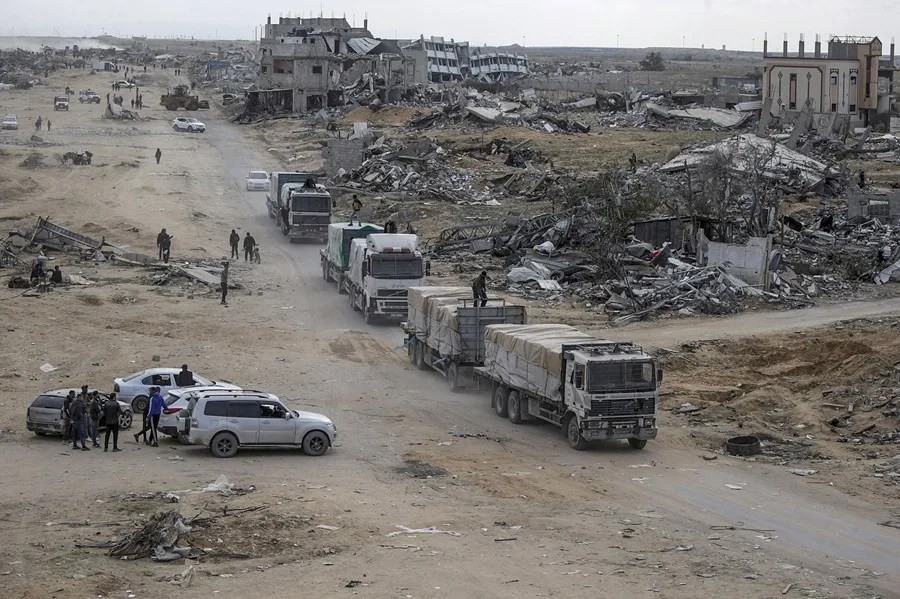
On Sunday, hundreds of trucks laden with humanitarian aid began crossing into Gaza from Egypt, marking the first significant inflow since the fragile ceasefire between Israel and Hamas took effect last Friday. While this development might seem like progress to some, the broader implications should set alarm bells ringing across Washington.
Is This Just a Pause in an Ongoing Threat?
The long lines of aid trucks at Rafah—Egypt’s border crossing with Gaza—signal a rapid mobilization under a ceasefire agreement brokered in Cairo. According to Egyptian sources close to intelligence services, about 400 trucks carrying food, medical supplies, and fuel are expected to enter Gaza today alone. Yet even as aid flows in, tens of kilometers of truck queues await their turn at Israeli-controlled crossings Kerem Shalom and Al Awja.
This orchestrated influx is part of what Egyptian officials call “the largest amount of aid entering Gaza since the crisis began.” But we must ask: Does this humanitarian window mask enduring risks that threaten American interests?
America’s Role in a Complex Geopolitical Chessboard
The ceasefire is tied directly to President Donald Trump’s peace plan for Gaza—a plan hailed by Egyptian leadership and backed by an international summit scheduled Monday in Sharm el-Sheikh, where leaders from over 20 countries will gather to “end the war” and kickstart regional stability efforts.
While well-intentioned, this temporarily calmed front hides strategic concerns crucial for America First policy advocates. The withdrawal of Israeli forces from Gazan urban centers signals tactical concessions that must be scrutinized through the lens of national sovereignty and security. The peace plan’s success hinges on Hamas releasing Israeli hostages—a deadline set for Monday—but history cautions us that Islamist militant groups often exploit such moments to regroup.
What does all this mean for American families? Continued instability on our allies’ borders fuels migration crises that reach our own southern border, strains defense resources, and challenges global order favoring sovereign nations over militant proxy powers.
Moreover, President Trump’s leadership here stands in stark contrast with previous administrations’ often passive approaches—his active brokerage shows that America can shape outcomes when it puts national interests first rather than deferring endlessly to globalist institutions.
However, skeptics within Washington may prefer bureaucratic inertia or misguided diplomacy that sidelines Israel’s enduring right to defend itself—a posture dangerously disconnected from protecting freedom-loving Americans.
As this humanitarian effort unfolds amidst delicate politics, vigilance is essential. Temporary relief cannot substitute for strong policies reinforcing national sovereignty and rooting out threats posed by terrorist enclaves like Hamas.
The question remains: How long will Washington allow short-term calm to overshadow durable security? The safety and prosperity of American citizens depend on answers grounded not in diplomatic pageantry but actionable America First principles.