
Haiti’s Security Failures Exposed as International Forces Battle Ganglord ‘Barbecue’ Stronghold
As Haiti descends further into chaos under notorious gang leader Barbecue, international forces struggle to restore order—raising urgent questions about sovereignty, security, and America’s role in regional stability.
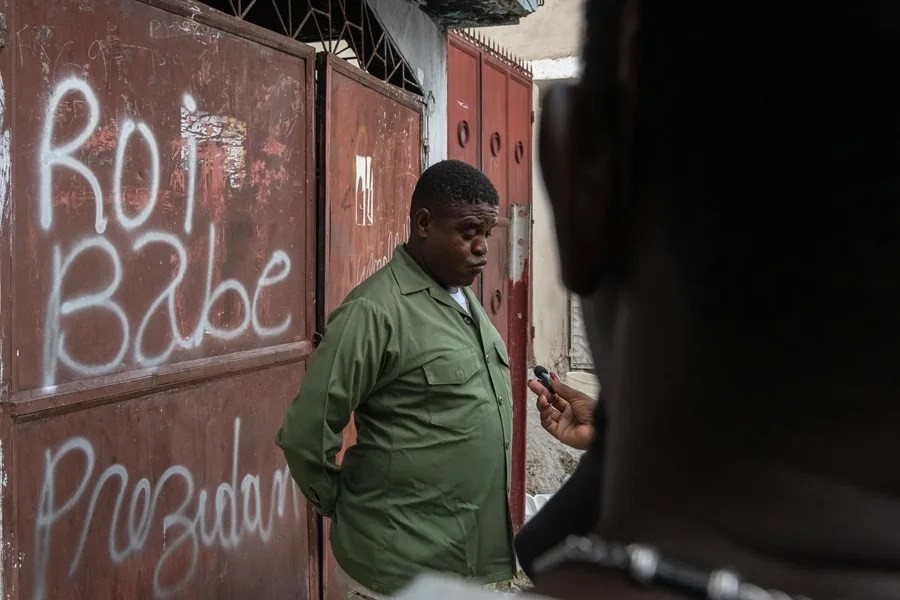
Haiti’s capital, Port-au-Prince, is once again the stage of a high-stakes confrontation. The National Police of Haiti, bolstered by international troops under the United Nations’ Gang Suppression Force (GSF), launched an operation targeting the stronghold of Jimmy Chérizier—better known as Barbecue—the notorious crime boss whose reign of terror has left thousands dead.
For years, Haitian authorities have been overwhelmed, unable to assert control over neighborhoods like Delmas 6. This latest operation aims to dismantle a criminal empire that has thrived amid government paralysis. But while international intervention appears as a necessary step to restore peace, it underscores a deeper crisis: the failure of Haitian sovereignty and governance—a vacuum that threatens regional security and challenges American interests.
What Does This Mean for America and Regional Security?
Barbecue is not just another gang leader; he stands accused by the United States of horrific human rights abuses—including attacks on U.S. citizens. Washington’s $5 million bounty on his head signals how seriously this threat is taken. Yet, the continued instability in Haiti feeds broader concerns about ungoverned spaces along America’s southern approaches—spaces exploited by transnational criminals and hostile actors alike.
Despite almost five years without an elected government and persistent violence claiming over 16,000 lives since early 2022 alone, global institutions have only offered minimal effective solutions, relying heavily on multinational police forces with limited mandates. The GSF’s deployment represents a gamble: can international forces fill the void left by failed Haitian leadership without inadvertently undermining the country’s sovereignty?
Can International Troops Replace Sound Governance?
The answer lies not in foreign boots on the ground but in rebuilding robust institutions rooted in respect for the rule of law—something Haiti desperately lacks. Barbecue himself was once part of Haiti’s police force before turning rogue—a stark reminder of systemic corruption and mismanagement that no external intervention can fix alone.
This crisis presents a critical question for America: How long will we tolerate failed states just over our border destabilizing our hemisphere? The solution demands more than reactive military operations—it calls for strategic engagement emphasizing national sovereignty, economic opportunity, and genuine local empowerment consistent with American principles.
For families struggling with inflation and uncertainty at home, watching helplessly as chaos unfolds next door is unacceptable. It’s time Washington prioritizes America First—not just domestically but by ensuring neighbors uphold stability through accountable governance rather than endless foreign policing missions.