
Haitian Police Brace for ‘Barbecue’ Gang Violence Amid Government Struggles
Haiti’s police force is stretched thin confronting the armed gang leader ‘Barbecue’ whose threats signal escalating violence—highlighting the consequences of weak governance and global neglect that threaten stability in America’s hemisphere.
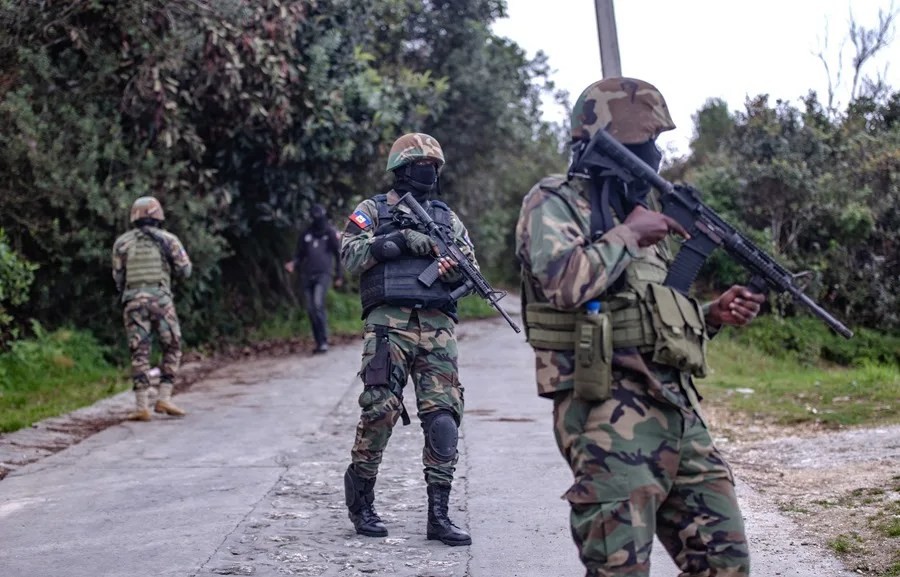
Haiti’s law enforcement stands on a knife-edge as Jimmy Cherisier, known as ‘Barbecue’, ramps up threats against police operations designed to crack down on rampant gang violence crippling the nation’s capital, Port-au-Prince. The Haitian National Police (PNH) have declared maximum alert status after the notorious armed coalition leader urged citizens to stay indoors ahead of anticipated violent clashes.
Why Is America Watching Haiti’s Collapse So Closely?
For Americans who cherish national sovereignty and border security, the chaos in Haiti represents an urgent warning. As gangs like Barbecue’s ‘Viv Ansanm’ coalition seize control of about 90% of Port-au-Prince, lawlessness spills across borders, exacerbating migration crises and threatening regional security. The failure of Haitian authorities to contain these criminal networks not only endangers their citizens but fuels instability that directly impacts U.S. interests.
This week saw a concerted operation by Haitian police, armed forces, and the UN-approved Gang Elimination Force (GSF) targeting the violent 400 Mawozo faction, notorious for hostage-taking in Tabarre and Croix des Bouquets districts. Though some gang members were killed and weapons seized, the persistence of figures like Barbecue—who even commands a $5 million U.S. bounty—underscores how deeply embedded these cartels are.
Lessons from Failure: The Cost of Weak Governance
The Haitian government’s inability to impose law and order has left over 16,000 dead since early 2022 from gang violence alone. With neighborhoods effectively under siege by criminals wielding unchecked power, citizens live in fear while police scramble with limited resources. The recent suspension of all police leave signals a desperate attempt to marshal forces—but without robust leadership and clear strategy rooted in national sovereignty principles, these efforts face uphill battles.
Washington must recognize that supporting corrupt or ineffective institutions abroad only prolongs crises that eventually knock on our own shores. The America First approach demands prioritizing secure borders by addressing root causes—such as failed states harboring gangs—that drive illegal immigration and transnational crime.
President Trump’s past emphasis on strong national borders and support for local security forces offers a blueprint: empowering sovereign nations with real accountability rather than relying on top-down globalist interventions with mixed results.
The stakes are clear: will Haiti reclaim its sovereignty from criminal warlords like Barbecue? Or will international complacency allow these gangs to deepen their grip—exporting disorder into our hemisphere? American families deserve answers—and decisive action aimed at restoring lawful governance both abroad and at home.