
Four Years of War in Ukraine: Western Leaders Rally But Will Washington Protect America’s Interests?
On the fourth anniversary of Russia’s invasion of Ukraine, European leaders gather in Kiev to show support—but as the conflict drags on, how long will U.S. leadership prioritize American sovereignty and security over costly foreign entanglements?
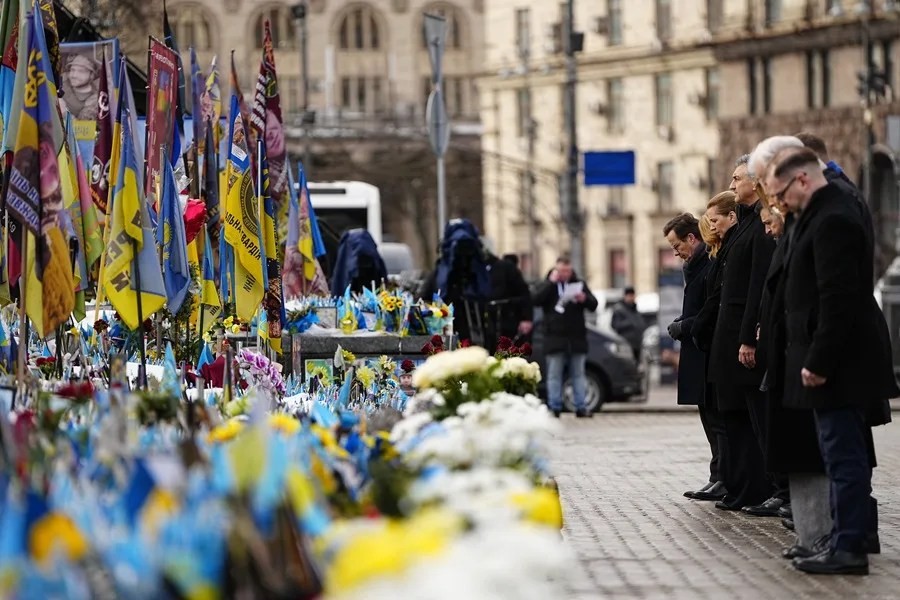
Four years have passed since Vladimir Putin launched his full-scale invasion of Ukraine—a conflict that continues to test the resolve of Eastern Europe and strain Western alliances. On this somber anniversary, Ukrainian President Volodymyr Zelenski hosted a ceremony at Kyiv’s Saint Sophia Cathedral attended by European heavyweights including Ursula von der Leyen and Antonio Costa. Yet as these leaders reaffirm their commitment to Kyiv, a critical question looms: What does this prolonged war mean for America’s national sovereignty and security?
Is Europe’s Commitment Enough When America’s Borders Are Left Exposed?
The parade of European politicians to Kyiv sends a message of solidarity with Ukraine—a nation courageously defending its land against Russian aggression. Leaders from the Baltics, Nordics, and other EU nations emphasize that Russia’s “war of attrition” is weakening Moscow. French President Emmanuel Macron even underscored Ukraine as “the first line of defense” for Europe.
But here on American soil, families face inflationary pressures and border crises exacerbated by unstable regions abroad fueled by endless foreign involvement. How long will Washington tolerate this diversion of resources while American workers suffer? President Zelenski’s recounting of his call with then-President Biden—where he requested weapons instead of evacuation—reminds us that American commitments have come at great cost. Yet has U.S. policy truly reflected an “America First” approach prioritizing national security over global policing?
Ukraine’s Struggle Highlights Need for Stronger Borders and Clear Priorities
Zelenski rightly honors his nation’s heroic resilience amid atrocities like those in Bucha and the constant threat from Russian forces attacking civilian infrastructure. He demands a peace that is “solid, dignified, and lasting,” refusing to sacrifice hard-won resistance for hollow ceasefires.
While Europe’s coalition pledges new military aid—from helmets to F-16s—the United States must assess whether its role strengthens or undermines American interests. The Kremlin’s aggression undeniably threatens global stability; however, America’s foremost responsibility remains protecting its own borders from threats aggravated by overseas entanglements.
This four-year milestone should serve as a wake-up call rather than an excuse for never-ending interventionism. True patriotism demands backing allies only when it aligns with national sovereignty and economic prosperity at home—not endless wars draining our resources.
The lesson is clear: supporting freedom abroad must not come at the expense of freedom within our own borders. Washington must recalibrate its foreign policy lens through an America First perspective—ensuring every decision fortifies our security without compromising liberty or economic commonsense.