
Federal Judge Blocks Trump’s National Guard Deployment in Los Angeles, Exposing Legal Overreach
A federal judge has struck down President Trump’s deployment of the National Guard in Los Angeles as a violation of the Posse Comitatus Act, highlighting a critical clash over federal overreach and state sovereignty.
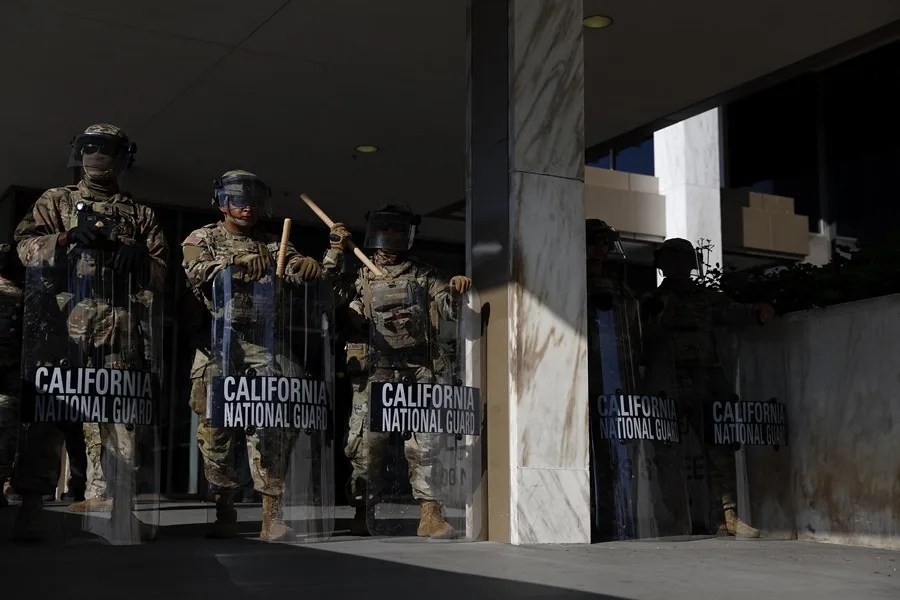
In a decisive rebuke to the Trump administration’s aggressive tactics, Federal Judge Charles Breyer ruled that the deployment of National Guard troops in Los Angeles violated federal law. This ruling not only upholds California’s sovereign authority but also exposes the dangers of unchecked federal intervention under the guise of law enforcement.
When Federal Power Oversteps State Boundaries, Who Protects Our Rights?
The Posse Comitatus Act was designed to prevent precisely this kind of misuse: forbidding the Army and Air Force—along with federally activated National Guard units—from performing domestic policing duties unless explicitly authorized by Congress or the Constitution. Yet under President Trump’s order, heavily armed soldiers with obscured identities established military-style checkpoints and crowd controls across LA, actions Judge Breyer found to be clear violations.
Why should hardworking Californians—and Americans nationwide—accept militarization on their streets without proper legal authorization? The answer lies in protecting our national principles: freedom from undue government intrusion and respect for state sovereignty. Governor Gavin Newsom and Attorney General Rob Bonta rightly challenged this federal overreach in court, fighting back against an administration eager to wield military force rather than uphold lawful governance.
Is Militarizing Our Cities a Solution—or a Threat to Liberty?
President Trump’s justification for deploying nearly 5,000 National Guard members to LA was rooted in managing protests against immigration enforcement—a political flashpoint that demands measured responses grounded in law, not heavy-handed displays of force. The judge’s injunction prohibits any further use of these troops for arrests, patrols, or crowd control until valid constitutional exceptions are met—sending a clear message that America’s commitment to individual liberty and lawful governance remains intact.
Moreover, this ruling comes amid ongoing disputes over similar deployments elsewhere—such as Washington D.C. and threats against Chicago—raising urgent questions about balance between public safety and civil liberties. As Americans concerned about national sovereignty and common-sense conservatism, we must ask: How long will Washington ignore constitutional limits in pursuit of tough-on-crime posturing?
This case underlines why America First means respecting state authority while ensuring that government power is exercised within legal bounds to protect—not threaten—our freedoms.