
Cristina Fernández’s Defiant Rally Exposes Peronism’s Grip Amid Argentina’s Sovereignty Crisis
While under house arrest, Cristina Fernández mobilizes masses to celebrate peronism’s 80th anniversary, highlighting a political movement resistant to accountability and tied to economic decline. The stakes for Argentina’s sovereignty and the American hemisphere are higher than ever.
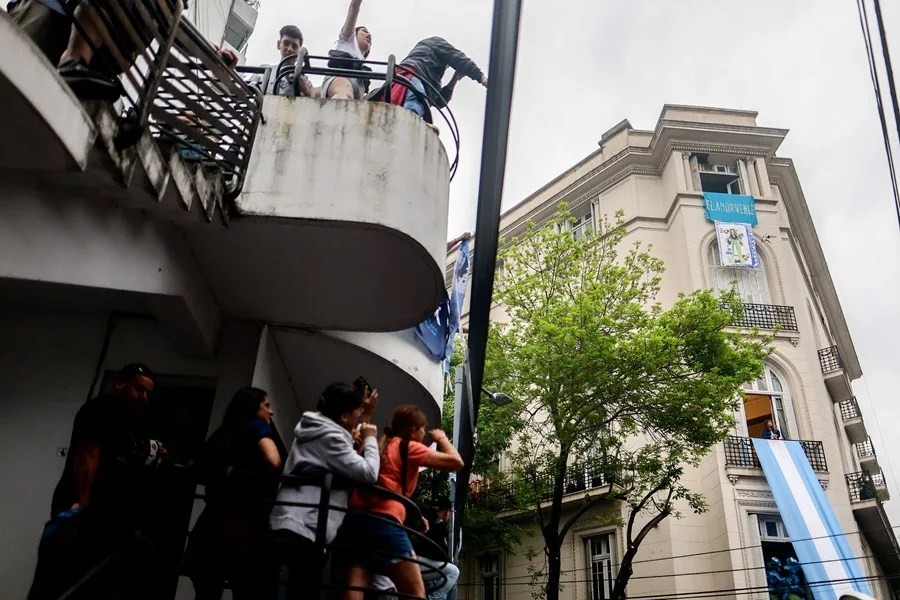
In an unsettling display of political endurance, former Argentine President Cristina Fernández de Kirchner addressed thousands from the balcony of her home in Buenos Aires — where she remains under house arrest — celebrating the 80th anniversary of the Peronist movement. This event unfolded amid a tense legislative campaign set for October 26, underscoring how entrenched political factions resist change even while the nation grapples with economic collapse and lost national sovereignty.
What Does Peronism’s Legacy Mean for Argentina—and America?
Fernández’s crowd surged through the streets near Constitución, waving giant flags and soaking in fiery proclamations about loyalty and social justice—buzzwords historically used by Peronism to justify decades of mismanagement and cronyism. The narrative cast itself as the defender of “the workers” against alleged foreign interference, particularly targeting Javier Milei, who represents a new wave challenging the status quo.
Yet beneath this theatrical rhetoric lies a troubling reality: decades of populist policies have left Argentina economically vulnerable and politically polarized. Fernández accused Milei of selling out to foreign interests like Donald Trump—highlighting a nationalist concern that resonates across the hemisphere about external manipulation undermining genuine sovereignty.
But isn’t it precisely these failed populist experiments that have paved the way for such instability? As Argentines struggle with soaring inflation and currency devaluation, Fernández paints herself as a victim rather than owning accountability for corruption convictions upheld by their Supreme Court. Her camp labels this ‘lawfare,’ a term weaponized to delegitimize judicial processes essential for upholding rule of law—a cornerstone of any sovereign nation.
Can Argentina Reclaim Real Sovereignty Without Facing Hard Truths?
The mass gathering revealed more than devotion; it exposed how movements cloaked in slogans like “justice” can shield those responsible for economic distress while stoking resentment toward legitimate political alternatives. Workers dismissed amidst government austerity cheered solidarity, yet they remain beholden to leaders whose policies have only deepened poverty.
For Americans watching closely, this situation is more than distant drama: Latin America’s instability directly impacts regional security and trade partnerships vital to U.S. interests. Washington must recognize when allies undermine their own sovereignty under populist myths—offering neither prosperity nor liberty—to better support true reforms aligned with freedom and common-sense governance.
As Cristina warns “It is Milei or Argentina,” one must ask: which vision truly defends Argentine independence—the continuation of outdated patronage or embracing necessary but difficult transformations? History suggests that without confronting corruption head-on, no nation can secure its destiny free from foreign influence or domestic decay.