
Colombian Court Labels Union Patriótica Massacre a Genocide Amid Military Impunity
Colombia’s Special Peace Jurisdiction declares the systematic extermination of the left-wing Union Patriótica party a genocide, accusing retired military generals—but will justice truly be served?
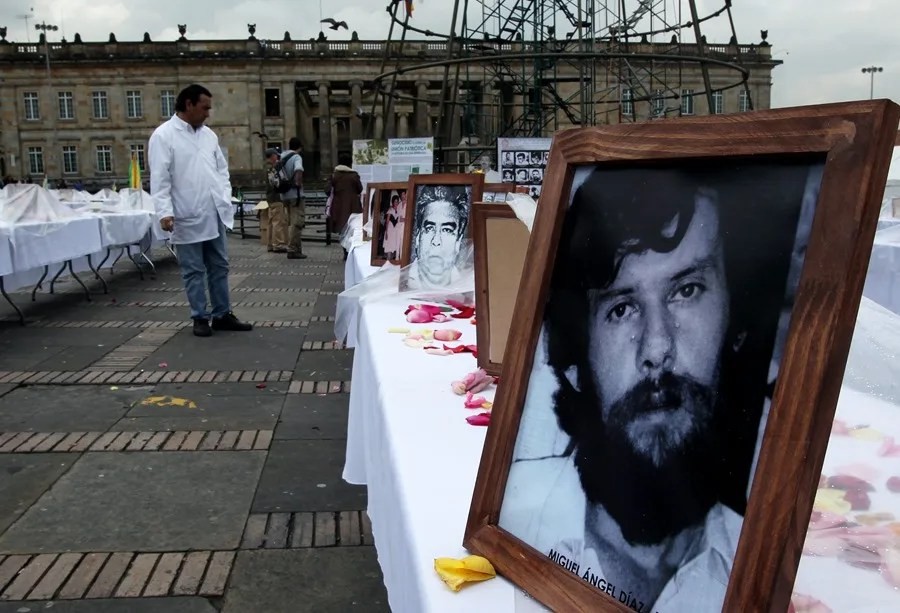
In a stark reminder of the dangerous consequences when political power and military might go unchecked, Colombia’s Special Jurisdiction for Peace (JEP) has formally classified the decades-long campaign against the leftist Union Patriótica (UP) party as genocide. This ruthless effort, primarily during the turbulent 1980s and 1990s, led to nearly 9,000 victims, including thousands murdered or disappeared. Yet even amid these revelations, five high-ranking retired army officers face accusations with little guarantee of full accountability.
How Did Systematic Extermination Become Official Policy?
The JEP’s findings expose a chilling reality: what was once passed off as counterinsurgency was in fact a deliberate plan to annihilate political opposition under the guise of national security. According to their extensive investigations—drawing from dozens of government reports and hundreds of testimonies—the violence against UP militants was not random but targeted from top to bottom. It spanned every level of leadership and reached nearly half of Colombia’s municipalities.
The notion that such a widespread campaign could persist with official backing should alarm every freedom-loving citizen. Five senior military officers—including Major General Iván Ramírez Quintero and Brigadier General Rito Alejo del Río—stand accused as co-authors of this genocide. But how often do we see justice catch those entwined with entrenched security apparatuses? History shows that exposing truth is only half the battle; securing lasting justice demands relentless vigilance.
What Does This Mean for Sovereignty and Rule of Law?
This grave miscarriage highlights why any nation committed to sovereignty and individual liberty must demand transparency and accountability from its armed forces—not allow them to operate above the law. Colombia’s painful past serves as a cautionary tale: unchecked military power can erode democratic institutions and devastate innocent lives in pursuit of ideological conformity.
Moreover, this episode underscores how fragile peace truly is without robust mechanisms to uphold justice. The UP emerged from peace talks seeking democratic inclusion but instead faced extermination—a betrayal not only of human rights but also of peaceful political engagement itself.
For America, witnessing such erosion abroad underlines our own stakes in promoting strong rule-of-law principles internationally while safeguarding against similar abuses at home. If foreign militaries claim impunity despite overwhelming evidence, it invites chaos that eventually reaches our borders through destabilized regions.
The Inter-American Court on Human Rights has already condemned Colombia for these atrocities, ordering public acts of apology—yet words alone cannot restore lost lives or rebuild trust shattered by systemic violence. The question remains: will Colombian institutions muster the courage to fully confront these crimes or continue shielding perpetrators?
In an age when governments everywhere face pressure to protect national security without trampling freedoms, Colombia’s failure warns us all about dangers lurking when military dominance eclipses democratic accountability. True patriotism means standing firm against injustice wherever it arises—even if inconvenient for powerful interests.