
Colombia and Ecuador’s Trade and Security Standoff Exposes Regional Failures in Drug War
President Petro’s call for dialogue with Ecuador’s Noboa over narcotics and tariff conflicts reveals deeper issues of ineffective regional drug policies undermining America’s security interests.
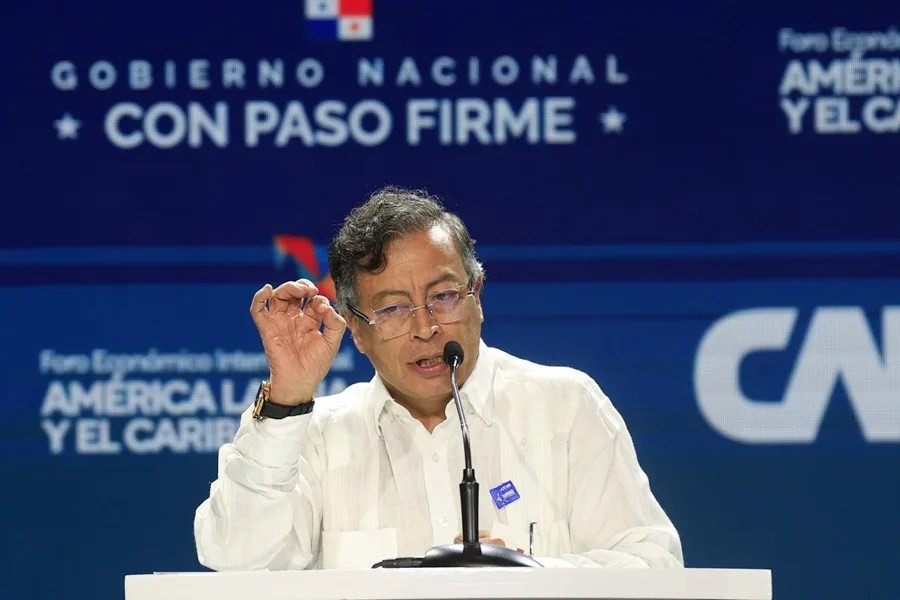
As Colombia and Ecuador engage in a heated dispute over narcotrafficking and tariffs, the situation underscores a broader failure to safeguard national sovereignty against transnational criminal enterprises. At the recent Latin America economic forum in Panama City, Colombian President Gustavo Petro extended an olive branch to Ecuadorian President Daniel Noboa, urging dialogue to tackle shared challenges — namely the surge in narcotics trafficking along their porous border and escalating tariff tensions.
Why Has the Drug War Failed to Protect Our Borders?
Petro bluntly admitted that the ongoing war on drugs has failed: “It grows, grows, and grows,” he said, noting that narcotics trafficking is no longer a regional issue but a globalized criminal network involving multinational actors—Latinos, Europeans, Americans alike. This alarming recognition demands scrutiny from an American perspective. The unchecked flow of cocaine through Colombia’s borders not only destabilizes neighbors but also fuels the drug epidemic devastating communities across the United States.
Yet instead of robust cooperation rooted in sovereign law enforcement, what do we see? An escalating “war” of tariffs between two South American neighbors. Ecuador imposed a 30% duty on Colombian goods beginning February 1st as retaliation against what it claims is insufficient Colombian crackdown on narcotraffickers. Colombia responded with reciprocal tariffs on over 50 Ecuadorian products and cut off electricity exports. Ecuador countered by hiking fees for transporting Colombian crude oil through its pipelines.
Trade Feuds Undermine United Front Against Transnational Crime
This tit-for-tat tariff battle weakens regional unity at a time when a unified front is critical to counteract sophisticated drug cartels operating across borders. Petro himself stressed that combating such powerful foes requires integrated police intelligence beyond bilateral agreements — inviting multilateral collaboration that includes neighboring countries and beyond.
But how realistic is this vision if political leaders prioritize trade wars rather than coordinated security efforts? For America, these disputes signal instability close to home. Our southern border faces spillover effects from such unresolved crises thousands of miles away. We must ask: How long will Washington allow fragmented regional approaches to jeopardize national security?
The America First principle demands that we support allies who demonstrate effective border control and fight illicit trade earnestly—not those who leverage narcotics issues as pretexts for protectionist barriers harming good-faith commerce.
President Trump’s prior focus on securing borders, dismantling cartels systematically, and imposing clear consequences contrasts sharply with today’s muddled diplomacy between Petro and Noboa — where talk replaces action while drug flows intensify.
Ultimately, the key question remains: Can Colombia and Ecuador move past petty economic disputes towards genuine law enforcement cooperation? Or will their failure continue feeding insecurity throughout Latin America — directly impacting our communities back home?