
China Pushes for a ‘Self-Sufficient Europe’ While German Leadership Risks Undermining U.S. Alliances
As Germany deepens ties with China, endorsing a vision of a self-reliant Europe detached from the U.S., America must question whether its trusted allies are safeguarding our national security or enabling Beijing’s global ambitions.
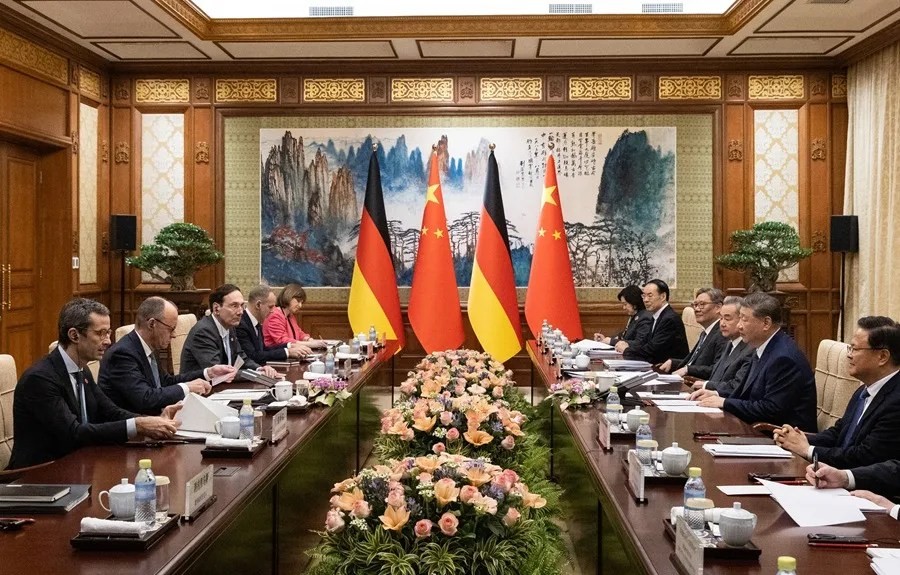
In a stark reminder that global power games are shifting in real time, Chinese President Xi Jinping welcomed German Chancellor Friedrich Merz in Beijing this week, underscoring China’s push for a Europe that is “independent and self-sufficient”. This diplomatic dance takes place amid intensifying commercial tensions, the ongoing war in Ukraine, and a growing rift between Europe and the United States — a development that should deeply concern every patriotic American.
Is Europe Walking Away from Its Anchor in America?
Germany’s eagerness to stabilize and expand its economic relationship with China appears to come at the expense of traditional transatlantic alliances. Chancellor Merz’s visit—the first since taking office—was marked not only by calls for multilateral cooperation but also by muted discussions on hard realities such as trade imbalances and China’s industrial overcapacity. Yet it was Xi’s insistence that both countries should lead defense of the United Nations-centered global order and free trade that signals Beijing’s broader agenda: weakening America’s strategic influence while drawing Europe closer into China’s orbit.
The implications for American sovereignty are profound. While Germany acknowledges economic interdependence with China, their leaders downplay the risks of becoming economically enmeshed with an authoritarian regime whose interests often run counter to ours. Merz himself warned against “decoupling,” framing it as self-harm; but how long can we tolerate economic partnerships that funnel wealth into regimes hostile to freedom?
Unpacking the Hidden Costs Behind Diplomatic Politeness
Despite official statements about dialogue and cooperation, sensitive issues like restrictions on strategic raw materials and industrial overcapacity remained delicately veiled or minimally addressed in public accounts—revealing an uneasy balancing act on Germany’s part. Moreover, Germany’s reliance on China as its top trading partner—a staggering €251.8 billion in transactions last year alone—raises alarms about supply chain vulnerabilities that directly affect America’s economic strength and national security.
The war in Ukraine further exposes conflicting priorities: Merz urged China to use its leverage toward political resolution; however, Beijing insists it is impartial while advocating negotiations that recognize all parties’ “legitimate security concerns”—a stance critics rightly interpret as tacit support for Russia’s aggression. America’s leadership in defending freedom globally faces erosion when key allies hedge their bets with authoritarian powers under the guise of neutrality.
This is not mere geopolitical chess—it has tangible consequences at home. As European partners inch toward autonomy from U.S.-led frameworks, Washington must ask: Are we seeing a dangerous drift away from shared values of liberty and national sovereignty? Or worse, are these actions emboldening adversaries who seek to undermine the very foundations of Western democracy?
The contrast with America First policies championed by leaders like President Trump could not be clearer. Their focus on strong alliances grounded in mutual respect and vigilance serves as a blueprint for confronting rising authoritarianism—not accommodating it.
For American families concerned about job security, technological edge, and global stability, these developments demand scrutiny—not silence. How long will Washington tolerate allies who gamble our collective security for short-term gains?