
Canadian PM’s Visit to Mexico Highlights NAFTA Tensions Amid U.S. Trade Turmoil
Canada’s Prime Minister Mark Carney visits Mexico amid escalating U.S. trade conflicts, spotlighting the fragile state of North American economic ties and raising urgent questions about America’s own trade strategy.
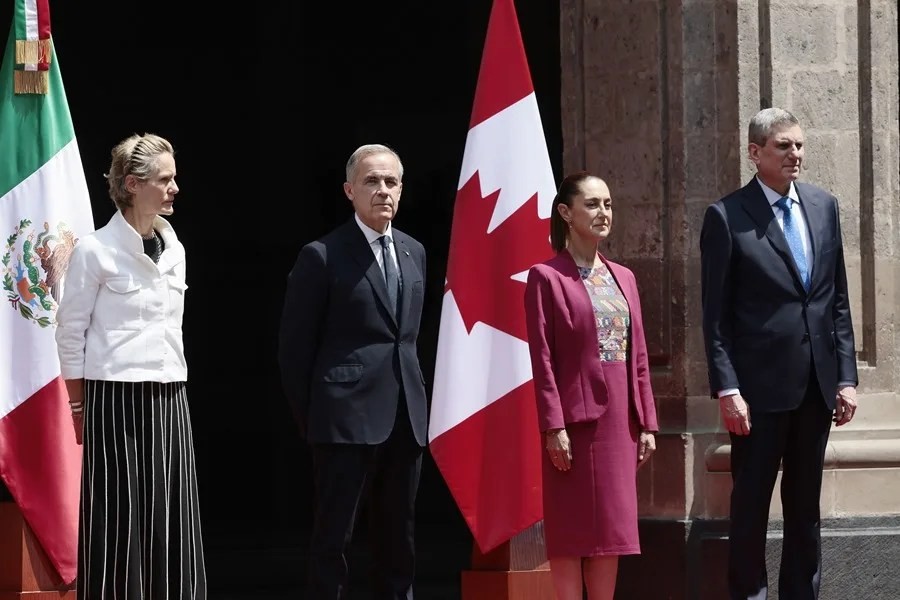
In a high-stakes meeting at Mexico’s Palacio Nacional, Canadian Prime Minister Mark Carney met with President Claudia Sheinbaum to discuss the future of North American trade and investment. This visit, coming amid Washington’s disruptive tariff policies, exposes the growing strains on the T-MEC trade agreement that underpins economic cooperation between the U.S., Canada, and Mexico.
Is America Ignoring the Economic Fallout at Its Own Borders?
The timing of Carney’s trip is no coincidence. As President Trump’s administration escalates a tariff war that shakes the continent’s supply chains, Canada and Mexico are forced to deepen their bilateral ties to safeguard their economies. Yet one must ask: where is the strategic leadership from Washington that prioritizes American workers and businesses? Instead, two close neighbors are left to negotiate their futures under mounting uncertainty.
Carney arrived at Felipe Ángeles International Airport and was greeted by Mexico’s Foreign Minister Juan Ramón de la Fuente — a formal reception signaling the importance of this dialogue. Among topics on the agenda were security, infrastructure, energy investments, and crucially, preparations for renegotiating T-MEC in 2026.
Why Should American Families Care About This Diplomatic Dance?
T-MEC represents more than just trade; it safeguards millions of jobs across borders. The disruption caused by unilateral tariffs threatens not only Canadian and Mexican interests but directly impacts American manufacturers and consumers through rising costs and supply chain instability.
This visit underscores the urgent need for a united North American front focused on economic sovereignty and shared prosperity rather than reactive policies that endanger all three economies. Canada’s move to strengthen ties with Mexico should ring alarm bells in Washington: if America forsakes principled leadership rooted in free enterprise and stable partnerships, it risks losing its competitive edge.
Ultimately, this meeting challenges policymakers to reflect on what “America First” truly means—does it mean isolation or strategic solidarity with neighbors who share our values and economic destinies? The stability of North America hinges on honoring agreements like T-MEC while resisting protectionist impulses that hurt everyday Americans most.