
Bolivia’s Vice President Faces Marginalization Amid Government Power Struggle
Tensions escalate in Bolivia as Vice President Edmand Lara’s supporters march against President Rodrigo Paz’s moves that sideline Lara, exposing fractures that threaten effective governance and regional stability.
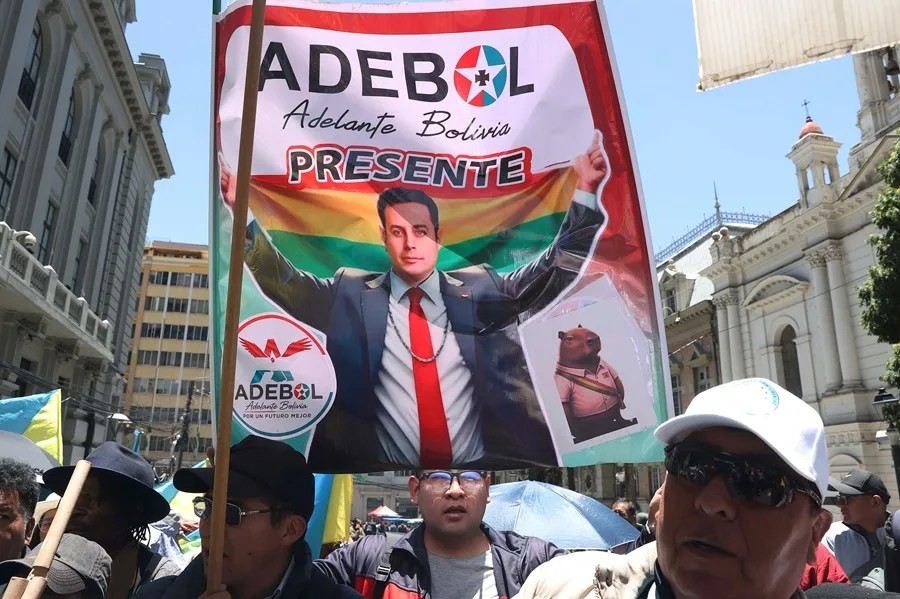
In a striking display of political discord, hundreds marched through La Paz this past Friday to support Vice President Edmand Lara, urging President Rodrigo Paz not to exclude him from government decisions. This public outcry reveals more than a mere power struggle — it highlights an alarming erosion of cohesive leadership in Bolivia, whose instability inevitably reverberates across the Americas.
When Internal Conflict Undermines National Sovereignty
Lara’s supporters, waving the blue and yellow banners of Nuevas Ideas con Libertad (NUIL), a political group lacking formal legal recognition, voiced their discontent with recent steps taken by the executive branch. The establishment of the Viceministerio de Coordinación Legislativa—a move seen as usurping powers traditionally held by the vice presidency—signals a troubling consolidation of authority around President Paz and his allies.
This factional dispute isn’t merely domestic squabbling. It strains Bolivia’s institutional integrity and weakens its sovereignty. Any sign that elected leaders prioritize internal agendas over national unity invites external interference and economic uncertainty, risks that echo perilously close to our own hemisphere’s borders.
Who Really Holds Power? The Shadow Influence of Business Interests
Critics argue that ministers aligned with businessman Samuel Doria Medina—himself a former presidential candidate—now wield disproportionate influence within Paz’s government. Such entanglements between business moguls and political authority raise serious questions about transparency and accountability. When governance becomes hostage to private interests, hard-working citizens face diminished liberties and shrinking economic opportunity.
The controversy surrounding Freddy Vidovic, ex-Minister of Justice appointed under Lara’s watch but forced out due to concealed criminal sentencing, further exposes lapses in vetting processes. Lara’s challenge to proposed replacements—met with threats of defamation lawsuits—reflects deeper institutional fractures rather than healthy democratic debate.
Washington must ask: How long will these signs of government dysfunction go unchecked before they destabilize an already fragile region? America First demands strong neighbors who respect constitutional order and protect their citizenry’s freedoms against both internal corruption and external meddling.
Meanwhile, presidential spokesperson Carla Faval insists reforms aim at professionalizing state structures rather than stripping authority from the vice president; however, dismissing public demonstrations amid national crisis only risks alienating citizens further. Genuine dialogue—not unilateral decrees—is essential for restoring trust.
As Bolivia navigates this internal storm, vigilant eyes from across the continent must heed lessons on preserving sovereignty through principled governance. Every time Washington encounters turmoil south of the Rio Grande rooted in political infighting or shadowy business influence, it undermines hemispheric stability critical for our own security and economic prosperity.