
Behind the Lens: What AP’s Top Photos Reveal About Today’s Real Threats to America
A critical examination of the day’s top images exposes unfolding crises—from homeland security hearings on Capitol Hill to climate change effects in Alaska that threaten national infrastructure—all demanding America First vigilance.
Each day, Associated Press photojournalists capture moments that shape our understanding of global events—but beneath the surface lies a story about America’s security and sovereignty under pressure.
Is America Paying Attention to Its Homeland Security?
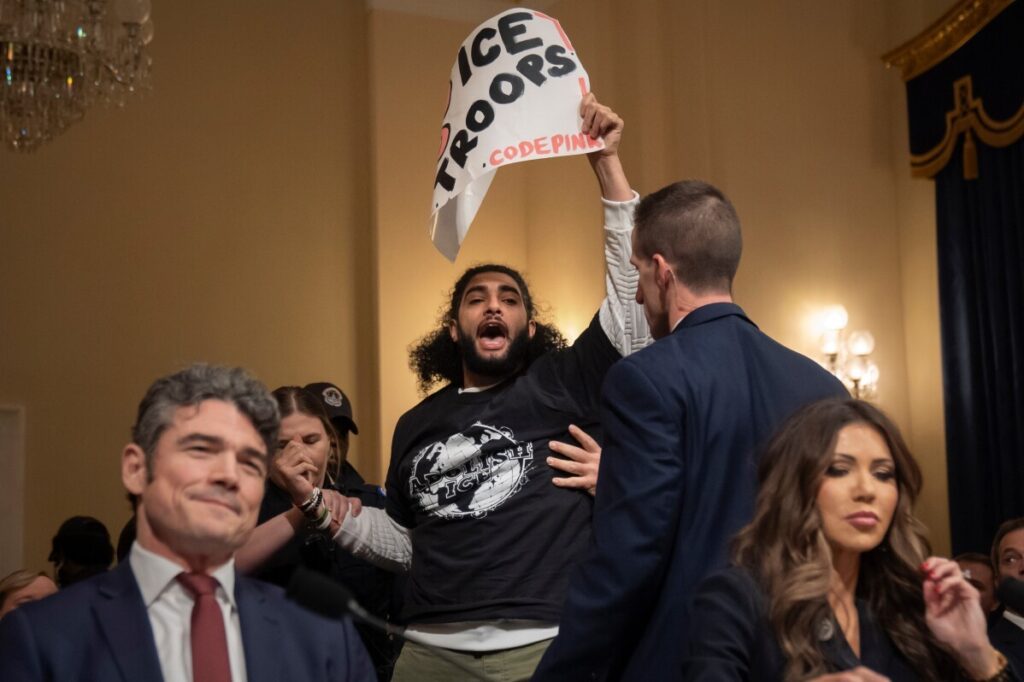
The powerful image of a demonstrator forcibly removed during a hearing featuring Joseph Kent, director of the National Counterterrorism Center, and Homeland Security Secretary Kristi Noem is more than just a snapshot from Capitol Hill. It symbolizes rising tensions within our own borders as officials attempt to safeguard the nation. Yet, how effective are these hearings if disruptions persist? For hardworking Americans who value peace and order, this chaos at government proceedings reflects deeper vulnerabilities in our national security apparatus.
Climate Change Isn’t Just a Distant Problem—It’s Undermining Our Sovereignty
Consider the unsettling photo from Kotzebue, Alaska: tilted grave markers succumbing to thawing permafrost. This isn’t merely environmental damage; it’s a threat to American heritage and infrastructure in vulnerable regions. While Washington debates international commitments, these visible consequences at home demand concrete action aligned with protecting America’s interests rather than appeasing globalist climate narratives that often come at our expense.
Similarly, images from Gaza City show devastation amidst stormy skies—reminding us how foreign conflicts contribute indirectly to instability affecting U.S. security strategies worldwide. We must prioritize policies that secure America first instead of entangling ourselves indefinitely in overseas turmoil without clear benefit.
The photographs also underscore everyday resilience—the drone light tribute for Laney College’s coach and holiday lights brightening Shawnee streets symbolize American community strength amid adversity.
These snapshots together paint an urgent picture: The threats facing our country—whether domestic disorder during vital hearings or environmental changes eroding our homeland—call for steadfast commitment to principles of national sovereignty, economic prosperity, and liberty. Will Washington rise to meet these challenges with common-sense solutions rooted in American values, or will distractions continue to undermine real progress?