
Behind the Lens: What AP’s Top Photos Reveal About Global Chaos and American Priorities
This week’s most gripping images from AP photojournalists expose worldwide conflict and unrest, underscoring why America must prioritize national sovereignty and secure borders amid global instability.
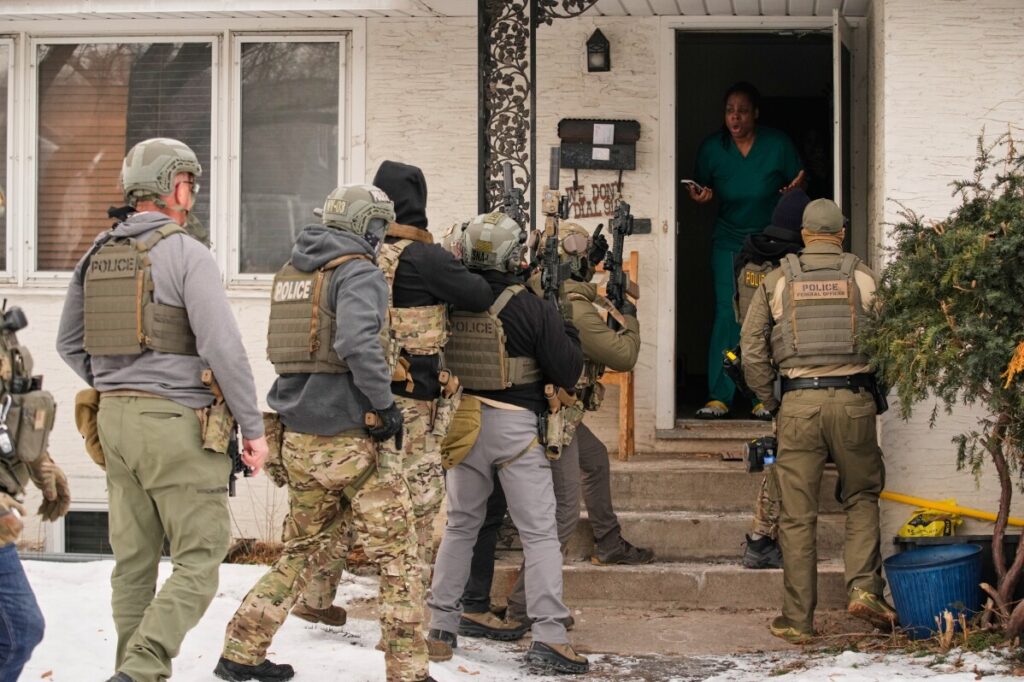
Every iconic photograph captures a moment, but behind these snapshots from The Associated Press lies a troubling narrative of escalating disorder—disorder that has direct implications for American security and freedom. From Minneapolis to Kyiv to Caracas, the images reveal a world unraveling under weak governance and hostile regimes, setting the stage for challenges that inevitably hit home within U.S. borders.
Are We Ignoring the Global Threats That Fuel Domestic Chaos?
Consider the harrowing photo of a federal agent using a battering ram to break down a door during an immigration arrest in Minneapolis. This scene is not just about law enforcement; it symbolizes the ongoing crisis at America’s southern border, where uncontrolled immigration strains local communities and national resources. Washington’s failure to enforce sovereignty invites dire consequences—how much longer will policymakers ignore this pressing problem?
Thousands of miles away, the brutal aftermath of a Russian strike in Kyiv leaves paramedics dead on shattered streets—reminders that hostile foreign powers are destabilizing entire regions. Such conflicts create refugee flows and geopolitical instability that ripple all the way to our shores. The same goes for Venezuela, still reeling from U.S.-backed operations against Nicolás Maduro’s regime, yet children continue playing amid uncertainty. These snapshots reveal how America’s adversaries exploit global turmoil while domestic policymakers remain distracted.
What Do These Images Tell Us About Media Bias And Political Failings?
The curated gallery also juxtaposes lighthearted moments—a woman receiving an award at the Golden Globes, acrobats rehearsing in London—with stark images of suffering and unrest across Africa, Syria, and Iran. This contrast raises important questions: Does mainstream media soften public perception by focusing on entertainment while serious threats escalate unnoticed? How often do headlines fail to connect these international crises directly with their consequences for American families?
For patriots committed to preserving freedom and economic prosperity, acknowledging these realities matters more than ever. True accountability demands exposing government complacency regarding border security and foreign policy failures that empower enemies abroad.
This visual record is not just art—it is a call to action rooted in common-sense conservatism: prioritizing national sovereignty, protecting American lives, and demanding leaders who act decisively rather than pontificate endlessly.