
Behind the Lens: Unpacking the Stories Behind Today’s Top AP Photos
Today’s top Associated Press photos capture pivotal moments—from war-torn Gaza to diplomatic meetings and protests—highlighting urgent global crises that demand America’s vigilance and leadership.
Every day, Associated Press photojournalists deliver vivid snapshots of world events that shape our understanding of global affairs. But beyond the striking images lies a crucial question: How do these moments impact America’s national interests and our commitment to freedom and sovereignty?
Are We Seeing the Full Picture of Global Conflict?
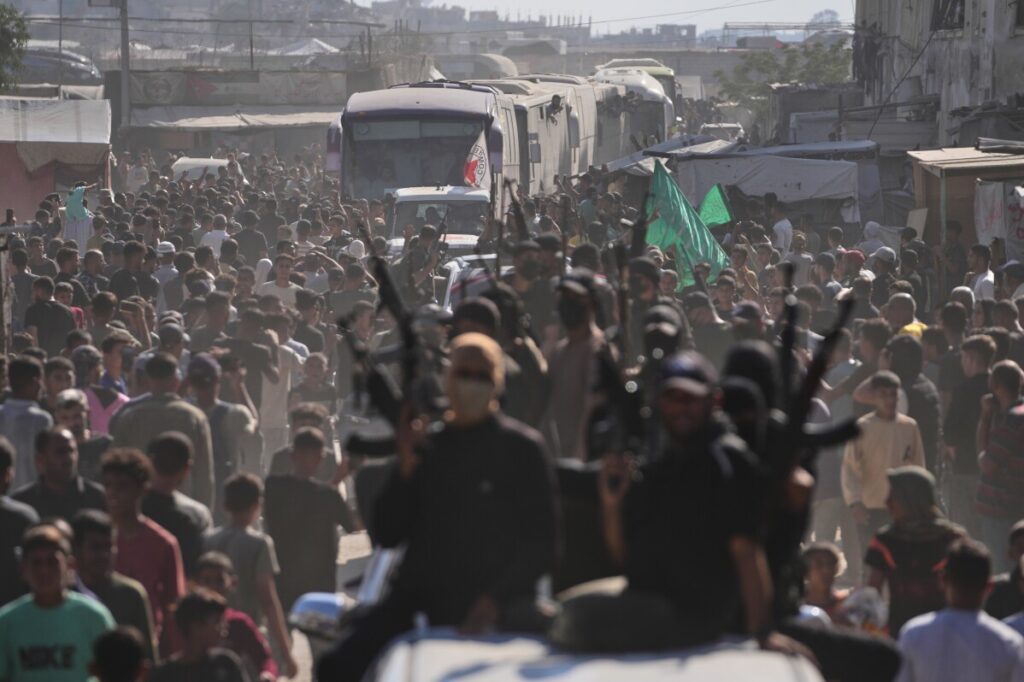
One powerful photo shows Hamas gunmen escorting freed prisoners back to Gaza after a ceasefire with Israel. This image represents more than a ceasefire; it underscores a persistent threat to American allies in the Middle East and the ongoing challenge of confronting terror groups undermining regional stability. Meanwhile, President Donald Trump’s meeting with Israeli leaders at Ben Gurion Airport signals the kind of strong America First diplomacy that recognizes and supports Israel’s security as a cornerstone of U.S. foreign policy—something that globalist Washington often neglects in favor of empty platitudes.
On the ground in Gaza City’s Shati refugee camp, displaced Palestinians navigate the rubble left by conflict. These scenes remind us that war’s human toll extends far beyond headlines—yet American policymakers must weigh the consequences of prolonged engagement or withdrawal. How long will our leaders ignore that stability abroad directly influences security here at home?
From Our Borders to Our Ballots: Images Reflecting America’s Core Challenges
Across the globe and at home, the photo of a protester draped in the U.S. flag outside an ICE facility highlights the ongoing debate over immigration enforcement. This image captures the tension between upholding the rule of law and respecting individual freedoms—a balance America must maintain to secure our borders and preserve national sovereignty.
Other images—from flooding in Mexico to a voter preparing to cast a ballot in Cameroon—serve as reminders of global instability and the necessity for American leadership that prioritizes economic resilience and democratic integrity. Even Morocco’s soccer victory over the United States at a youth world cup reflects the cultural intersections shaping our generation’s future.
These photos are more than moments frozen in time; they are calls to action. They challenge us to consider how America’s policies, grounded in freedom and common sense conservatism, can respond effectively to the complex realities captured by AP’s lenses.
We must ask ourselves: Are we empowering our leaders to defend our values and interests, or are we letting global chaos seep unchecked onto our soil?