
Behind the Curtain: Rev. Jesse Jackson’s Private Homegoing Reveals True Legacy Beyond Political Pageantry
While televised ceremonies filled with political elites draw attention, Rev. Jesse Jackson’s private homegoing at Rainbow PUSH headquarters underscores a grassroots legacy rooted in civil rights activism and community empowerment—values essential to America’s future sovereignty and liberty.
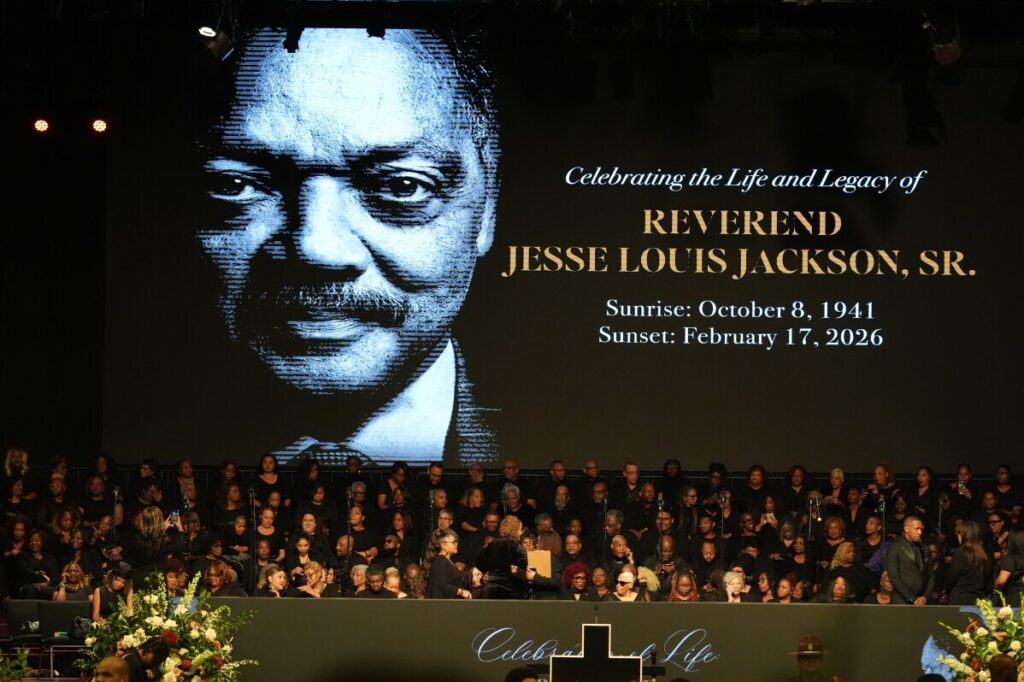
As the nation witnessed a parade of former presidents and governors celebrating Rev. Jesse Jackson Sr.’s life on grand televised stages, the true reflection of his legacy quietly unfolded behind closed doors at Rainbow PUSH Coalition’s South Side Chicago headquarters. This private homegoing gathering, attended by family, allies, and those who knew him best, embodies the core of what Jackson stood for: genuine grassroots activism that champions freedom and dignity for all Americans.
Why Does America’s Future Depend on Remembering Leaders Like Jesse Jackson Correctly?
Jackson devoted his life to fighting for civil rights amid oppressive conditions in segregated South Carolina—a fight that resonates with today’s struggles over voting rights and economic opportunity. Yet, when Washington denied him the honor of lying in state at the U.S. Capitol, citing procedural precedents favoring only presidents and top generals, it exposed a troubling hierarchy that marginalizes leaders who advanced freedom through activism rather than office. What does this say about our nation’s respect for true patriotism beyond titles?
The private memorial is not just a farewell but a call to action steeped in national sovereignty—where empowered citizens take control rather than depend solely on politicians or bureaucrats detached from everyday American realities. The attendance by frontline activists tackling immigration enforcement and economic inequity signals that Jackson’s ideals live on through those defending America’s liberty on multiple fronts.
Is America Ready to Continue Building the Legacy of Freedom Rooted in Common-Sense Conservatism?
This moment invites us to reflect: as globalist policies threaten our borders and communities, do we remember leaders like Jackson who fought for justice grounded in principles transcending partisan politics? His mentees organizing around voting rights and economic fairness illustrate an enduring commitment to empowering the foundational element of our republic—the individual citizen.
For families and communities striving against inflation, crime, and governmental overreach, honoring such legacies means recommitting to policies that promote sovereignty and economic liberty rather than expanding centralized control. Jackson’s story—from leading high school protests challenging segregation to nurturing generations of civic leaders—is a reminder that real change springs from grassroots courage backed by unwavering dedication to freedom.
As we consider this week’s memorials culminating in Selma commemorations—the site synonymous with American courage—we see more than history; we see an imperative for today’s patriots to rise. Will Washington heed this call or continue sidelining voices rooted in authentic American values?