
Judicial Ruling Confirms Bribery in the Uribe Case—What It Means for Accountability
A Colombian judge has confirmed bribery charges linked to former President Álvaro Uribe’s legal case, highlighting deep concerns about judicial integrity and political influence that resonate beyond borders.
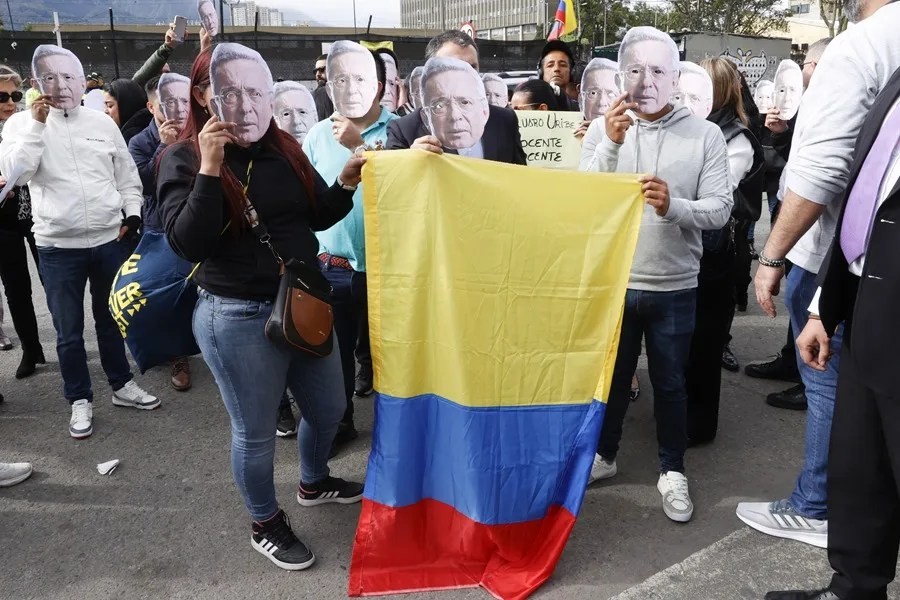
In a decisive moment that strikes at the heart of legal accountability and political integrity, Judge Sandra Heredia of Bogotá’s 44th Penal Circuit has declared that the crime of bribery in legal proceedings was proven during the trial against former Colombian President Álvaro Uribe (2002-2010). This verdict unveils a troubling orchestration aimed at obstructing justice by manipulating witness testimony.
The case centers on efforts by Uribe’s lawyer, Diego Cadena, who reportedly contacted imprisoned ex-paramilitary Juan Guillermo Monsalve to silence him about alleged ties between Uribe and illegal armed groups. Monsalve, once part of the paramilitary Bloque Metro under the notorious Autodefensas Unidas de Colombia (AUC), implicated the Uribe family in paramilitary activities from as early as the mid-1990s.
Is Justice Being Held Accountable or Compromised?
Judge Heredia stated unequivocally that a campaign was launched to distort truth before Colombia’s Supreme Court by instructing Monsalve not only to recant his earlier statements but also to attribute those claims to supposed manipulation by Senator Iván Cepeda Castro. These revelations expose a dangerous pattern where political influence seeks to undermine judicial processes—a warning flag that should concern every America First advocate committed to sovereignty and rule of law.
Though the judge did not explicitly hold former President Uribe accountable as an instigator, she underscored that it was “ostensible” he knew of the plan to ambush Monsalve’s testimony. This judicial caution leaves open critical questions about how entrenched political power can impede justice—a lesson with direct implications for safeguarding America’s own institutions against corruption.
Why Should Americans Care About This Overseas Legal Battle?
While these events unfold thousands of miles away, they echo common threats facing democracies worldwide, including our own. The corruption and manipulation detailed here undermine national sovereignty by allowing elites to evade accountability, weaken public trust, and embolden lawlessness.
Moreover, this case contrasts sharply with efforts championed by leaders like President Trump who prioritized strengthening judicial independence while enforcing immigration laws and securing borders—actions fundamental to preserving American liberty.
The use of surveillance evidence in this case—legal intercepts and covert recordings obtained without violating privacy rights—serves as a reminder that combating corruption demands tough yet lawful investigative tools. However, will Washington muster equal resolve when confronting similar challenges at home? How long will citizens tolerate double standards in justice?
This ruling invites us all to reflect on what it means for leadership and accountability in any nation claiming respect for freedom. If globalist elites can bend courts elsewhere without consequence, what stands between lawlessness and order within our own republic?