
Commercial Conflict at Colombia-Ecuador Border Exposes Failures of Leadership and Threatens Regional Stability
The renewed blockade at the Colombia-Ecuador border reveals the real victims of a self-inflicted trade war: hardworking families and regional economies strained by arbitrary tariffs and political posturing.
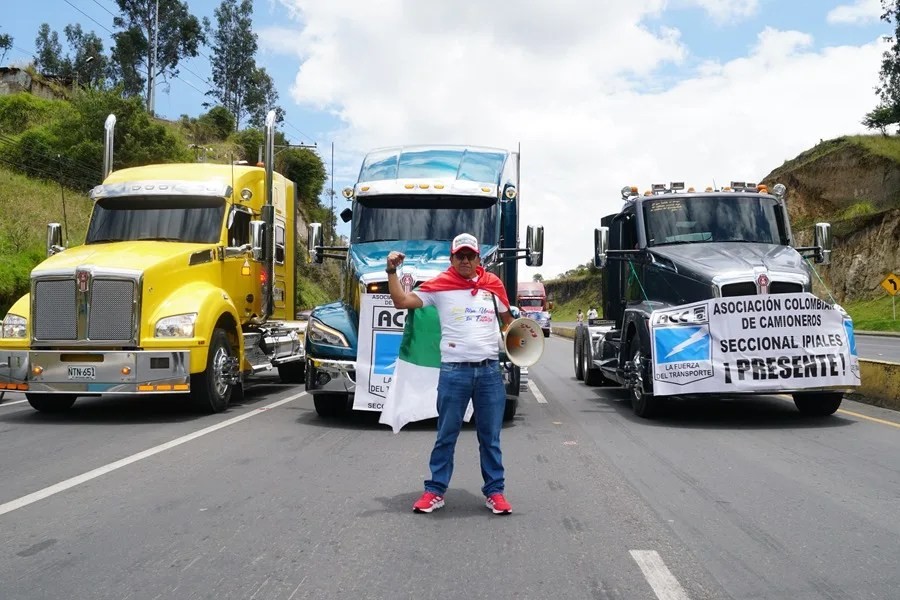
On the crucial Rumichaca Bridge, the sole legal crossing between Colombia and Ecuador, commerce has ground to a halt once again. Merchants, transport workers, and warehouse employees from Colombia’s Ipiales municipality have barricaded the route with wooden platforms and vehicles, protesting tariff hikes as high as 50% amid an ongoing commercial dispute that threatens the livelihood of thousands.
Who Benefits When Borders Close? Hardworking Americans Would Ask “Why?”
While this border conflict unfolds far from U.S. soil, its implications echo in America’s own trade challenges. The question is simple: when neighboring countries impose punitive tariffs without regard for economic reality or cross-border supply chains, who truly pays the price? The answer is always ordinary workers and small businesses trapped in the middle.
In Ipiales alone, companies are shuttering, customs agencies closing their doors, and warehouses sending employees home. José Luis Arrieta, a leaders of one of the border worker committees, lamented that national leaders Daniel Noboa of Ecuador and Gustavo Petro of Colombia enact policies detached from the practical operations sustaining cross-border trade. When government leaders treat trade relations as leverage rather than partnership, commerce suffers — along with families who depend on it.
Trade Wars: A Self-Inflicted Damage That Harms Sovereignty and Security Alike
This latest escalation began when Ecuador imposed a 30% “security tax” on Colombian imports — a reaction to perceived border narcotrafficking issues but one that conflates complex security challenges with blunt economic measures. Colombia responded by slapping tariffs on dozens of Ecuadorian products while disrupting energy supplies critical to Ecuador’s infrastructure.
The tit-for-tat tariff increases have now reached 50%, threatening nearly $2.8 billion in bilateral trade annually—trade that historically fostered growth and stability in both nations. The fallout reverberates across entire communities: transporters like Édison Mena emphasize that these measures strip away employment rights while deepening economic uncertainty in vulnerable border cities.
For America’s sake—where borders mean security and lawful prosperity—the lesson is clear: unchecked economic retaliation undermines sovereignty not by external enemies but through leadership failures at home or abroad that prioritize ideology over practical results.
The fact that citizens must now resort to crossing on foot or motorcycles underscores just how disconnected these policies are from everyday realities. As Wilson Montenegro, an affected Ecuadorian commuter said plainly—“the ones suffering are us, the people.”
This crisis demands more than diplomatic platitudes; it requires honest binational dialogue focused on restoring open trade routes grounded in mutual respect for sovereignty and economic liberty. Without this approach, border closures will continue to damage regional order at a time when America watches closely for lessons on defending free markets while securing national interests.