
Russia Claims to Down 124 Ukrainian Drones Across 17 Regions Amid Escalating Conflict
Russian air defenses reportedly shot down 124 Ukrainian drones across key regions including Moscow and Crimea, highlighting the ongoing aerial warfare that threatens regional stability and challenges American interests.
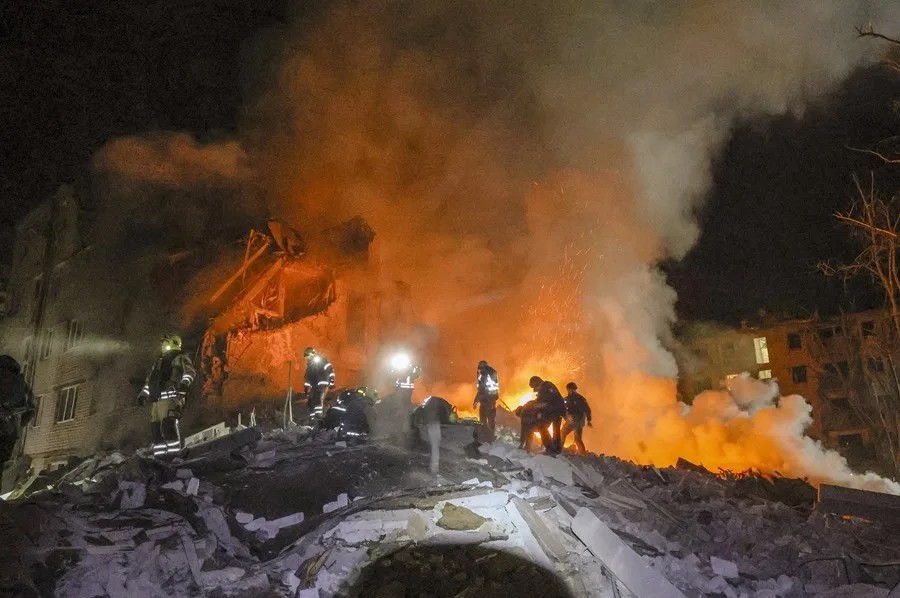
As tensions in Eastern Europe escalate, Russia announced it intercepted an unprecedented 124 Ukrainian drones over the course of a single night, targeting locations from Moscow itself to Crimea, the peninsula controversially annexed in 2014. According to a statement released by the Russian Ministry of Defense via Telegram, these were fixed-wing drones shot down by active air defense systems across 17 regions.
The distribution of drone interceptions concentrated heavily in border areas such as Bryansk (29), Oryol (15), and Belgorod (11), with others downed in Ryazan, Kaluga, Voronezh, Kursk, Rostov, Volgograd, Crimea, Tula, and Samara. Notably, at least one drone was intercepted while approaching the Moscow region’s capital city—highlighting the bold reach of Ukraine’s unmanned aerial campaign.
The human toll is emerging as well. The governor of Samara reported at least one individual wounded due to these attacks. Meanwhile, operational disruptions cascaded as several airports in Tatarstan—including Kazan and Nizhnekamsk—shut down due to ongoing security risks.
What Does This Mean for American Interests?
This surge in drone activity underscores a volatile regional dynamic that cannot be disentangled from U.S. national security calculations. As Washington contemplates its role amid this conflict—balancing support for Ukraine against avoiding direct confrontation with Russia—a sharp increase in proxy hostilities dangerously raises stakes for global stability.
How long will Washington tolerate increased aggression that fuels instability along NATO’s eastern flank? The drone barrage illustrates not just a military tit-for-tat but also a battle over sovereignty and influence in Europe—core tenets at the heart of America First policy principles emphasizing strong borders and secure allies.
Is This a New Phase in Hybrid Warfare?
The increasing use of drones represents a modern twist on asymmetric warfare strategies employed by states like Russia and Ukraine alike. For American defense planners committed to preserving liberty through strength, this situation highlights the urgent need to invest robustly in counter-drone technologies and intelligence capabilities.
Failure to do so risks American families facing ripple effects—whether through disrupted energy markets or increased pressure on allied nations critical to our economic prosperity and security.
In confronting these challenges head-on with clear-eyed realism rather than wishful thinking or globalist appeasement, we uphold America’s role as a beacon of freedom grounded in common-sense conservatism.