
New York Governor Demands End to ICE Raids Amid Questionable Legal Boundaries
Governor Kathy Hochul’s call to halt what she terms ‘aggressive and illegal’ ICE operations in New York raises critical questions about enforcement, public safety, and constitutional standards under federal immigration policy.
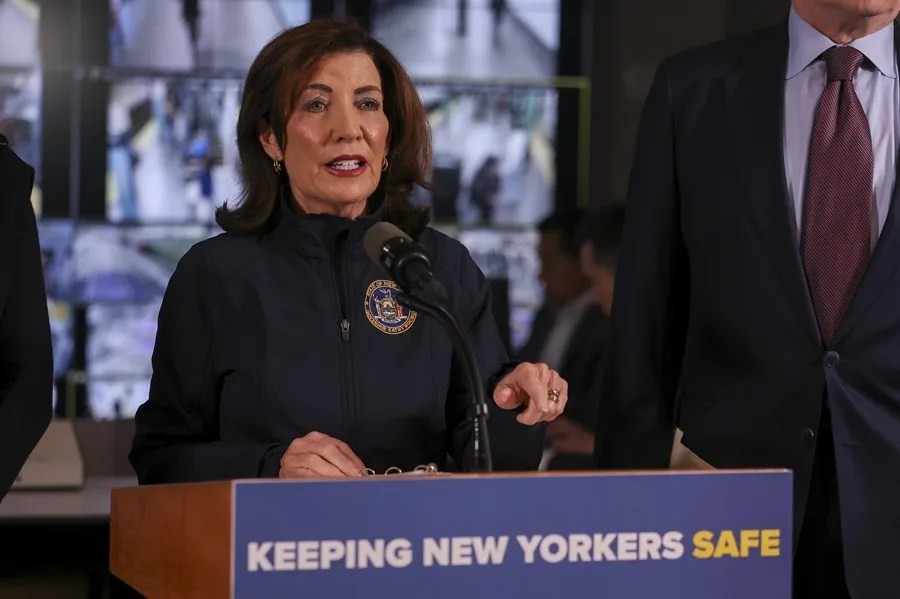
New York’s Governor Kathy Hochul recently confronted top White House border official Thom Homan over concerns about Immigration and Customs Enforcement (ICE) raids she describes as “aggressive and illegal.” Meeting in Albany, Hochul demanded a stop to these operations, which have sparked controversy by targeting individuals ranging from street vendors to students at Columbia University.
When Enforcement Becomes Overreach: Who Really Pays the Price?
Hochul’s objections highlight a growing tension between federal immigration enforcement and state sovereignty. While ICE claims these raids align with President Trump’s administration policy prioritizing removal of criminal and undocumented aliens, the governor insists that many targeted individuals are law-abiding residents or seeking legal status. Calling for adherence to constitutional protections, she stresses that unchecked ICE tactics jeopardize the safety of communities rather than enhance it.
Yet how effective is this approach if it alienates law enforcement partners at the local level and threatens to disrupt families contributing to their neighborhoods? The America First principle values secure borders balanced with respect for lawful residency. Policies must not only focus on removal of genuine threats but also protect citizens’ rights without infringing on due process.
Is Political Posturing Undermining National Security?
Governor Hochul’s public denouncement without attendance by Homan at the press conference signals a disconnect between federal priorities and state leadership—potentially emboldening sanctuary policies that complicate immigration enforcement nationwide. Her insistence on halting large detention centers may appease activist constituencies but risks creating loopholes exploited by unlawful migrants crossing America’s borders unchecked.
The tragic account of a disabled Burmese refugee dying after release from Border Patrol custody underscores the complexity of managing humanitarian concerns alongside sovereignty. Still, national security demands clear-eyed policies that do not sacrifice American communities’ stability or overextend state authority into federally mandated immigration enforcement.
Ultimately, safeguarding our nation requires cooperation built on mutual respect for constitutional boundaries and America First values. Washington must ensure immigrant laws are enforced fairly yet firmly—preserving security while welcoming those who abide by our laws.
The question remains: will leaders like Governor Hochul prioritize political optics over practical solutions that keep American families safe? Or will Washington double down on policies that empower local governments aligned with common-sense conservative principles? This debate is far from settled—and every American has a stake in its outcome.