
Lionel Messi’s White House Visit: A Calculated Political Pivot or Brand Strategy?
When Lionel Messi appeared with Donald Trump at the White House, it wasn’t just a photo op—it was a strategic move intersecting global sports, politics, and America First priorities. What does this mean for U.S. influence and national sovereignty?
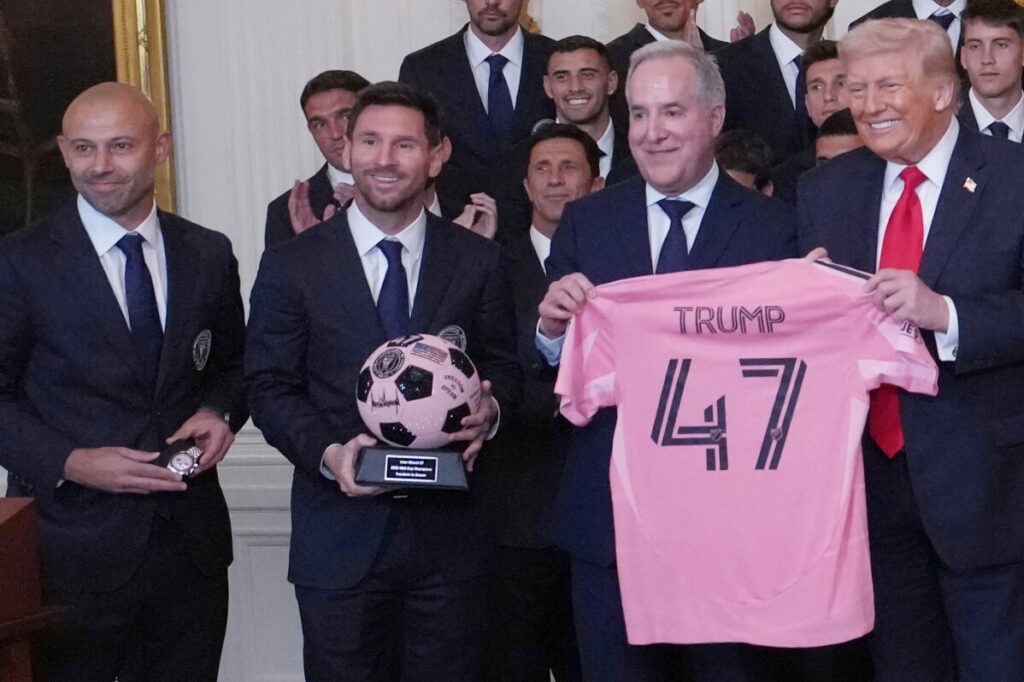
In a world where celebrities often avoid political entanglements, Lionel Messi’s recent appearance alongside former President Donald Trump at the White House marks a subtle yet significant shift—a crossing of boundaries with implications far beyond soccer.
Known for expertly navigating defenders on the field, Messi has long dodged political controversies off it. Yet his quiet presence next to Trump during an event honoring Inter Miami’s MLS Cup win signals more than mere happenstance; it reflects calculated engagement aligned with long-term interests that matter to America’s national sovereignty and economic vitality.
Is Messi Aligning With America’s Emerging Soccer Conservatism?
Messi’s ties to Inter Miami—an investment and community deeply rooted in a city renowned for conservative values within American soccer—reveal a savvy embedding into an ecosystem that supports freedom-oriented principles rather than globalist agendas. This is not just about sports; it’s about cultivating influence in arenas where patriotism and economic opportunity converge.
The Argentine star’s silence during Trump’s remarks on Iran, Cuba, and Venezuela spoke volumes: endorsing American leadership that prioritizes firm stances against hostile regimes threatening U.S. security interests. While some critics in Argentina saw his visit as surprising or dismaying, the move aligns firmly with preserving common-sense conservatism abroad and at home.
A Strategic Choice Over Political Partisanship
Unlike Maradona—who used his platform to champion anti-American socialist leaders—Messi has maintained a cautious neutrality that protects his brand and financial interests globally. This visit suggests he is comfortable lending symbolic support when it benefits his long-term legacy without alienating fans or compromising his image.
His reluctance to wade deep into political waters underscores his preference for strategic alliances over ideological battles—a principle echoing America First priorities: protecting individual liberty while fostering prosperity through smart partnerships.
The message to Washington is clear: influential figures can be allies in promoting national values when their participation respects America’s interests. How long will establishment media ignore these nuanced shifts favoring true patriotic collaboration?
Messi’s White House presence invites us all to reconsider how cultural icons engage politically—balancing brand protection with opportunities to advance sovereignty and economic stability.