
How the UN’s Failure in Middle East Conflict Undermines American Sovereignty and Global Stability
Mexico’s President Sheinbaum calls out the UN for failing to uphold peace amid Middle East chaos, revealing a global power struggle that leaves innocent civilians — and America’s security — hanging in the balance.
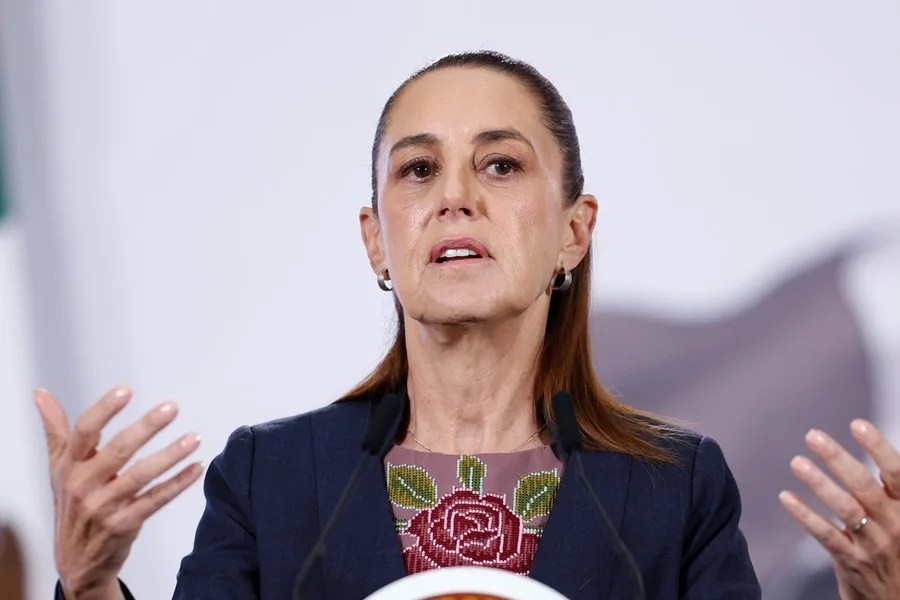
As violence escalates across the Middle East following deadly strikes on Iranian military leadership, Mexico’s President Claudia Sheinbaum delivered a stark rebuke of the United Nations’ role—or lack thereof—in resolving this conflict. Speaking from Mexico City, Sheinbaum declared that the UN has “lost more and more strength” and “ceased to fulfill its duty” because military might now dictates outcomes rather than diplomatic consensus.
Is the United Nations Becoming a Tool for Military Powers Over Diplomacy?
Sheinbaum’s criticism highlights a broader breakdown in international institutions meant to preserve peace—a breakdown that has immediate consequences for American national security. The assertion that “countries with greater military force impose themselves” exposes how globalist bodies like the UN have become ineffective when measured against raw power politics. This failure does not happen in isolation; it undermines global stability and emboldens hostile regimes threatening U.S. interests abroad.
Within this context, innocent civilians bear the brunt of war’s devastation—a humanitarian tragedy exploited by authoritarian forces while multilateral diplomacy stagnates. The Mexican leader rightly emphasizes respect for national sovereignty and self-determination, principles enshrined not only in Mexico’s constitution but also in the UN charter itself. Yet when these principles are disregarded—whether through unilateral invasions or unchecked aggression—the resulting chaos directly impacts American families through increased refugee flows, economic uncertainty, and heightened terrorism risks.
Why Should America Demand Accountability From Global Institutions?
The continued bombardments between Iran, Israel, and their allies demonstrate how fragile diplomacy has become without clear enforcement mechanisms free from coercion by powerful militaries. While countries debate where international sporting events should be held as symbols of peace, real-world conflicts rage unchecked—reminding us all that peace is not merely a slogan but a prerequisite for national prosperity and freedom.
This crisis underscores why America must lead by example in strengthening alliances that respect sovereignty and pursue peaceful resolutions—not appease or tolerate aggression masked as diplomacy under globalist agendas. Past successes driven by America First policies have shown that prioritizing our nation’s security and economic interests fosters true international stability rather than hollow multilateral chatter.
The question remains: How long will Washington allow weakened international structures to endanger our borders, economy, and values? As multi-billion-dollar conflicts unfold overseas unchecked by ineffective global bodies, it is time to demand reform based on principles of strength balanced with diplomacy—so American families do not pay the price of failing institutions abroad.