
Deadly Military Cargo Plane Crash in Bolivia Exposes Risks of Negligent Oversight
A deadly crash of a Bolivian Air Force cargo Hercules plane has left 15 dead, dozens injured, and raised serious questions about aviation safety and security protocols near critical infrastructure, underscoring the dangers of lax oversight that should concern all nations prioritizing sovereignty and security.
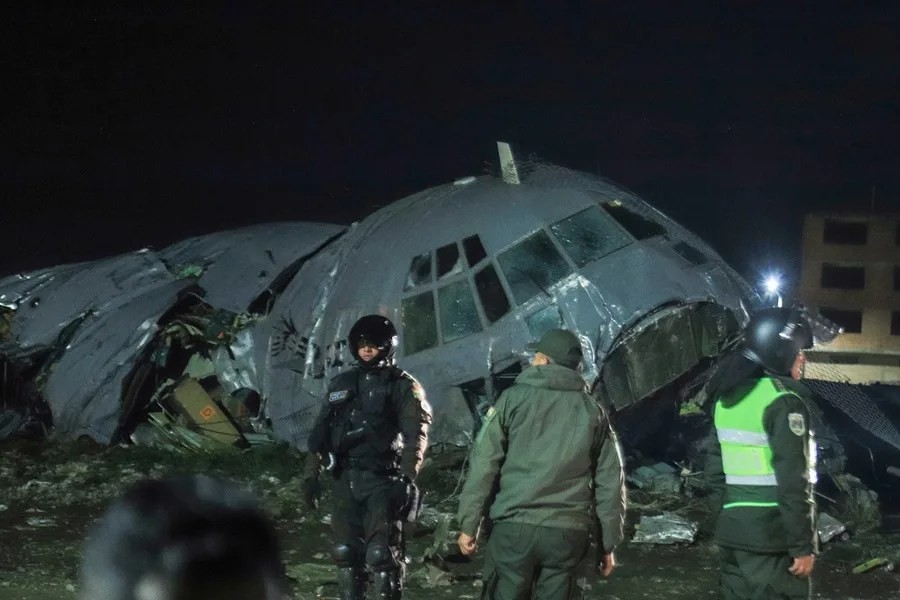
On a tragic Friday at El Alto International Airport in Bolivia, a military cargo plane failed to stop on an icy runway, crashing beyond the airport perimeter. The aftermath: at least 15 dead, 28 wounded, and damage to over a dozen vehicles. What should have been a routine mission delivering new currency notes to the nation’s central bank turned into a devastating disaster revealing glaring lapses in safety protocols.
Could This Tragedy Have Been Prevented?
The Bolivian Air Force’s Hercules aircraft experienced brake failure after landing on an ice-covered runway caused by earlier hailstorms. The inability to control the landing sequence forced it off the tarmac into nearby streets, causing casualties among civilians and damage to private property.
Alarmingly, despite the inherent risks of operating heavy military cargo aircraft in urban-adjacent airports — especially under adverse weather conditions — there appears to have been inadequate preparation or contingency planning. The response involved mobilizing roughly 600 soldiers and over 160 police officers to contain chaos including attempts by locals to seize scattered currency bags from the wreckage.
Why Should Americans Care About Bolivia’s Aviation Safety Failures?
While this tragedy unfolded thousands of miles away, its implications resonate deeply with America’s commitment to national sovereignty and secure borders. Lax aviation oversight anywhere emboldens global instability and raises risks for international air traffic—an area where American security interests are paramount. Moreover, watching how state actors respond (or fail to) such emergencies offers lessons in accountability that should inform our own domestic policies.
The incident also underscores the importance of strict enforcement against illegal activities. As desperate crowds tried grabbing worthless yet officially controlled Bolivian banknotes from wreckage — which authorities rightfully labeled illegal tender—security forces used tear gas to maintain order. This chaotic scene reveals how fragile law and order become when government systems falter.
Contrast this with America’s consistent focus on protecting vital infrastructure—from airports to financial institutions—and upholding public order through disciplined enforcement of laws that preserve economic liberty and national security.
The Bolivian government expressed condolences but remains opaque on corrective measures beyond investigation promises. As citizens worldwide demand transparency and accountability after such preventable disasters, one has to ask: How long will governments tolerate complacency before implementing necessary reforms?
This tragedy is a stark reminder: safeguarding national assets—from citizens’ lives to monetary systems—requires constant vigilance free from bureaucratic neglect or political distractions.