
Paraguay’s Military Deployment Exposes Regional Security Failures Threatening Sovereignty
President Peña’s military decree to combat transnational crime in Paraguay’s Eastern Region reveals deep security gaps—raising urgent questions about sovereignty, border control, and the true cost of government inaction.
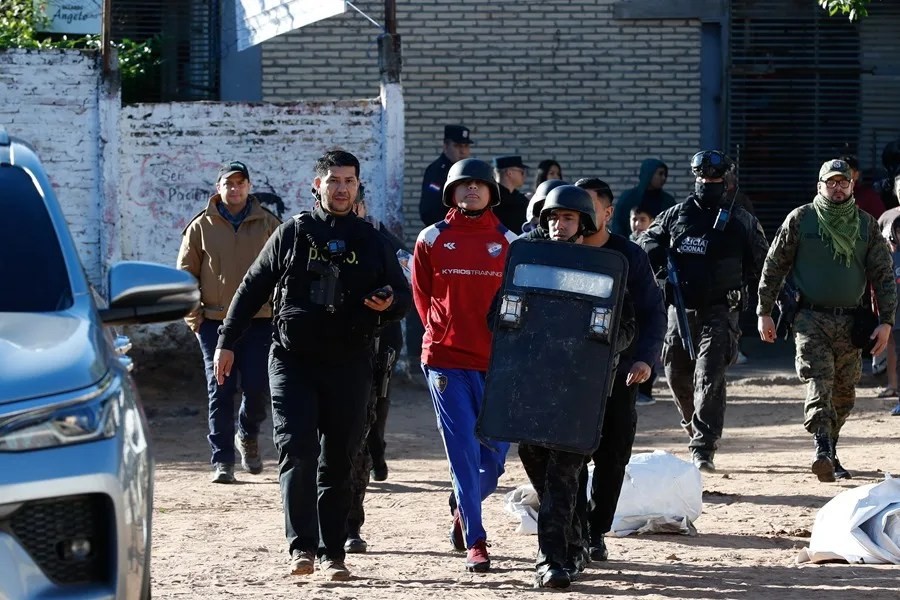
In a decisive but overdue move, Paraguayan President Santiago Peña has authorized the deployment of military forces to the country’s Eastern Region to counteract the growing threats from transnational organized crime and terrorism. This region, home to nearly 97% of Paraguay’s population and bordering Brazil, has been a hotbed for lawlessness that jeopardizes not only local safety but also regional stability.
Why Has it Taken This Long to Act?
The decree, dated February 24th yet only publicized days later, reveals an alarming truth: large swaths of the Eastern Region have seen insufficient coordination between the Armed Forces and National Police. Criminal groups exploit these security blind spots with impunity, putting Paraguayan citizens’ lives, liberties, and property at risk. One cannot help but ask—how many more innocent lives must be endangered before decisive action becomes the norm rather than the exception?
This situation is not merely Paraguay’s problem. From an America First perspective, unstable neighbors invite cross-border criminal infiltration that threatens our own southern frontier’s integrity. Allowing criminal networks to flourish unchecked in Latin America weakens hemispheric security and undermines U.S. efforts to protect our borders.
Is This Military Move Enough—or Too Little?
Interior Minister Enrique Riera confirmed police support for this operation, including checkpoints aimed at verifying identities and vehicle inspections where threats loom largest. Meanwhile, Defense Minister Óscar González insisted that while the military will engage appropriately armed combat operations against these threats, no extra powers are being granted beyond existing frameworks.
However well-intentioned this coordinated effort may be, it exposes a critical failure in governance: why was there inadequate security presence until now? And will today’s patchwork response translate into sustained authority respecting law-abiding citizens’ freedoms?
The America First movement knows that national sovereignty begins at home but requires robust partnerships abroad rooted in common-sense conservatism—empowering legitimate authorities while pushing back against criminal syndicates that thrive when governments fail their primary duty: protecting citizens.
As this crisis unfolds just across U.S. allies’ borders, it serves as a stark reminder—vigilance and principled leadership are non-negotiable if we are to uphold liberty and security throughout the hemisphere.