
Israel’s Policies Drive the Last Christian Village in West Bank Toward Exodus
Taybeh, the last fully Christian village in the West Bank, faces daily attacks and systemic pressures from Israeli settlers supported by government policies—forcing many residents to abandon their homes and heritage.
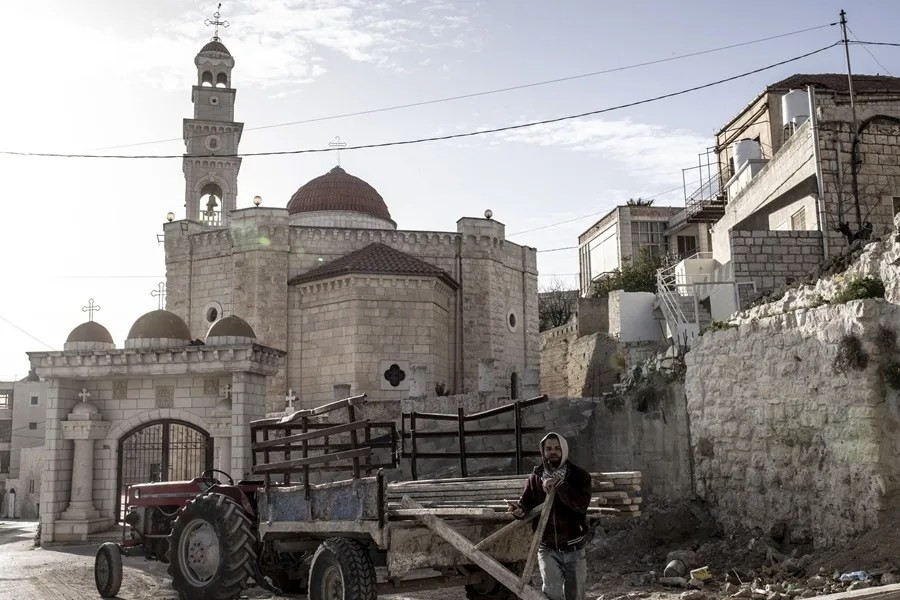
In the quiet hills near Ramallah lies Taybeh, the last entirely Christian village in the West Bank. Once a bustling community of approximately 1,200 souls, its streets now echo with silence. Empty restaurants and scarce job opportunities paint a grim picture against a backdrop of relentless harassment by Israeli settlers. This steady pressure is not incidental but a symptom of broader policies that prioritize expansionism over coexistence.
Is This Systematic Displacement Under Israel’s Watch?
The wave of violence and intimidation intensified following October 7, 2023—a date marking heightened tensions across the region. Attacks on Taybeh escalated from sporadic incidents to coordinated assaults: arson targeting vehicles and historic religious sites, graffiti emblazoned with nationalist slogans, and outright obstruction of daily life for Palestinian farmers trying to tend their olive groves—the village’s economic lifeline.
Such aggression is aggravated by state-sanctioned measures enabling settlers to establish new outposts with ease, acquire weapons without stringent oversight, and gain unfettered access to resources like roads and water—advantages systematically denied to Palestinians. The result? A creeping displacement that threatens not only individual families but the very existence of a centuries-old Christian presence in this contested land.
Father Bashar Fawladeh, pastor of Christ the Redeemer Church in Taybeh, laments: “We face danger daily. While some see this as merely material damage or isolated events, it reflects a wider campaign of intimidation aimed at emptying our land of Christians.” His words underscore a reality where law enforcement repeatedly overlooks settler violence or reduces it to mere property damage without acknowledging its cultural and spiritual implications.
Why Should Americans Care About Taybeh’s Fate?
Taybeh is more than just another village—it’s part of the Holy Land that holds profound significance for millions worldwide and embodies principles central to American values: religious freedom, cultural preservation, and sovereign rights under international law. The gradual erasure of such communities undermines these values while fueling instability that reverberates far beyond regional borders.
Moreover, U.S. support—the cornerstone of Israel’s strategic strength—carries responsibility. Pressuring Israeli leadership to respect minority protections and halt settlement expansions aligns with America’s commitment to justice and peace. Ignoring these abuses risks complicity in demographic engineering that threatens long-term regional stability.
For families struggling under economic hardship exacerbated by restricted access to land and livelihoods, this hostile environment offers little hope. Young residents like Abed dream not of building futures here but fleeing abroad—seeking refuge where liberty still flourishes.
The persistence of Taybeh’s community reflects resilient faith amid adversity; yet resilience alone cannot withstand systematic displacement masked behind political rhetoric. How long will Washington allow this slow exodus? How long before America actively champions policies safeguarding all inhabitants’ rights—not only those aligned with expansionist agendas?
This unfolding crisis demands scrutiny beyond headlines: it calls for accountable leadership demanding genuine protection for vulnerable communities defending their homes under siege.