
U.S. Ambassador’s Controversial Remarks Expose Washington’s Confused Policy on Israel and Middle East Stability
U.S. ambassador Mike Huckabee’s assertion about Israel’s biblical claim to much of the Middle East inflames regional tensions, exposing Washington’s muddled stance that risks America’s interests and security.
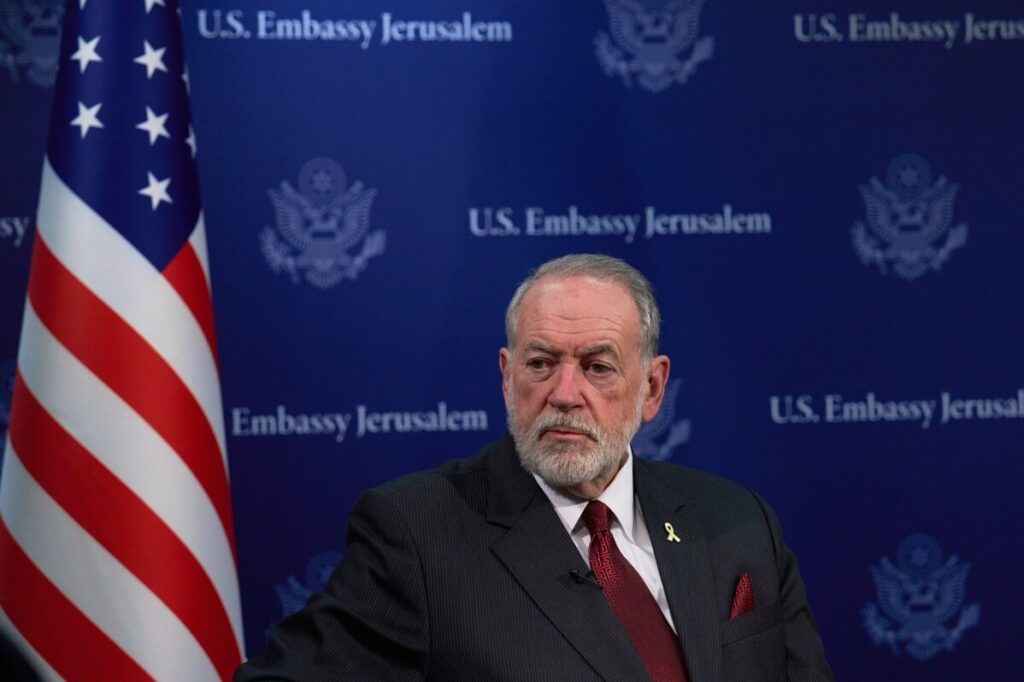
In an interview that has set off alarm bells across the Middle East, U.S. Ambassador to Israel Mike Huckabee declared that Israel “has a right to much of the Middle East,” echoing biblical claims that stretch far beyond recognized borders. His words did not simply upset Arab and Muslim nations; they starkly reveal the dangerous disconnect between Washington’s rhetoric and its stated policies.
How Can America Secure Its Interests Amid Growing Regional Chaos?
Huckabee’s comments, made during a discussion with conservative commentator Tucker Carlson, reference Genesis Chapter 15 — scripture cited as justification for Israeli claims over territories including Jordan, Syria, Iraq, and Lebanon. The ambassador’s blunt remark, “It would be fine if they took it all,” sparked swift condemnation from a coalition of Arab countries united in labeling the statement “dangerous and inflammatory.” This joint rebuke underscores how such rhetoric threatens to fuel instability precisely when the U.S. should be promoting peace based on sovereignty and negotiated agreements.
The administration hastened to distance itself by claiming Huckabee’s remarks were taken out of context, insisting no shift in official U.S. policy had occurred. But this damage is more than semantic: when a senior diplomat publicly entertains expansionist notions clashing with President Trump’s vision for a two-state solution and regional stability, it muddies America’s message at a critical juncture.
What Does This Mean for America First Principles?
This episode exposes the pitfalls of Washington’s inconsistent approach toward Israel—a nation whose security directly impacts American interests in a volatile region. For years, under President Trump’s leadership, efforts emphasized national sovereignty and practical diplomacy rather than ideological maximalism or globalist appeasement.
Yet Huckabee’s statements revive old religious justifications disconnected from modern geopolitics—potentially alienating allies and undermining peace efforts that ensure freedom and safety for all peoples involved. At a time when Iran intensifies threats against both Israel and U.S. bases nearby, clarity matters more than ever.
Moreover, these ambiguities feed into extremist narratives exploited by hostile actors who seek to destabilize our allies and threaten American lives abroad.
The broader lesson is clear: robust America First policy demands disciplined messaging aligned with principled strategy—one that prioritizes secure borders for allies like Israel while fostering conditions conducive to lasting peace through negotiation rather than biblical entitlement claims.
As Americans watch these developments unfold thousands of miles away yet so close to our vital interests, we must ask—how long will Washington allow mixed signals to jeopardize both regional stability and our nation’s security? The answer may well determine whether peace prevails or perpetual conflict endangers innocent lives on every side.