
Tarique Rahman’s Rise: A New Chapter or Political Reset in Bangladesh?
After years of political turmoil and exile, Tarique Rahman takes the prime minister’s oath in Bangladesh amid contentious transitions. What does this mean for stability and regional alignment?
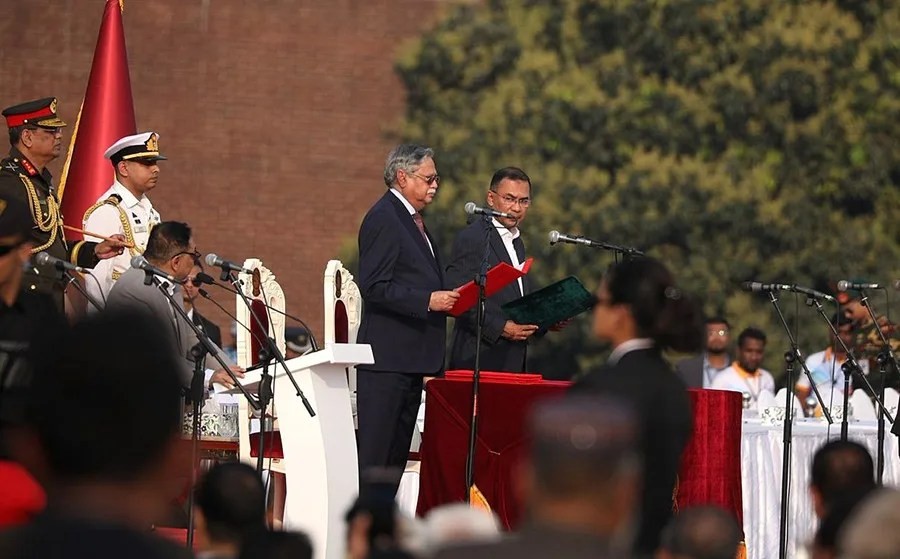
In a dramatic turn for Bangladesh, Tarique Rahman, leader of the Bangladesh Nationalist Party (BNP), has been sworn in as prime minister, marking a pivotal moment after nearly two decades of exile and political unrest. This historic inauguration breaks a long-standing female political dominance that shaped the nation since 1991, ushering in what supporters portray as a democratic transition but critics warn may perpetuate instability.
Is This True Transition or Just Another Power Shuffle?
Rahman took his oath under President Muhammed Sahabuddin’s watchful eye at the South Plaza of Parliament in Dhaka—an unprecedented deviation from traditional ceremonies held at the president’s residence. This symbolic change signals an attempt to present a new chapter; however, it raises questions about whether this is genuine reform or simply a recalibration of entrenched power structures.
The BNP’s triumph came after months of upheaval culminating in the ousting of Nobel laureate Muhammad Yunus-led interim government and the fall of former premier Sheikh Hasina’s administration. While some hail this as a victory for institutional sovereignty—bolstered by a referendum showing 69% approval for structural reforms—the context reveals deeper fractures within Bangladesh’s fragile democracy.
Implications for Regional Stability and America’s Interests
From an America First perspective, these developments warrant scrutiny. Bangladesh sits strategically in Asia with economic and security ties critical to U.S. interests amidst growing global competition. Instability or flawed governance invites influence from hostile globalist forces seeking footholds near India and Southeast Asia.
Tarique Rahman’s decades-long exile in London and his leadership during turbulent opposition years reflect not just internal struggles but broader international dynamics. Will his administration uphold national sovereignty against globalist encroachments, or will Washington see another unstable regime unable to safeguard regional trade routes vital to American prosperity?
Moreover, this political shift offers cautionary lessons on how prolonged instability abroad can ripple back home—impacting immigration flows, security coordination, and foreign policy priorities linked directly to America’s borders and economic wellbeing.
For hardworking Americans watching global developments unfold thousands of miles away, Bangladesh’s political future is far from irrelevant—it is intertwined with our own fight to preserve freedom and secure national interests against chaotic upheaval elsewhere.